

Trip.com Review for Asia Travel: Where It Beats Booking and Where It Does Not
Some links on this page earn us a small commission, at no extra cost to you. Full disclosure.
Quick answer
In Asia, open Trip.com first: it is often cheaper in mainland China, Japan, Korea and Southeast Asia, but not always, so compare the total price for your exact dates. It also books flights and high speed trains in the same app. This Trip.com review shows where it wins and where Booking still does. Outside Asia, Booking is usually cheaper or the same. Keep both apps installed and pick the cheaper one each time.
Many travelers book everything through Booking.com out of habit. In Asia it pays to check Trip.com side by side, because it often has better prices and deeper local inventory there.
Here is where Trip.com beats Booking, where Booking still wins, and how to combine them so you do not overpay.
From the road: I always check Trip.com too, next to Booking.com, Skyscanner and Google Flights, and I run all of those searches through a VPN.
The Short Answer
If you are traveling anywhere in Asia, open Trip.com first. It is the flagship brand of Trip.com Group (formerly Ctrip), a Shanghai-based travel group listed on Nasdaq and in Hong Kong that also owns Skyscanner, and it has deep relationships with Asian hotel chains and airlines than any western competitor. That translates into lower prices, better last minute availability, and bundled deals that Booking simply cannot match.

Outside Asia we still default to Booking. But in Bangkok, Tokyo, Bali, Ho Chi Minh, Hong Kong, Manila and Seoul, Trip.com is now the first tab we open. For a broader look at every option, see our flight search engines comparison.

What Is Trip.com? The Facts in Short
- What it is: An international one-stop travel booking platform
- Sells: Hotels, flights, trains, car services, attractions and tours
- Languages: 24
- Countries and regions: 39
- Hotels: More than 1.7 million
- Airlines: More than 600
- Customer support: 24/7, multilingual
- Sister brands: Ctrip, Skyscanner and Qunar (all Trip.com Group)
Numbers from Trip.com's own About page and the Trip.com Group brands page, checked on 5 October 2026.
Where Trip.com Wins
The biggest difference is pricing on Asian properties. Not always, but often enough to make checking both sites a habit.
What stands out:
- Hotel prices in mainland China, Japan, Korea and Southeast Asia are often lower
- Flight inventory inside Asia is the deepest of any platform. They show low cost carriers like AirAsia, Lion Air and Spring Airlines that Skyscanner sometimes misses
- Train tickets in China, Japan and Korea can be booked through the same app. The Shinkansen and bullet train flow is smoother than going through native sites
- Last minute deals (booking within 24 hours) are often cheaper than Booking, especially on weekday hotel nights
- Trip Coins (their loyalty program) actually convert into useful discounts on later bookings
- 24 hour customer service in English
The other thing nobody talks about. Trip.com has a strong selection of business hotels in tier two and tier three Chinese cities. If you are traveling outside Beijing or Shanghai, the western platforms have huge gaps. Trip.com fills them.

Why We Wrote This Review

Chenzo, founder of NomadsToolsLab
Chenzo has been on the road for 27 years, including 11 years backpacking through South America. He checks Trip.com on every trip, alongside Booking.com, Skyscanner and Google Flights, always behind a VPN so prices do not change on him.
Where Booking Still Wins
We do not want to oversell this. Booking still has the edge in a few real situations.
- Europe, North America, South America and Australia. Booking has more inventory and better prices in these regions
- Free cancellation. Booking is more consistent on flexible cancellation policies across the board
- Genius loyalty perks. The Booking Genius program kicks in earlier and offers more across more properties
- Apartment and guesthouse coverage. Trip.com leans hotel heavy, so for small guesthouses and apartments outside cities, Booking has more options
So we still keep Booking in our rotation. But the moment we land in Asia, our booking workflow flips.

How Much Cheaper Is It?
It depends on the city, the dates and the hotel. Trip.com is often cheaper in mainland China, Japan, Korea and Southeast Asia, but not always, and on some nights Booking wins. The only reliable answer is to compare the total price on both sites for your exact dates.

Flights on Trip.com: The Hidden Strength
Trip.com is also worth checking for flights within Asia. Start on Skyscanner (which, like Trip.com, belongs to Trip.com Group) and cross check Trip.com once you have a route in mind.
Our Skyscanner review covers whether Skyscanner is still the best flight search engine to start with.
Where Trip.com tends to beat Skyscanner:
- Low cost carriers that Skyscanner sometimes misses, especially in China and Korea
- Multi city Asia flights, where the routing logic on Trip.com seems sharper
- Combined flight plus hotel packages, which often shave 50 to 150 dollars off the total
- Domestic Chinese flights, which are often unbookable on western platforms but easy on Trip.com
The interface is busier than Skyscanner, but the inventory is real. On some Asia routes it comes out cheaper, so compare.

One thing to plan for: low cost carriers in Asia are often strict about cabin bag size and weight, so a carry on that fits their limits saves you surprise fees at the gate. Our best backpacks guide covers the ones that work well for this kind of travel.
One thing worth flagging: if you have airline status you are trying to maintain, book direct with the airline, because bookings through agencies may not count toward status the same way.
If your route hops between several cities, our multi-city flight routing guide covers how to stitch legs together without overpaying.
For Kiwi multi-city search and the Kiwi Nomad tool, see our Kiwi.com review.
Trains in Japan, Korea and China
This is the feature most people sleep on. Trip.com books high speed trains across China, Japan and Korea inside the same app you use for hotels and flights.

Booking the Shinkansen through their flow is faster than going through JR West or JR East directly, especially if your Japanese is rough. For Korea, check whether your route is available. And in China, where the rail system has been growing fast, Trip.com handles seat selection and payment in English with no problem.
The convenience is worth a small premium, but in many cases the prices are similar to the native sites with a much smoother flow.

Real Issues To Know About
Trip.com is not perfect. A few things to know so you go in with eyes open.

First, the user interface is busier than Booking. Pop ups for Trip Coins, flash deals, hotel of the week. After two or three trips you tune it out, but the first few searches feel cluttered.
Second, the cancellation rules are sometimes stricter than Booking. On hotel deals, "Non refundable" is more common on Trip.com than on Booking. We always filter for "Free cancellation" and check the policy on the booking confirmation page before completing payment.
Third, customer service over email is slow. Customer service over the in app chat is fast and good. So when something goes wrong, we always use the chat, not email.
Fourth, the prices shown in the search results sometimes do not include all taxes and fees until the final checkout step. It is not a bait and switch, but the final total can be 5 to 10 percent higher than the initial search price. We have learned to always read the breakdown before clicking book.
How To Combine Trip.com With Booking
Same workflow every time we are in Asia:
- Open Trip.com and Booking.com in two tabs, both incognito
- Search the same city, same dates, same room preferences
- Filter for free cancellation, fast wifi and any other amenities we need
- Compare the total prices including all fees, not the headline rate
- Read three recent reviews on whichever site has the cheaper rate
- Book the cheaper option, almost always Trip.com in Asia
Fifteen minutes per booking, and often a real saving on Asia stays.

Another place to look for a bed is ZenHotels, where you can search and compare hotels, hostels and apartments.
Compare hotel prices on ZenHotels
Want an eco-certified stay? Check labels first, then compare prices.
From the road
Trip.com is always in our rotation. I check it next to Booking.com, Skyscanner and Google Flights before I book anything. And I run all of these searches through a VPN, because when you come back to the same search later, the price can be higher.
Who Trip.com Is Best For
If you are spending more than two weeks of the year in Asia, Trip.com pays for itself fast. It also makes sense if you book a lot of intra Asia flights, because the cheaper inventory on regional carriers compounds across a year of travel.

If you only travel in Europe and North America, you can skip Trip.com. It will not save you money and the inventory is not deeper than what you can find on Booking.
If you book trains across Japan, Korea or China, the convenience of having flights, hotels and trains in one app is worth the trade off in the slightly busier interface.
Whichever platform you book through, pay with a card built for travel. See our travel credit cards and banking guide.

- In Asia, open Trip.com first. Outside Asia, Booking is usually cheaper or the same.
- Trip.com is often cheaper in mainland China, Japan, Korea and Southeast Asia, but not always: compare the total price for your exact dates.
- It books hotels, flights within Asia and high speed trains in China, Japan and Korea in one app.
- Booking still wins on free cancellation, Genius perks and apartment and guesthouse coverage.
- Filter for free cancellation and read the price breakdown before you book: the final total can be 5 to 10 percent higher than the search price.
- Keep both apps installed, compare every booking and pick the cheaper one.
Final Take
In Asia, Trip.com is a strong default. Booking still has its place, but in this region the deeper local inventory and the train booking flow make a difference.

The smart play is to keep both apps installed. Compare every booking. Pick the cheaper one each time. Loyalty to a single platform costs you money, and that is just as true here as it is with flights.
For the rest of the travel system, our booking sites comparison covers the global picture and our Skyscanner playbook covers flights.
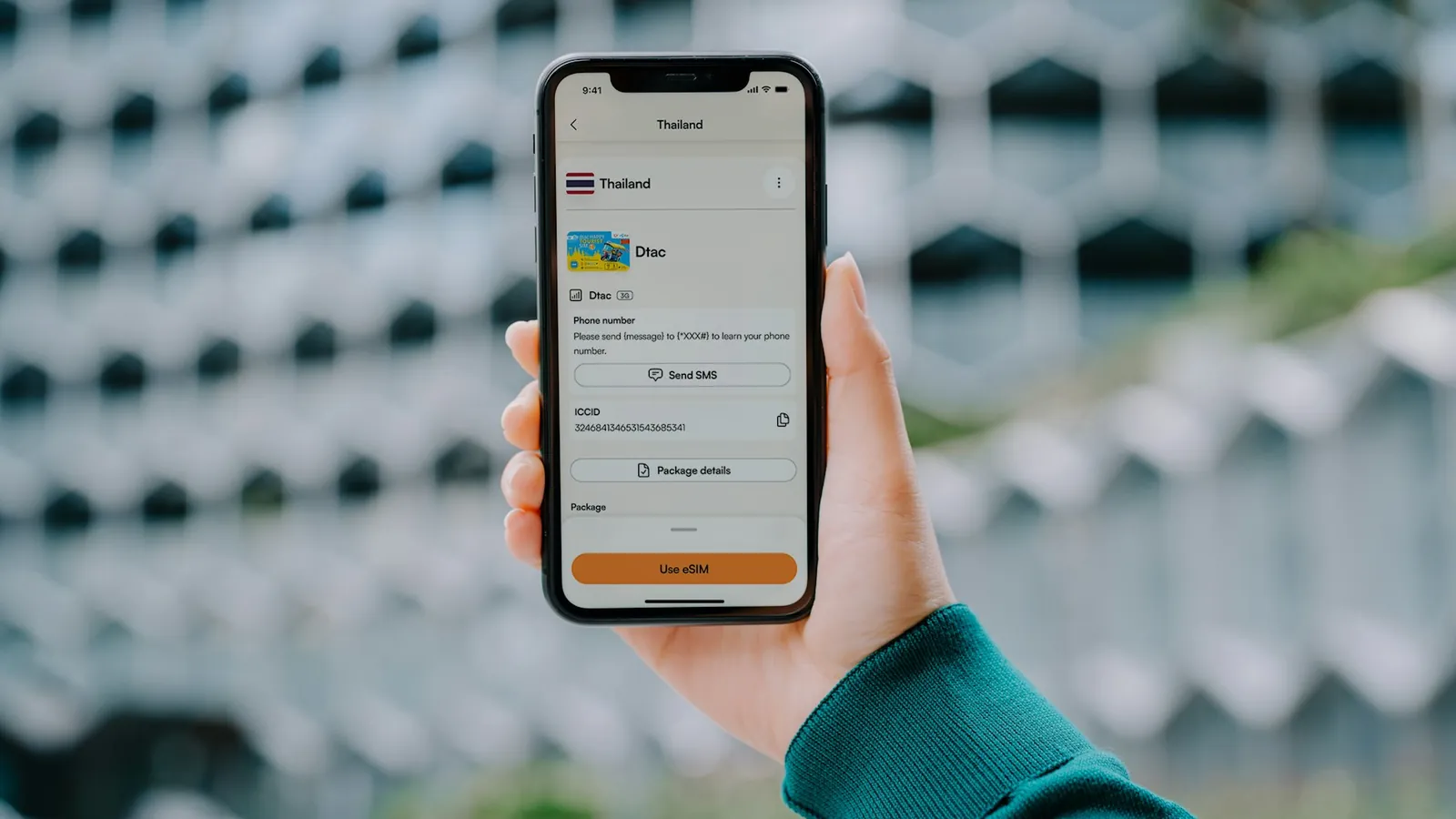
You will also want mobile data the moment you land, so you can open the Trip.com app, show your booking and get to your hotel. An eSIM is the easiest way to sort that before you fly. Our Airalo review explains how it works, and our eSIM comparison for digital nomads shows how Airalo stacks up against Holafly and a local SIM.

FAQ
Is Trip.com safe to use?
Yes. It belongs to Trip.com Group (formerly Ctrip), a publicly listed company on Nasdaq and the Hong Kong Stock Exchange. Payments are secure and the platform has been operating internationally for over a decade.
Is Trip.com cheaper than Booking.com?
In Asia it is often cheaper, but not always, so compare the total price for your dates. Outside Asia, Booking is usually cheaper or the same.
Can you cancel a Trip.com booking?
It depends on the rate you book. Free cancellation options exist on most hotels, but Non Refundable rates are more common on Trip.com than on Booking. Always filter for free cancellation and check the policy before paying.
Does Trip.com have a loyalty program?
Yes, it is called Trip Coins. You earn coins on every booking and can redeem them for discounts on future bookings. It is not as strong as Booking Genius, but it adds up if you travel Asia for more than a month or two a year.
Can I book trains on Trip.com?
Yes. High speed trains in China, Japan and Korea (including the Shinkansen and KTX) are bookable in the same app as flights and hotels. The flow is smoother than going through native rail sites for most travelers.
Is Trip.com legit and reliable?
Yes. Trip.com is a real booking platform and part of Trip.com Group, which also runs Ctrip, Skyscanner and Qunar. It offers 24/7 multilingual customer support. Read the cancellation terms of your rate before you pay.
Is Ctrip the same as Trip.com?
They are sister brands. Trip.com Group describes Ctrip, founded in 1999, as one of the best known travel brands in China, and Trip.com as its international platform (checked on 5 October 2026).
Is Trip.com good for Japan?
Often, yes. Hotels in Japan are often cheaper on Trip.com and you can book Shinkansen tickets in the same app. Compare the total price for your exact dates.

Updated:
Affiliate disclosure. This post contains affiliate links. If you click and buy something, this site earns a small commission at no extra cost to you. Picks are based on published specs, independent reviews and manufacturer information, and we only recommend what we would use ourselves. As an Amazon Associate I earn from qualifying purchases. Read the full affiliate disclosure.
Your next step






One Comment