Best Portable Solar Panels for Digital Nomads & Travel (2026)
As an Amazon Associate I earn from qualifying purchases. Some links on this page earn us a small commission, at no extra cost to you. Full disclosure.
Quick answer
For most nomads the EcoFlow 220W Bifacial is the pick among the best portable solar panels for digital nomads: the best balance of weight and output. Backpacking? The Goal Zero Nomad 50 is the lightest here. Living in a van? The Renogy 400W gives serious power.
Our top picks
Solar Panel Comparison Table
| Panel | Wattage | Weight | Best for | Shop |
|---|---|---|---|---|
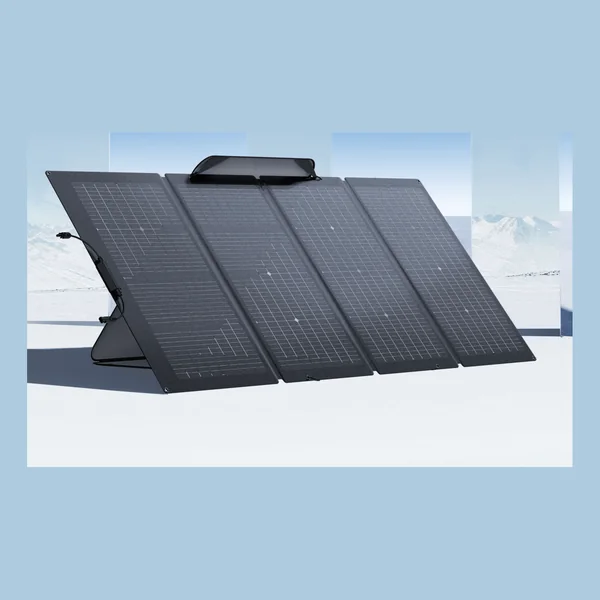 | 15.4 lbs | Balanced nomads | Get yours on Amazon | |
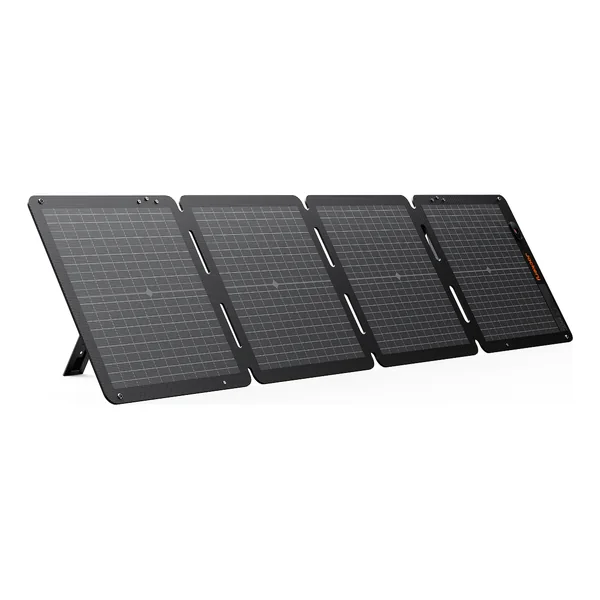 | 10.3 lbs | Backpackers | Get yours on Amazon | |
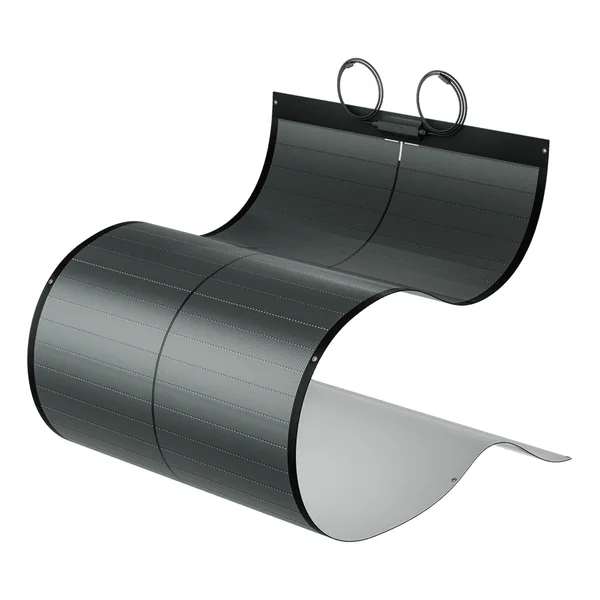 | 8.44 lbs | Cloud seekers | Get yours on Amazon | |
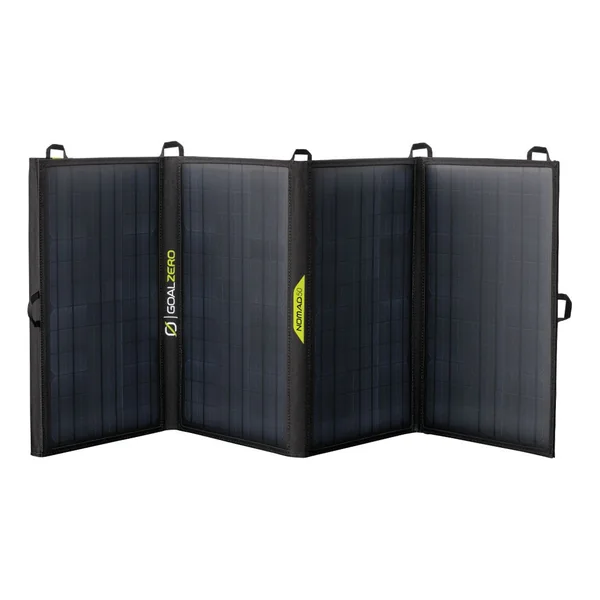 | 6.8 lbs | Ultra-light | Get yours on Amazon | |
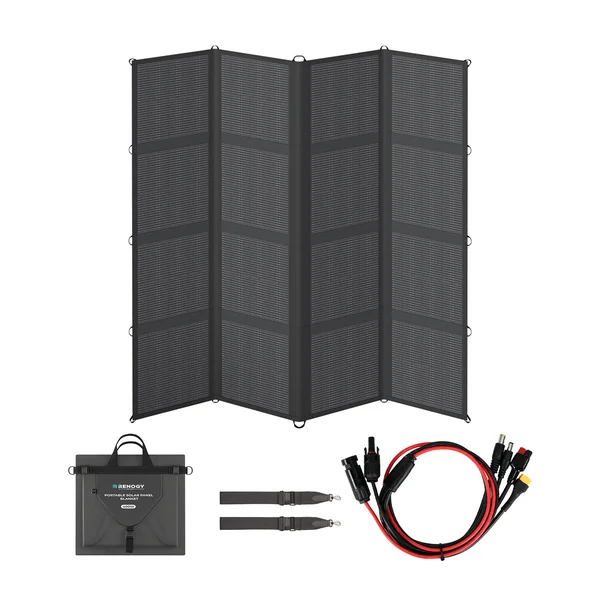 | 16.09 lbs | Van lifers | Get yours on Amazon |
EcoFlow 220W Bifacial
EcoFlow 220W Bifacial
Pros
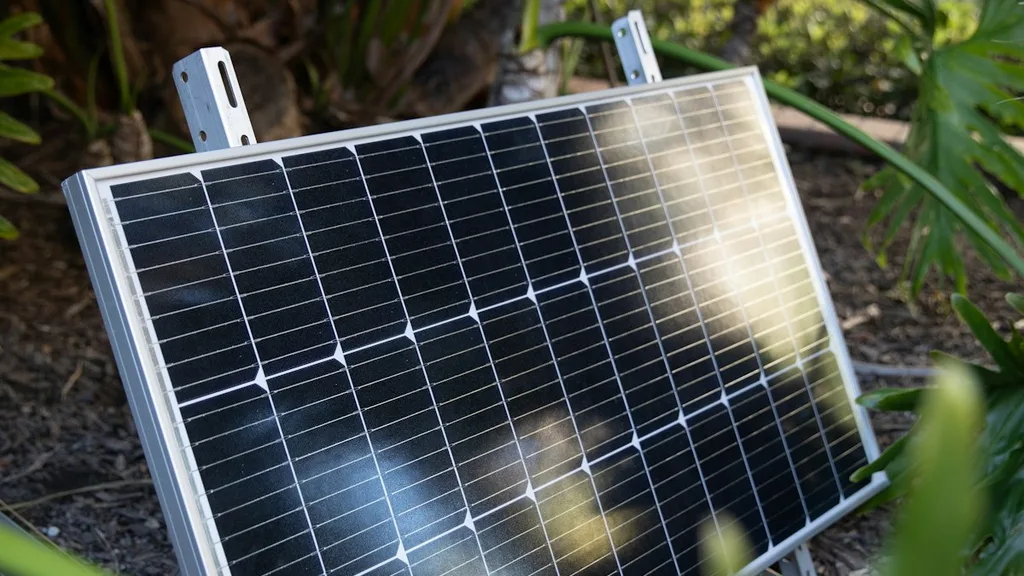
- Bifacial design collects up to 25% more energy from reflective surfaces
- Premium build quality, weatherproof connectors
- Strong output for its size
- Excellent kickstand, easy to angle for optimal sun tracking
- Solar-to-XT60 cable included for EcoFlow power stations
Cons
- One of the heavier panels on this list (15.4 lbs), not ideal for ultralight backpacking
- Bifacial advantage only works with reflective surfaces
- Overkill if you only need 100-150W regularly
Best for: Best Overall, Maximum efficiency in a portable package
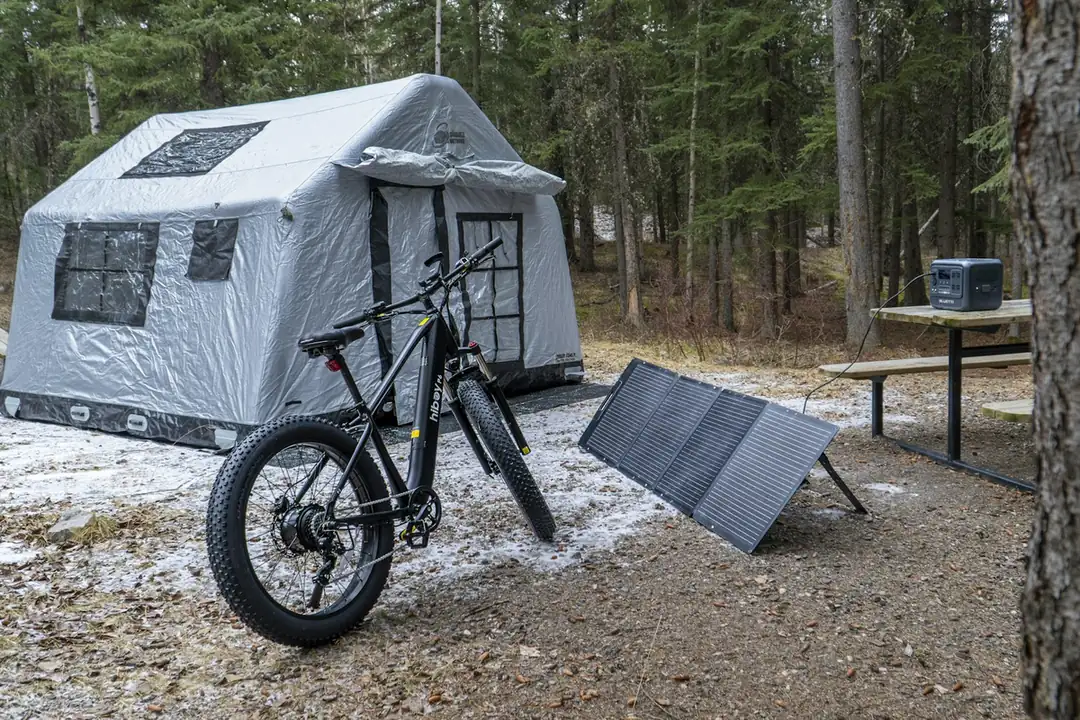
The EcoFlow 220W is a bifacial panel: the back side also catches light reflected from sand, water or light ground, which EcoFlow says adds up to 25% extra energy. The build quality feels premium, and the adjustable stand lets you set the angle without props or rocks. It is heavy, so it suits van and car travel more than backpacking. The bifacial gain drops on dark surfaces like asphalt, so it works best when you park on sand, grass or light gravel. The specs here are for the EcoFlow NextGen 220W, the model in the video below: 220W on the front and 175W on the back, 25% efficiency, 15.4 lbs (7.0 kg) (EcoFlow US product page, read 9 October 2026).
Power Output
220W
Weight
15.4 lbs (7.0 kg)
Folded Size
24.2 x 23.2 x 1.3 inches
Efficiency
25% (N-type TOPCon, bifacial)
Price
Check price on Amazon
Jackery SolarSaga 100W
Jackery SolarSaga 100W
Pros
- Lightweight and portable, under 11 lbs with carrying bag
- Fast fold/unfold, takes 30 seconds max
- Compatible with most Jackery generators and power stations
- Reliable performance in partial shade
- Best value-per-watt for mobile nomads
Cons
- Not enough for heavy power users (RVs, full vans with AC)
- Only 100W output means slower charging of large batteries
- Connectors aren't Anderson, proprietary to Jackery ecosystem
Best for: Best Portable, The Goldilocks of solar panels
The Jackery SolarSaga 100W works well as a "bring everywhere" panel: light enough to carry to a campsite, strong enough to keep camera batteries, a phone and a small power station topped up. Jackery lists 24.3% conversion efficiency. It is not a workhorse for heavy loads like a fridge or air conditioning, and in winter or at high latitudes expect a lot less output than in summer.

Power Output
100W
Weight
10.3 lbs (4.67 kg)
Folded Size
28.3 x 10.9 x 1.1 inches
Efficiency
24.3% (Jackery)
Price
Check price on Amazon
BougeRV Yuma 200W
BougeRV Yuma 200W
Pros
- Best light-penetration in cloudy/overcast weather
- Excellent value for a 200W panel
- Durable CIGS thin-film construction
- Works with standard Anderson connectors
- Good temperature performance (doesn't degrade as much in heat)
Cons
- Slightly lower overall efficiency in bright sunlight
- Shorter manufacturer lifespan claim than monocrystalline
- Rolls up instead of folding, so it packs as a long roll (82 inches)
- Underrated brand, less resale value if you sell later
Best for: Best Value, Maximum wattage per dollar
When budget is tight, the BougeRV Yuma 200W is the panel that punches above its weight class. CIGS thin-film panels like this one tend to cope better with overcast weather and low sun angles than standard monocrystalline panels, at the cost of lower efficiency in bright sun. It is a panel for longer stops, not for carrying around all day. The specs here are from the BougeRV product page for the Yuma 200W with tape (82.2 x 26.0 x 0.06 inches, 8.44 lbs, 17% cell efficiency, read 9 October 2026); the Amazon listing gives 7.05 lbs. For the newer BougeRV Arch Pro against Renogy's ShadowFlux, read our BougeRV vs Renogy comparison.
Power Output
200W
Weight
8.44 lbs (3.83 kg)
Size
82.2 x 26.0 x 0.06 inches (a flexible panel that rolls up)
Efficiency
17% (CIGS thin-film cell efficiency, BougeRV spec)
Price
Check price on Amazon
Goal Zero Nomad 50
Goal Zero Nomad 50
Pros
- Featherweight, fits in most backpacks
- Rugged build quality, excellent durability
- Works with Goal Zero ecosystem (Nomad batteries, etc.)
- USB output means no adapters needed for phones/tablets
- Best for ultra-mobile setups (hiking, biking, sailing)
Cons
- Insufficient for stationary van/RV setups
- Slow charging, not a primary power source
- Limited to 50W output only
- Expensive per watt compared to larger panels
- USB connection limits compatibility with larger power systems
Best for: Best Ultralight, Van-to-backpack transitions
At 6.85 lbs (Goal Zero spec), the Nomad 50 is light enough to strap to a backpack, and it can top up a power bank, camera or GPS device. It has a USB-A port (up to 12W) plus an 8mm solar port for Goal Zero power stations. 50W isn't going to replace your main power source if you work full-time from a van: it's a supplement and a backup. The build is Goal Zero's usual solid quality. Just don't expect fast charging straight from the panel.
Power Output
50W
Weight
6.8 lbs (3.1 kg)
Folded Size
17 x 11.25 x 2.5 inches (Goal Zero spec)
Efficiency
21-22%
Price
Check price on Amazon
Renogy 400W
Renogy 400W
Pros
- 400W, the highest output on this list
- N-type cells with 25% efficiency (Renogy)
- Folds to backpack size, with a carry handle and straps
- 4-in-1 extension cable for popular power stations included
- IP65-rated (Renogy)
Cons
- Large once unfolded, so you need open ground or a vehicle roof to lay it out
- Overkill for minimalist or ultralight setups
- Check that your power station accepts this much input before you buy
Best for: Best for Van/RV, Serious power for serious nomads
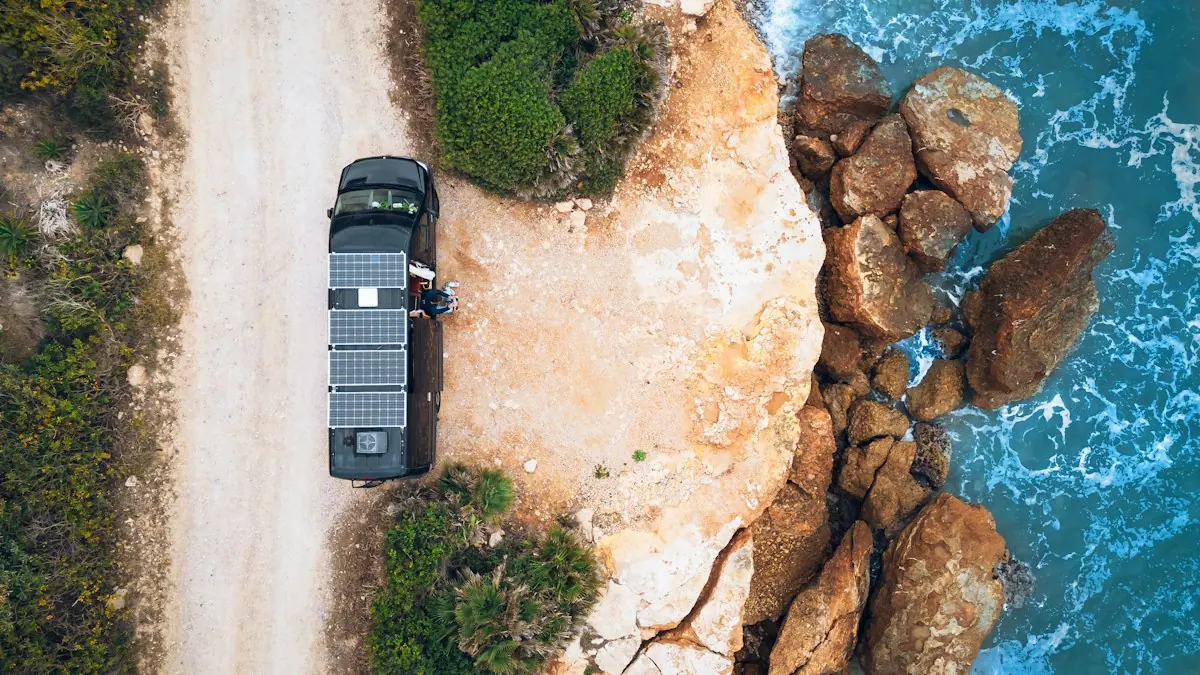
The Renogy 400W is the step up when a 220W panel is not enough for full-time van life. With 400W you can run a laptop, external drives and some AC loads from a power station on a good sunny day. It is a solar blanket that Renogy says weighs 16.09 lbs and folds to backpack size, with a carry handle and straps. You lay it on the vehicle or the ground, or hang it, so plan for the space it needs when unfolded.
Power Output
400W
Weight
16.09 lbs (7.3 kg)
Folded Size
Folds to backpack size (Renogy)
Efficiency
25% (N-type cells, Renogy)
Price
Check price on Amazon
Solar Charging Tips for Nomadic Remote Workers
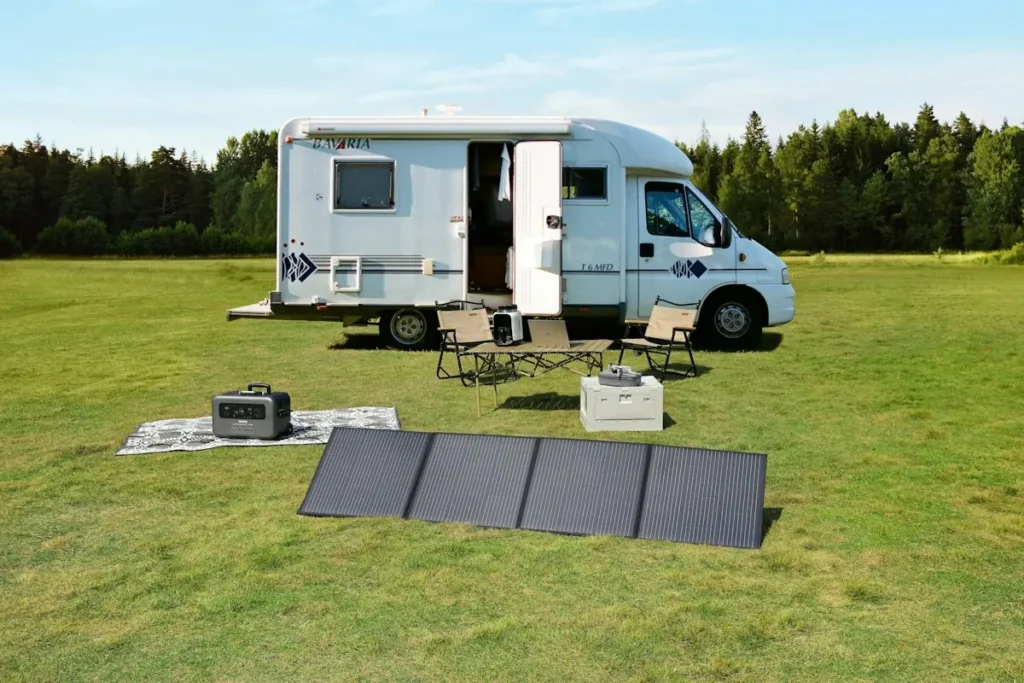
Solar power is straightforward, but there are tricks that dramatically improve performance. Here's what actually works:1. Sun tracking changes everything. Your panels are only as good as their angle to the sun. Invest in a simple adjustable mount, and adjust the angle a few times a day as the sun moves.2. Keep panels clean. Dust, bird poop, and salt spray kill efficiency faster than anything else. Rinse them regularly with clean water and a soft cloth, and more often in dusty regions.3. Match your panel to your power needs. Too small and you're constantly rationing. Too large and you're carrying unnecessary weight and spending money you don't need to. Use this formula: (your daily power use in Wh) ÷ (average daily sun hours in your region) = wattage you need. In most places, 4-5 hours of usable sun is realistic, even on good days.4. Battery efficiency matters as much as panel output. Cheaper power stations lose more energy to heat and conversion than good ones, so pair a good panel with a good battery.5. Temperature management is critical. Solar panels actually get less efficient when they're hot, counterintuitively. Allowing airflow underneath your panels (with stands that create space) reduces heat buildup, which helps output in hot climates. Planning a fixed roof setup instead of loose panels? See our guide to the best solar panels for a camper van. Our Jackery vs EcoFlow comparison covers two popular power stations for van life, and the Victron vs Renogy charge controller guide covers the step after that.
FAQ: Common Solar Questions from Nomads
Can I really work off-grid full-time?
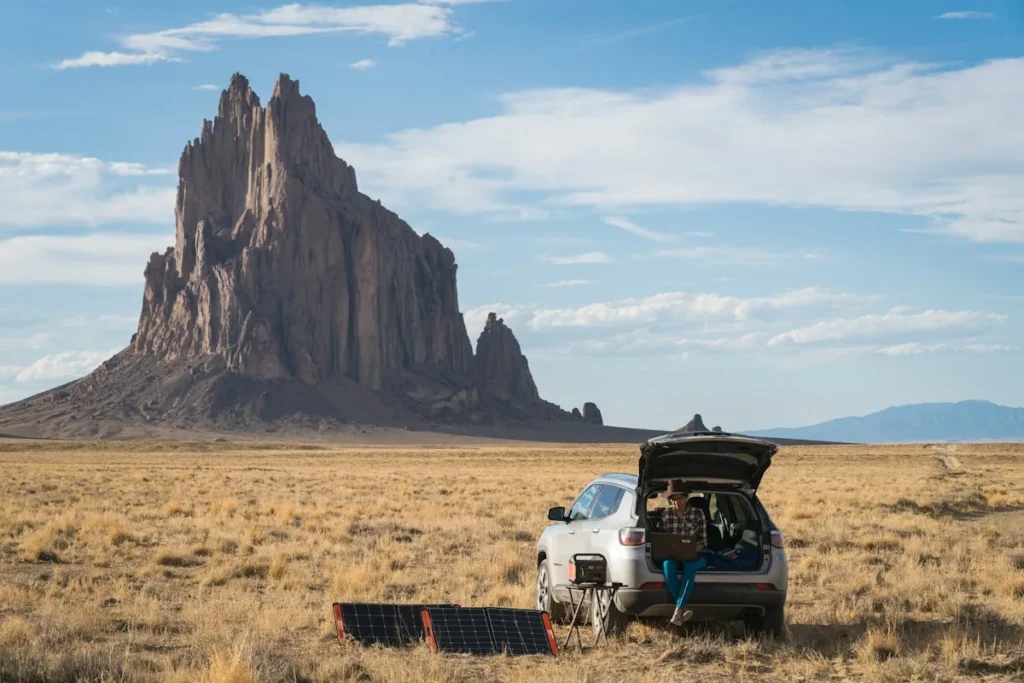
Yes, with caveats. If your work is writing, design, coding, or consulting (mostly CPU/screen time), a 200-400W solar setup will handle it fine. If you need cloud rendering, video calls all day, or run servers, you might stretch the limits. If you do heavy video editing, plan to charge from the grid now and then and use solar for daily work.
How long do solar panels last?
Most quality panels are rated for 25-30 years at 80% efficiency. But you're not keeping the same panel for 30 years, nomadic gear usually gets upgraded or replaced every 3-5 years as technology improves. What kills panels isn't age, it's damage: dropping them, puncturing them, or running them in extreme temperatures without ventilation. Treat them well and they'll last your whole nomadic career.
Will solar panels work in winter or cloudy climates?
Sort of. Winter output is typically 40-50% of summer output, depending on latitude and weather. The exception is CIGS thin-film panels (like the BougeRV), which perform better in lower light. If you're in Seattle or Northern Europe in winter, you'll need either a much larger system or a grid backup. If you're nomadic, the simple solution is to travel south in winter, which, honestly, most nomads do anyway.
Can I expand my system later?
Absolutely. Most systems let you add panels in series or parallel, depending on your power station. Starting with one small panel and adding a second one later also gives you redundancy: if one panel gets damaged, you still have power.
How much does a full solar setup cost?
Panel cost is just part of the equation. A complete setup adds up a panel, a power station, connectors/cables, and mount/stands. Many nomads start with a small panel and a basic battery and upgrade later. Most land somewhere in the mid-range.
Watch: the EcoFlow 220W bifacial solar panel reviewed
Video by At Home with Lucas.
Seen enough? Here is the EcoFlow 220W panel from this article.
EcoFlow 220W Bifacial
Pros
- Bifacial design collects up to 25% more energy from reflective surfaces
- Premium build quality, weatherproof connectors
- Strong output for its size
- Excellent kickstand, easy to angle for optimal sun tracking
- Solar-to-XT60 cable included for EcoFlow power stations
Cons
- One of the heavier panels on this list (15.4 lbs), not ideal for ultralight backpacking
- Bifacial advantage only works with reflective surfaces
- Overkill if you only need 100-150W regularly
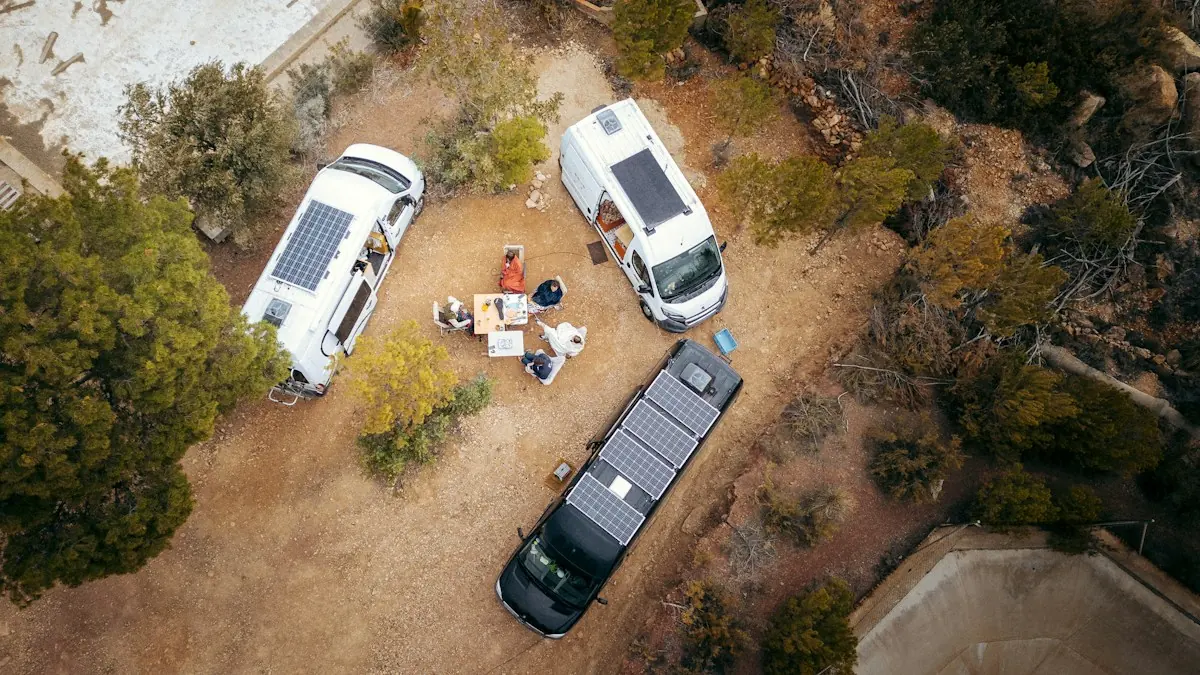
- The EcoFlow 220W Bifacial is the pick for most nomads: the best balance of weight and output.
- The Goal Zero Nomad 50 is the lightest here at 6.8 lbs, and the Jackery SolarSaga 100W is the portable all-rounder at 10.3 lbs.
- The BougeRV Yuma 200W is the value pick, and its CIGS thin-film design copes better with overcast weather.
- The Renogy 400W is for serious van life: 400W in a solar blanket that folds to backpack size, but it needs space to lay out.
- Match the panel to your power needs and keep it clean, angled to the sun and ventilated.
Our remote work setup
The gear guides we compare for working from cafes, coliving rooms and rentals:
Final Verdict: Which Panel Should You Choose?
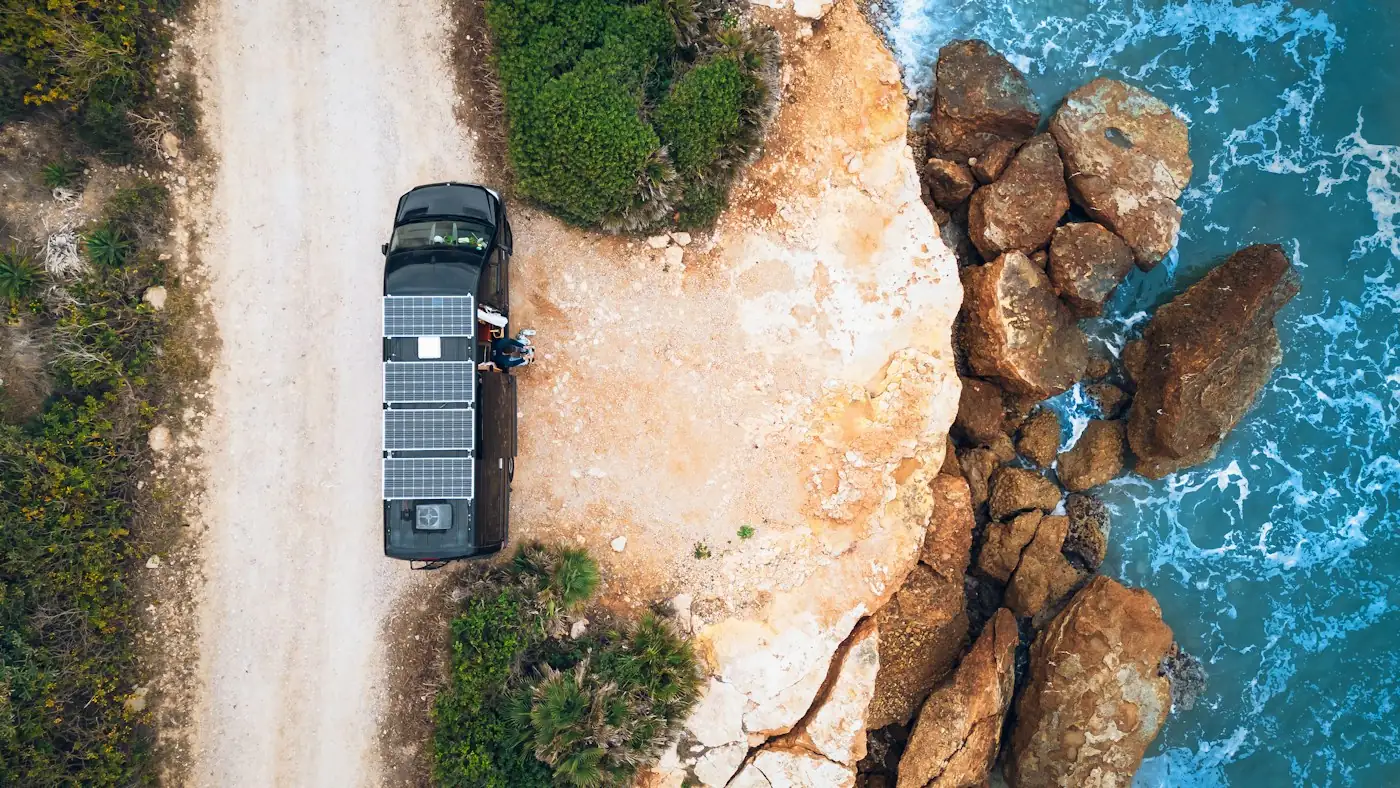
Here's our honest take: There's no "best" panel for all nomads. Your choice depends on your specific life:If you move constantly (backpacking, bike touring, sailing): Get the Goal Zero Nomad 50 or Jackery 100W. Weight matters more than power. You can supplement with power banks and be fine. If you live in a van or small RV: Go with the EcoFlow 220W or BougeRV 200W. You have the carrying capacity, you need consistent power, and these hit the sweet spot of output vs. weight vs. cost. If you're serious van life (big rig, full-time, want AC/heating options): The Renogy 400W is worth the investment. It genuinely changes what's possible in a remote location. If you work in cloudy climates: Lean toward the BougeRV Yuma because CIGS thin-film performs better in lower light. If you want one panel to do everything: The EcoFlow 220W is our recommendation. It's the most versatile, light enough to move between locations but powerful enough to be your primary power source. The reality is this: the "best" panel is the one you'll actually use consistently. The second-best panel that's always on your roof is worth 10x more than the perfect theoretical panel you left at home because it was inconvenient. So pick the one that fits your nomadic life, actually set it up, track the sun, keep it clean, and let it do its job. You'll never be stuck without power at a perfect beach campground again.
Why this matters
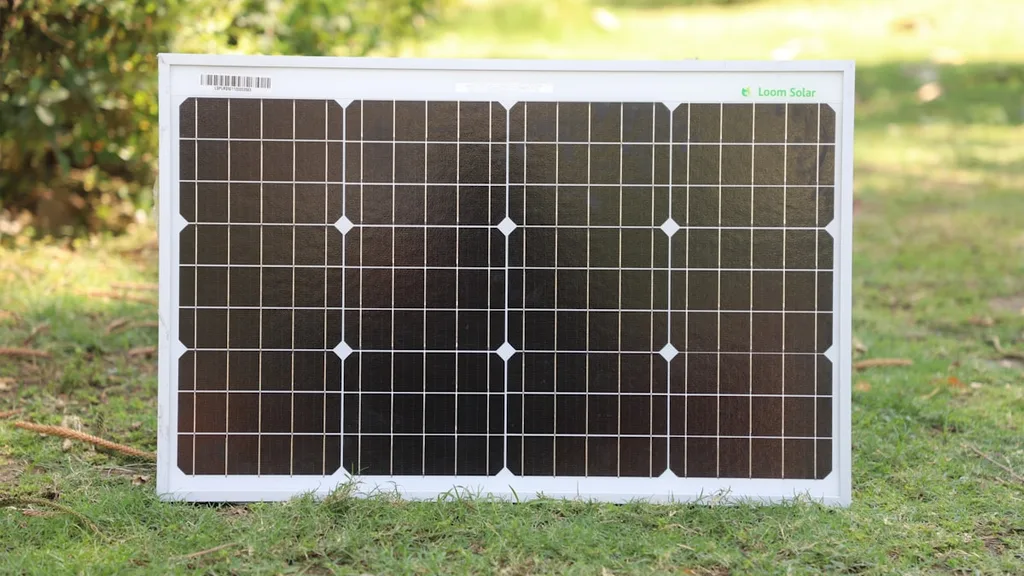
Picture a perfect beach campground, a laptop full of client work, and a battery gauge that hits red because a cloudy morning did not deliver the solar power you counted on. Having reliable solar power isn't a luxury when you live and work off-grid, it's the foundation of everything. This guide looks at what actually matters when your work depends on a piece of equipment.
Why Solar Panels Are Essential for Digital Nomads
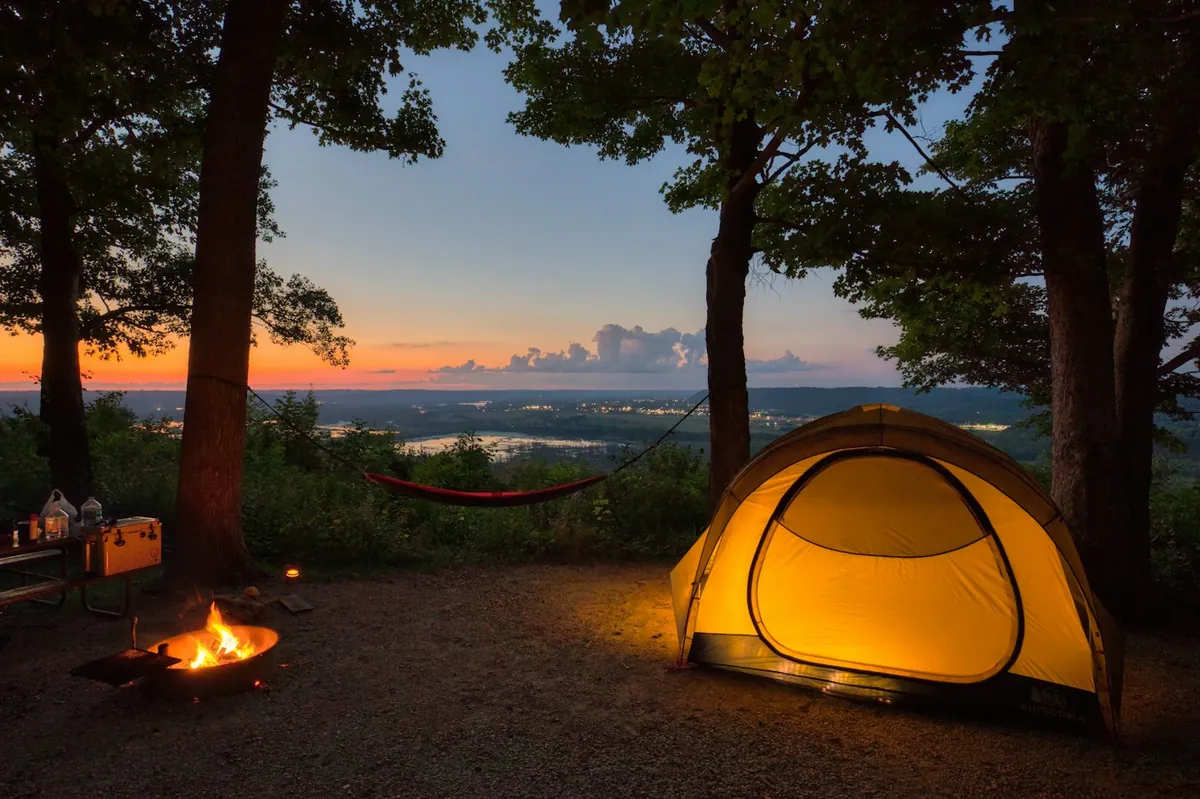
Look, we get why traditional energy solutions feel safer. You can always find a café with a power outlet or drive to a town with electricity. But the freedom that attracts people to nomad life, the ability to work from anywhere, to stay in places most people miss, to wake up on a beach or in the mountains, that freedom evaporates if you're constantly hunting for a power source. With a decent solar setup, you're actually independent. You can work from a van in the Mojave Desert, a tent in the Andes, a beach hut in Thailand. You're not locked to locations with electricity. And beyond the freedom factor, there's the practical stuff: no sketchy hostel WiFi, no relying on unfamiliar electrical systems, no worrying about power outages that shut down everything in developing countries.
Wondering whether a place is really green? See our guide to eco stays and labels.
Related Articles for Digital Nomads
Best Portable Power Stations for Van Life
Complete Van Life Electrical System Guide
Remote Work Setup: Internet Solutions for Off-Grid Living
Energy Efficient Laptops & Devices for Nomadic Workers
Want the full setup in one place? Grab the Free Digital Nomad Setup Guide.
The Nomad Toolkit
Tools We Recommend on the Road
These four cover the boring but essential parts of nomad life. These are the four we recommend first for most nomads:
- SafetyWing, monthly nomad insurance, subscribe once, keeps running as you move country to country
- Airalo, eSIM for 200+ countries, activate before you land, no more SIM card hunting
- Revolut, multi-currency account with real exchange rates, my daily card abroad
- DiscoverCars, best car rental prices worldwide, filter for automatic and unlimited km
Updated:
Affiliate disclosure. This post contains affiliate links. If you click and buy something, this site earns a small commission at no extra cost to you. Picks are based on published specs, independent reviews and manufacturer information, and we only recommend what we would use ourselves. As an Amazon Associate I earn from qualifying purchases. Read the full affiliate disclosure. Amazon and the Amazon logo are trademarks of Amazon.com, Inc. or its affiliates.
Want to see a full van build around the panels? Read cargo van conversion for beginners in 5 steps.
Your next step