
How Padel Scoring Works: A Simple Guide for Beginners
The first thing almost every new player asks on a padel court is how the padel scoring works. It sounds like tennis, and mostly it is, but the serve and the walls work differently, and that is where most of the confusion starts.
I play padel in every country I go to. Good news: padel borrows tennis point counting almost exactly, then adds a few rules around the serve and the walls. Below is the whole system, from one point to a full match, plus the usual beginner mistakes. Once you have the rules, our guide to padel levels and rating systems is the natural next step.
Quick answer
Padel counts points like tennis (15, 30, 40, game), sets go to 6 games with a tie-break at 6-6, and the serve is always underhand after a bounce. The big difference is the glass: once the ball has bounced in your court, it can hit the walls and still be in play.
Checked on 5 October 2026 against the FIP Rules of Padel (version applying from 1 January 2026).
Next steps

Padel scoring at a glance
If you already know tennis scoring, you are most of the way there. Padel counts points and games using the same numbers tennis does.
| Points won in a game | Score called |
|---|---|
| 0 | Love |
| 1 | 15 |
| 2 | 30 |
| 3 | 40 |
| 4 (with a 2-point lead) | Game |
A team needs four points to win a game and needs to win by at least two points. Win the game, and the score resets to love-love for the next one.
How a point is actually won
A point ends when the ball:
- Bounces twice on one team's side of the court before they return it
- Is hit out of the enclosed court entirely, over the fencing or past the top of the glass, without bouncing on the court first
- Is hit into the net or fails to clear it
- Hits the opponents' glass or fencing before bouncing in their court
- Touches a player or their clothing before landing correctly
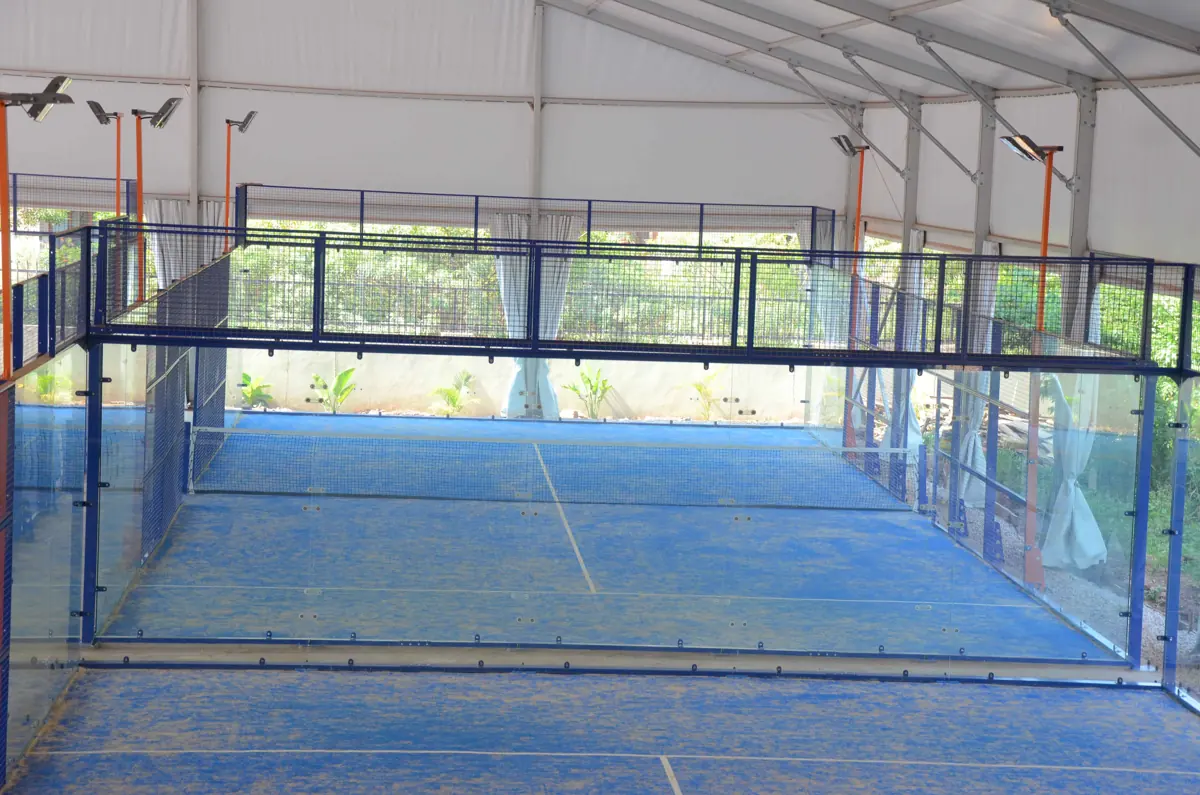
The part that surprises new players: after the ball bounces once on the court, it is still in play even if it then hits the back or side glass or the metal fencing. You let it come off the glass and play it back, a bit like squash. You can also play the ball against your own wall on purpose, as long as it then crosses the net and lands in the opponents' court.
Games, sets and matches
A standard padel match is structured almost exactly like a tennis match:
- A set goes to the first team that wins 6 games, with at least a 2-game lead (6-4 wins the set, 6-5 does not, you keep playing).
- A match is usually the best of 3 sets. Win 2 sets, win the match.
- If a set reaches 6-6 in games, most matches go to a tie-break rather than playing on indefinitely.
If a set is level at 5-5, you play two more games and win it 7-5. If a match is level at one set each, some events replace the third set with a 10-point super tie-break, also won by two clear points (FIP alternative scoring methods).
The tie-break at 6-6
When a set reaches 6 games each, a tie-break decides it. It is scored differently from a normal game:
- Points are counted in plain numbers, 1, 2, 3, instead of 15/30/40
- The first team to reach 7 points, with at least a 2-point lead, wins the tie-break and the set
- If it reaches 6-6 within the tie-break itself, play continues until one team gets a 2-point lead
- Serve rotates between players and teams every 2 points during the tie-break, after the very first point, so everyone serves roughly the same number of times
- Players change ends every six points
Win the tie-break and the set is recorded as 7-6 on the scoreboard.

Deuce, the golden point and the Star Point
This is the part that actually varies from club to club and from tour to tour, so it is worth knowing all three versions before you step on court.
Traditional deuce, like tennis. When the score reaches 40-40, it is called deuce. A team then needs to win two points in a row to take the game: win one point and you have advantage, lose the next and it goes back to deuce, win the next and you take the game.
Golden point, punto de oro. Many recreational leagues, clubs, and casual matches skip traditional deuce entirely. At 40-40, the next point simply wins the game outright, no advantage, no back-and-forth. Whoever wins that single point takes the game. On that deciding point, the receiving team chooses which of its two players receives the serve.
Star Point, the pro format since 2026. The International Padel Federation (FIP) brought in the Star Point for 2026 in Premier Padel, the CUPRA FIP Tour, FIP Promises and the amateur FIP Beyond circuit. At 40-40 you play up to two normal advantages; once the second advantage is lost, one deciding point, the Star Point, settles the game. You will see it on TV, while most club games still use one of the two versions above.

| At 40-40 | What happens | Most points still to play |
|---|---|---|
| Traditional deuce | Win two points in a row; advantage goes back to deuce if lost | No limit |
| Golden point | One deciding point wins the game | 1 |
| Star Point | Up to two advantages, then one deciding Star Point | 5 |
All three are listed as scoring options in the official FIP Rules of Padel. In the golden point and the Star Point the receiving pair picks whether to receive on the right or the left side, and the two receivers cannot swap positions.
Clubs differ on this, so ask before you start. It changes how you approach the big points.
Before your first match
- Ask whether the group plays deuce, golden point or Star Point at 40-40.
- Serve underhand, at or below waist height, after bouncing the ball behind the service line.
- After a bounce in your court, the ball may hit the glass and stay in play.
Changing ends
Players change sides after the 1st, 3rd and every following odd game of a set. In a tie-break they change ends after every 6 points. If you forget, correct it as soon as you notice: points already won stay valid.
Want to try the scoring in a new city? See how to find padel players anywhere you travel and the best apps to book padel courts.
How serving works in padel
Serving is one of the biggest differences from tennis, and it trips up almost every beginner in their first few sessions.
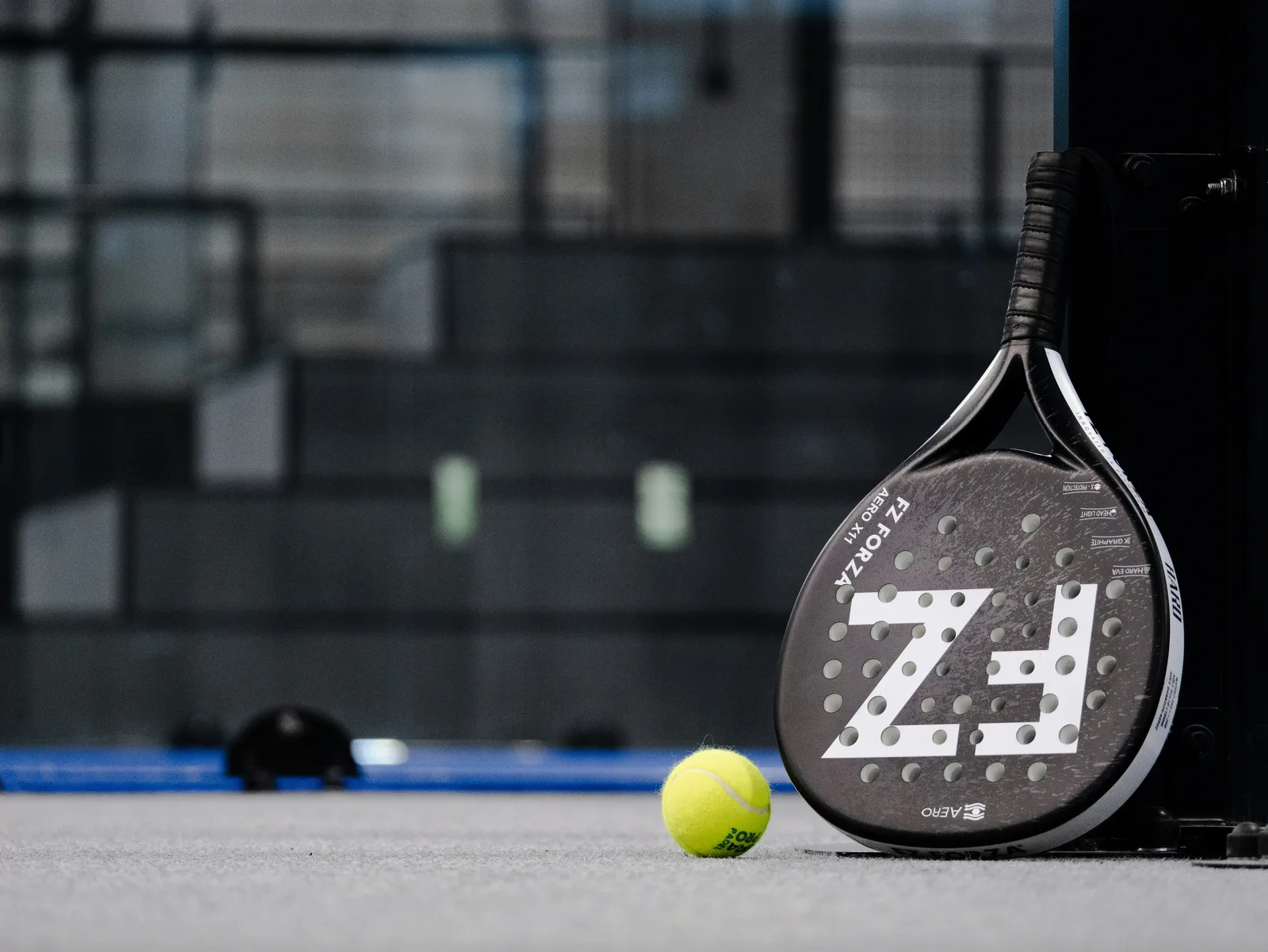
- The serve is underhand. The ball must be hit at or below waist height. No overhead serves allowed.
- You bounce the ball first. The server stands behind the service line and bounces the ball behind it, on their own half, before hitting it.
- It is diagonal, like tennis. The ball has to land in the service box diagonally opposite, on the other side of the net.
- Start from the right. The first serve of each game is from the right side, then you switch sides after every point.
- You get two attempts. A missed first serve gives you a second serve before you lose the point, same as tennis.
- One player serves the whole game. The serve then passes to the other team, and partners take turns on their team's service games, so the order runs A1, B1, A2, B2.
- Glass after the bounce is fine, anything else is not. After bouncing in the correct box, the serve may hit the back or side glass and is still in play. If it hits any wall before bouncing, or hits the metal fencing after bouncing, it is a fault.
A serve that clips the net or a post and still lands in the right box is a "net" and is replayed; on a second serve only the second serve is repeated. The server must keep one foot behind the service line, must not touch it, and must have at least one foot on the ground when the ball is hit.

Serving order, game by game
- 1A1Serves the first game
- 2B1Serves the second game
- 3A2Serves the third game
- 4B2Serves the fourth game

The walls and glass: what's in, what's out
Legal, ball stays in play:
- The ball bounces on the court, then hits the back or side glass, and a player returns it before it bounces a second time
- The ball bounces on the court, hits the metal fencing above the glass, comes back down, and is returned
- You play the ball against your own back or side wall and it then crosses the net and lands in the opponents' court
Point is over:
- Your shot hits the opponents' glass or fencing before bouncing in their court: you lose the point
- Your shot bounces in the opponents' court and then leaves the court: you win the point (unless the court allows playing outside and they return it)
- The ball bounces twice on your side before you return it, glass or no glass: you lose the point
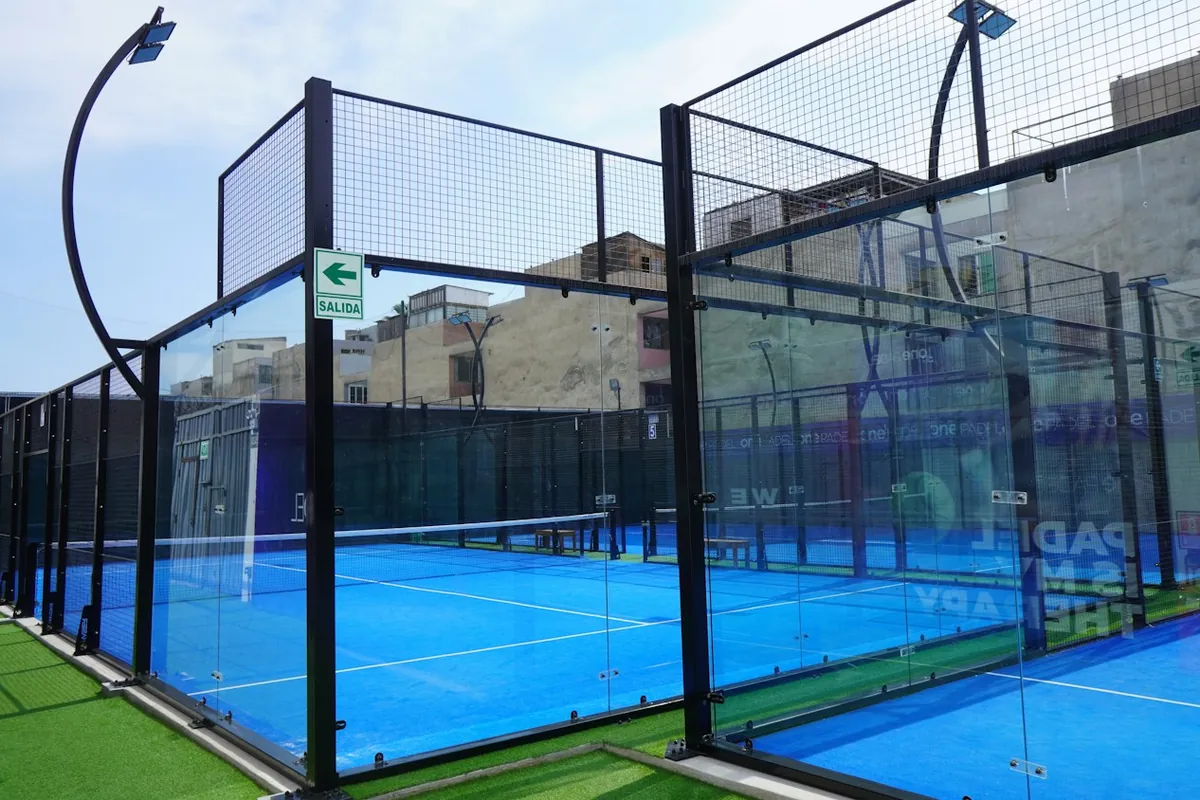
The glass walls are what make padel padel. Once you learn to play the rebound instead of avoiding it, a whole set of shots opens up that tennis simply does not have.
Common beginner scoring mistakes
- Assuming the ball is out the moment it touches the glass. It usually is not. Only worry about the glass if a shot hits the opponents' glass before bouncing in their court.
- Serving overhand out of habit. A habit that takes a few sessions to unlearn if you come from tennis.
- Not confirming golden point, Star Point or deuce before the match starts. Small detail, changes how tight matches actually play out.
- Losing track of whose serve it is. Because the serve rotates through all four players, it is easy to lose track of whose turn it is, especially in a fast, social match with four friends and a couple of beers involved.
Keep exploring the padel series
- Padel Levels Explained: Playtomic Levels and Other Rating Systems, for figuring out roughly where you stand
- How to Find Padel Players Anywhere You Travel, the method we actually use to get a game in a new city
- 4 Apps to Book Padel Courts and Find Players While Traveling, for the tools that make both of the above easier
Gear you'll need
Scoring is free to learn. Court time and equipment are not, and having the right gear makes learning the actual game a lot less frustrating. If you are picking up padel for the first time or getting ready to play on the road, check our guides to the best padel rackets for beginners and travel and the best padel shoes for travelers before your first session.
FAQ
Is padel scoring the same as tennis scoring?
Almost exactly, for points, games and sets: love, 15, 30, 40, game, with sets played to 6 games and a tie-break at 6-6. The differences are padel-specific: the underhand serve, the legal use of the glass and fencing, and clubs that often use a golden point instead of traditional deuce, while the pro tours use the Star Point since 2026.
What is the golden point in padel?
At 40-40, instead of playing a normal deuce with advantage, the next point wins the game outright. It is common in recreational and club-level padel, though not universal, so check before your match starts.
Can the ball hit the wall in padel?
Yes, and it is a normal part of the game, not a foul. Once the ball has bounced in your court, it can hit the back or side glass and the fencing and still be in play, as long as you return it before it bounces a second time. You can also play it against your own wall to get it back over the net. What you cannot do is hit the opponents' walls before the ball bounces in their court.
How many points do you need to win a game in padel?
Four points, the same as tennis, and you need to win by at least two points, with the golden point, the Star Point or traditional deuce deciding what happens at 40-40.
Do you serve overhand or underhand in padel?
Underhand only, at or below waist height, after bouncing the ball behind the service line. An overhead serve is not legal in padel, unlike tennis.
How long is a typical padel match?
Most club and recreational matches are best of 3 sets and take somewhere between 60 and 90 minutes, though it varies with skill level, how many rallies go long, and how often you stop to argue about whether that ball was really out. In casual club play you often book 60 or 90 minutes and play as many games as fit.
When do you change ends in padel?
After the 1st, 3rd and every following odd game of a set, and after every 6 points in a tie-break, according to the FIP Rules of Padel.
What is a super tie-break in padel?
A 10-point tie-break that replaces the third set when a match is level at one set each. The first pair to 10 points wins, with at least a 2-point margin. Not every event uses it, so check the format before you play.
What happens if the serve hits the net in padel?
If the served ball touches the net or a post and still lands in the correct service box, it is called a net and the serve is replayed. On a second serve, only the second serve is repeated.






One Comment