

Best Meditation Apps for Travelers and Digital Nomads in 2026
No affiliate links in this post yet. Every link goes straight to the app's official site. If that changes, we will update this note.
Jetlag, a new timezone every few weeks, a bed that is not yours and a nervous system that never quite knows which country it is in. That is what most nomads meditate against, and it is very different from the quiet home routine most apps are designed for. The best meditation app for travelers is not the one with the biggest name. It is the one that works when you are tired, in a strange room, with spotty wifi and ten minutes between two coworking blocks. So this guide looks at three things: offline use, sleep and jetlag help, and short sessions.
Quick answer
Calm is the best all-round pick for travelers, Medito the best free option, and Waking Up the premium choice for a serious daily practice. Whichever you pick, check the offline options before a long flight or a stay with spotty wifi.
Quick links
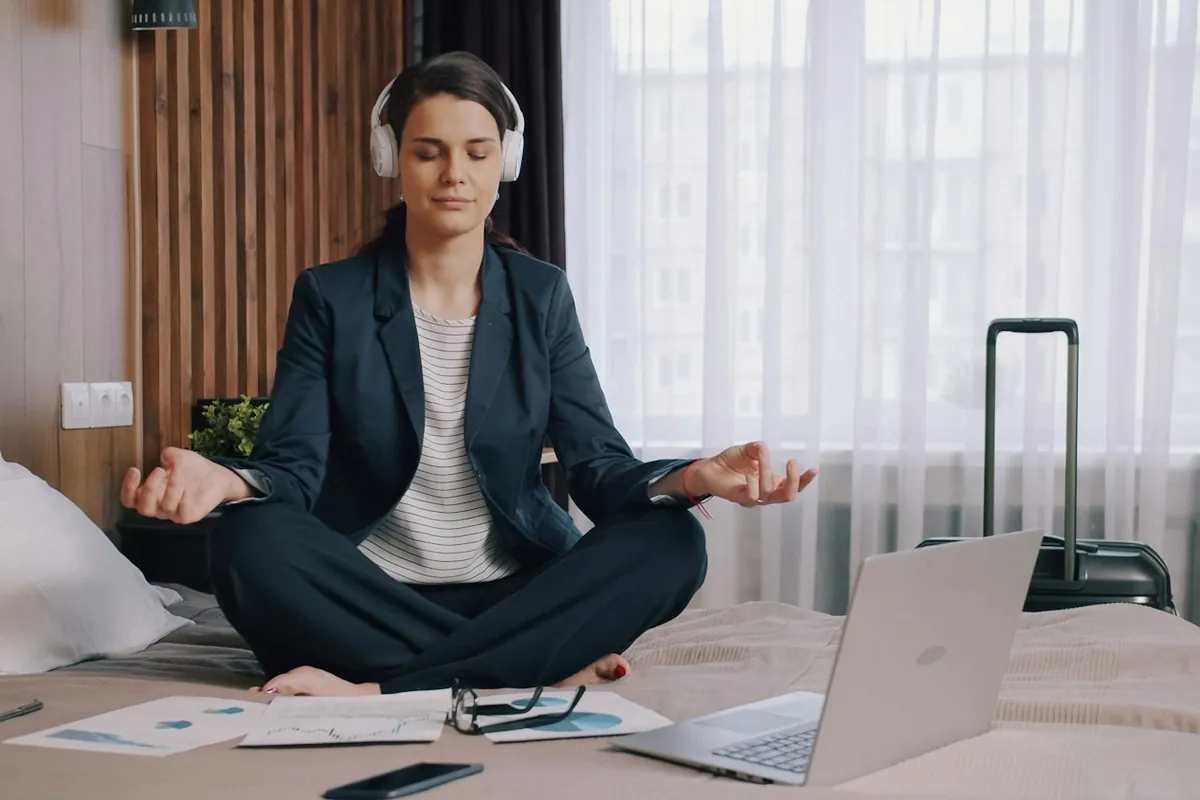
If you are also thinking about the physical side of a travel wellness routine, our guide to travel yoga mats for digital nomads covers the other half of that setup, and both fit naturally into the broader ultimate digital nomad packing list and our guide on how to pack for a year of nomadic travel.
- Calm is the best all-round pick for travelers, Medito the best free option, and Waking Up the premium choice for a serious daily practice.
- Offline downloads are the most important feature for a nomad: Calm and Headspace document them, while Balance has no real offline mode yet.
- Calm has a strong reputation for sleep content, which lines up with jetlag and travel-related sleep disruption.
- Medito is completely free and comes from a nonprofit foundation.
- Whatever you pick, give it a real trial that includes at least one overnight flight or one bad jetlag night.
Quick pick summary
- Best overall for travelers: Calm
- Best free option: Medito
- Best premium, for serious daily practitioners: Waking Up
- Best for browsing by teacher or style: Insight Timer
- Best for simple habit-building: Headspace
- Best minimalist, distraction-free design: Balance
What to look for in a meditation app for travel
Offline downloads. The most important feature for a nomad. Long flights, patchy coworking wifi and restricted countries mean you cannot count on a connection, so look for apps that let you download sessions in advance.
Jetlag and sleep content. Crossing timezones again and again is a different problem from ordinary insomnia. Dedicated sleep and wind-down content helps more here than a general relaxation library.
Short sessions and reminders. A nomad's day rarely has a guaranteed 30 minute quiet block, so a real range of session lengths matters. Reminders usually follow your phone's clock, so reset them after you land.
Depth versus simplicity. Insight Timer offers a huge library of teachers and styles; Balance and Headspace give a simpler, guided structure. Neither is better, it depends on whether you want to explore or be told what to do next.
A free option. Not everyone wants another subscription on top of coworking, SIM cards and travel insurance, so a useful free tier or a fully free app counts.
The 6 best meditation apps for travelers and digital nomads
1. Calm
Best for: travelers who want one dependable app that covers meditation, sleep, and general relaxation without much setup.
Calm is one of the most recognized names in the meditation app space, and it has built a particularly strong reputation around its sleep content, including its well-known "Sleep Stories" format. For a nomad dealing with jetlag and unfamiliar beds, that sleep-focused library is a genuine practical advantage over apps built purely around seated meditation.
What we like
- A strong, well-established reputation specifically for sleep content, which lines up directly with jetlag and travel-related sleep disruption
- Offline downloads are supported, according to Calm's own help center, useful for long flights and unreliable wifi
- Broad enough content library to cover meditation, breathing exercises, and relaxation in one app rather than needing separate tools
What could be better
- The full library sits behind a subscription, and the free tier is more limited than dedicated free apps like Medito
- With such a large content library, it can take some browsing to find what actually fits a short, in-between-meetings session

2. Headspace
Best for: travelers who want a structured, course-like approach to building a meditation habit rather than an open library to browse.
Headspace built its reputation on approachable, animated explanations of meditation concepts and a clear, guided course structure. That structure can be genuinely useful for a nomad who wants to be told what to do next rather than making a decision every time they open the app, which matters when you are already making a lot of decisions living out of a bag.
What we like
- Clear, structured courses rather than an open library, which reduces decision fatigue when you just want to start
- Offline downloads are supported, according to Headspace's own help center
- A well-established, long-running app with a broad general reputation, not a new or unproven product
What could be better
- The more structured, course-based format is less flexible if you want to jump straight to a specific short session without following a sequence
- Full access sits behind a subscription, similar to Calm
3. Insight Timer
Best for: travelers who want to browse a large, varied library by teacher, tradition, or specific topic rather than follow one app's house style.
Insight Timer is built around a large, community-driven library with many different teachers and traditions represented, rather than one single guided-course approach. For a nomad who has been exposed to different meditation styles while traveling, or who wants to explore rather than follow a fixed program, that breadth is a real advantage.

What we like
- A notably large, varied library spanning many teachers and traditions, useful if one style or voice has not clicked for you
- A substantial portion of the content is accessible without a paid subscription, more generous than some competitors' free tiers
- Includes a simple standalone timer function for unguided, silent meditation, useful if you sometimes just want a bell and nothing else
What could be better
- The sheer size and variety of the library can feel less curated than a more structured app, more effort to find the right session
- Offline access and some features are limited on the free tier, check the current app listing for what is included before assuming full offline access
4. Waking Up
Best for: travelers who want a more philosophically grounded, less mainstream-wellness approach to meditation.
Waking Up was created by Sam Harris and is positioned differently from most mainstream meditation apps, leaning into the underlying philosophy and theory behind meditation practice rather than only guided relaxation. It tends to appeal to people who want to understand why a practice works, not just be guided through it.
What we like
- A distinct, more analytical approach compared to the wellness-app tone of most competitors, which some long-term practitioners specifically prefer
- Anyone who cannot afford the subscription can request a free membership, according to Waking Up's own site
- Includes theory and discussion content alongside guided sessions, useful for travelers who like to read or listen deeply rather than just follow along
What could be better
- The more philosophical, analytical tone will not appeal to everyone, especially if you want something purely simple and guided
- Less oriented around travel-specific features like sleep stories compared to Calm
5. Balance
Best for: travelers who want a simpler, more minimalist app experience without an overwhelming amount of content to choose from.
Balance is built around a more personalized, streamlined approach, aiming to adapt to how your practice is going rather than presenting a huge static library upfront. For a nomad who finds a big content library overwhelming when they just want to sit down and meditate for ten minutes, that simplicity is the main appeal.
What we like
- A cleaner, less overwhelming interface compared to library-heavy apps like Insight Timer
- Designed around adapting to your ongoing practice rather than requiring you to browse and choose every time
What could be better
- Smaller overall content library than Calm, Headspace, or Insight Timer, which may matter if you want variety over time
- Less specifically built around travel or jetlag content compared to Calm's sleep-focused library
- No real offline mode yet, according to Balance's own help center; its workaround is to open a session and tap Begin while you are still online so it loads in advance

6. Medito
Best for: travelers who want a genuinely free, no-subscription option without a paywalled tier.
Medito is built and maintained by the nonprofit Medito Foundation and is positioned as a completely free meditation app, without the freemium-then-paywall structure most of the other apps on this list use. For a nomad who does not want another recurring subscription added to their monthly costs, that matters more than any single feature.
What we like
- Free to use without the paywalled premium tier structure common across this list
- Comes from a nonprofit foundation rather than a venture-backed subscription business, a different incentive structure worth knowing about
- Covers foundational, structured meditation courses as well as standalone sessions
What could be better
- Smaller content library than the larger subscription apps on this list, fewer teachers and styles to browse
- Less brand recognition than Calm or Headspace, so fewer people you meet on the road will already be using it too
Quick comparison
| App | Approach | Free tier available | Best for |
|---|---|---|---|
| Calm | Broad library, strong sleep focus | Limited | Jetlag and sleep-focused travelers |
| Headspace | Structured, course-based | Limited | Habit-building, less decision fatigue |
| Insight Timer | Large, varied community library | Generous | Browsing by teacher or tradition |
| Waking Up | Philosophy-driven, analytical | Free trial, free membership on request if you cannot afford it | Practitioners who want the theory too |
| Balance | Minimalist, adaptive | Free trial | Simplicity over a big library |
| Medito | Free, nonprofit | Fully free | No-subscription travelers |
How to choose a meditation app for travel

Put offline downloads high on your list. An app you cannot use on a long flight or in a low-connectivity guesthouse is a weaker travel tool, which is why Balance, with no real offline mode yet, only makes sense if you mostly meditate somewhere with wifi.
Weigh sleep and jetlag content seriously if timezone changes are a regular part of your travel pattern. This is one area where Calm in particular has built a specific, well-known reputation, and it is a genuinely different problem than general daytime stress.
Think honestly about whether you want structure or a library to browse. If decision fatigue from constant travel planning is already a problem, a more structured app like Headspace or Balance removes one more decision from your day. If you like exploring and switching things up, Insight Timer's breadth is the better fit.
Do not assume the most expensive or most famous app is automatically the right one for your budget. Medito exists specifically for travelers who do not want another subscription, and it is a legitimate full option, not a stripped-down trial version of something else.
Trials and free options, checked on 5 October 2026 on the official sites: Headspace offers a 14 day free trial, Waking Up a 7 day free trial plus a free membership if you cannot afford it, and Medito says it has no paywalls, no ads and no premium tier. Medito is run by a registered non-profit in the Netherlands. Prices differ by country, so check the current price in the app store before you subscribe.

How we put this list together
We have not tested these apps in our own practice, and we are not claiming a formal side by side test. This guide is based on each app's stated features, official help pages, app store listings and feedback from the nomad and meditation community, and it focuses on travel problems: offline access, jetlag and unpredictable schedules. Where we could not confirm a feature, we say so instead of guessing. Whatever you pick, give it a real trial that includes at least one overnight flight or one bad jetlag night.

FAQ
Do meditation apps actually help with jetlag?
They will not eliminate jetlag, but sleep-focused content, like Calm's wind-down and sleep material, can genuinely help you fall asleep faster in an unfamiliar timezone, which is a real part of how jetlag resolves. Treat it as one tool alongside light exposure and a consistent sleep schedule, not a complete fix on its own.
Which meditation app works best without wifi?
Calm and Headspace both document offline downloads in their own help centers. Balance says it has no real offline mode yet. For the others, check the offline settings inside the app before a long flight, since exactly what is downloadable can vary by content type and subscription tier.
Is a free app like Medito actually good enough, or should I pay for a subscription app?
Medito is a legitimate, complete option, not a limited trial version. Whether you need more than it offers depends on whether you want a much larger library to browse, in which case a larger library like Insight Timer, or a subscription app like Calm, gives you more room to explore.
How short can a meditation session be and still help?
Most of the apps on this list include short sessions, often just a few minutes, alongside longer options. A short, consistent session between coworking blocks is generally more sustainable for travel life than trying to protect a long uninterrupted block every day.
Can I use these apps if I am completely new to meditation?
Yes. Headspace and Balance in particular are built around guiding beginners through a clear starting structure, while Insight Timer and Medito also include foundational, beginner-oriented courses if you prefer a more self-directed start.
Do these apps adjust reminders automatically as I change timezones?
Do not count on it. Reminders generally follow your phone's clock, so reset your reminder time after you land.






3 Comments