
Deel Review 2026: How to Get Paid as a Remote Contractor
Some links on this page earn us a small commission, at no extra cost to you. Full disclosure.
Quick answer
For remote contractors who work with foreign companies, Deel is the cleanest way to get paid in 2026. This Deel review covers how it works for remote contractors. For contractors it is free, because the employer pays the fees.
Checked on 5 October 2026 against deel.com: the standard contractor plan costs employers $49 per contractor per month, and Deel says it supports 150+ countries.
The platform
Deel
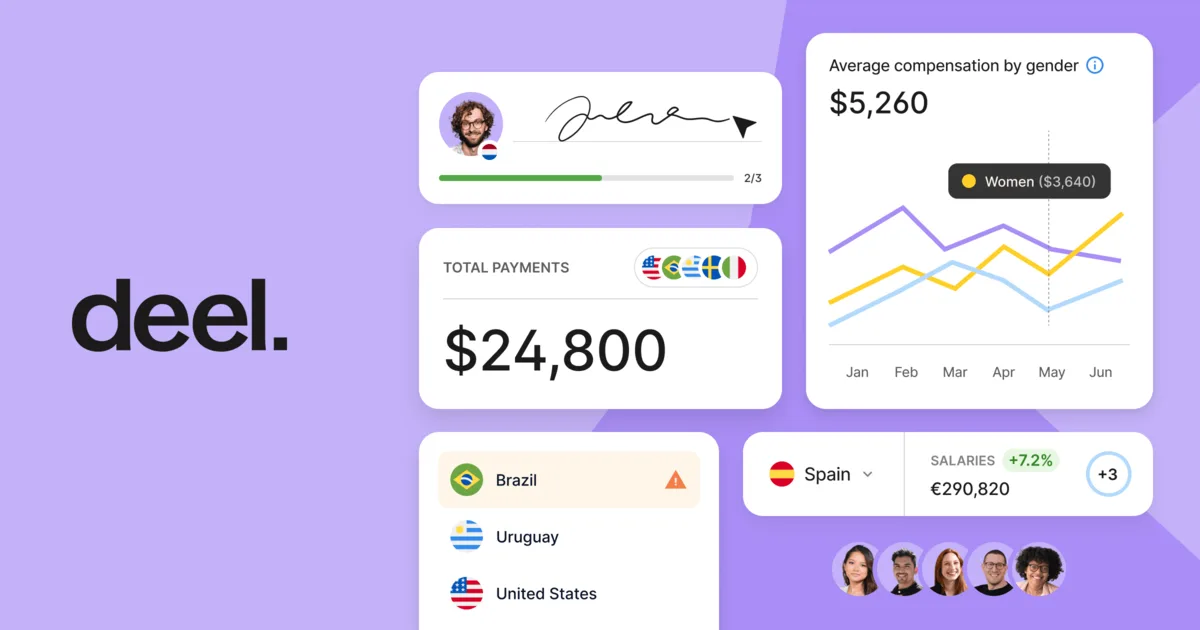
Compliant contracts, automated invoicing and several payout methods. Read more
Getting paid as a remote contractor across borders is full of friction. International wire fees, currency conversion losses, missing tax forms, late payments because someone forgot to fill in a SWIFT code. Deel turns that mess into a single login where you file your invoice, pick how you want to be paid, and the money lands in your account a few days later.
This is an honest review of Deel from the contractor side, with a look at the employer side. The good. The friction. And the alternatives worth knowing.

The Short Answer
For remote contractors who work with foreign companies, Deel is the cleanest way to get paid in 2026. The platform handles contracts, compliance, invoicing, and pays you in your preferred currency or method (bank transfer, PayPal, Wise, crypto, even local payouts in many countries).
For employers, Deel handles compliance across 150+ countries and lets you hire contractors and EOR employees without setting up local entities. The fees are higher than DIY but the time saved is real.

For contractors, Deel is free. The employer pays the fees.
What the employer pays: Deel's pricing page (checked 5 October 2026) lists the standard contractor plan at $49 per contractor per month and Contractor of Record at $325 per contractor per month. If your client asks what this costs them, that is the number to give.
What Deel Actually Does
Deel is a hiring and payments platform built for the remote work era. The features that matter to a contractor:
- Compliant contracts (the platform generates a contract that meets local labor law for the country you live in)
- Automated invoicing (you submit an invoice at the end of each month, the system handles the rest)
- Multiple payout methods (bank transfer, PayPal, Wise, Payoneer, crypto in some regions, local mobile money)
- Tax forms (Deel generates the right tax forms for your country, including W 8BEN for US clients)
- Withdraw card (a Deel Mastercard you can use to spend or withdraw your earnings)
- Multi currency support (get paid in USD, EUR, GBP and many others, convert in app)
The whole flow takes maybe 30 minutes to set up the first time. After that you log in once a month to confirm your invoice and the payment lands on the date the contract specifies.

The Real Workflow
Here is what a typical month looks like:
That is the whole monthly cycle. Compared to manually sending an invoice, chasing payment, dealing with bank fees and missing forms, this is night and day.
Payout Methods Compared
| Method | Speed | Fee | Best For |
|---|---|---|---|
| Bank transfer (local) | 1-3 days | Low or free | Most countries |
| Wise (formerly TransferWise) | 1-2 days | Low | Multi currency holders |
| PayPal | Same day | Higher | Quick access, smaller amounts |
| Payoneer | 1-2 days | Medium | Countries where local bank is harder |
| Crypto (USDC, USDT) | Minutes | Low | Specific situations, comfort with crypto |
| Deel Card | Instant | Mostly free | Spending directly, ATM withdrawals |
Wise is a popular payout choice: good exchange rates, low fees, and the money lands in a multi currency account you can hold in EUR or USD. For very large invoices, local bank transfer is sometimes cheaper.

Where Deel Wins
The big one is compliance. Different countries have different rules about contracts, tax withholding, minimum invoice requirements and worker classification. Getting this wrong as a contractor (or as an employer) can mean fines or back taxes. Deel automates this in the background. The contract is generated to be compliant with the laws of the country the contractor lives in.
The other big win is speed. Payment follows the schedule in the contract, instead of a week late after three follow up emails. For freelancers who used to chase invoices, this alone is worth a lot.
And the third win is the Deel Card. They issue a Mastercard linked to your Deel balance, so you can spend your earnings directly without converting to your home currency first. For nomads who hold balances in multiple currencies, this is a quiet game changer.

Where Deel Falls Short
Three real downsides.
First, the platform takes a small cut on currency conversion. Not as bad as a bank, but a touch worse than going through Wise directly. If you can get paid in your home currency, do that.

Second, the contractor side is great but the employer side has friction for very small clients. If your client is a one person freelance shop, paying through Deel may feel like overkill for them. Some smaller clients prefer to pay directly through PayPal or Wise to skip the platform.
Third, customer support is fine but not fast. Most questions get answered in 24 to 48 hours via in app chat. For an urgent payment issue, that delay can feel long.

Who Should Use Deel
- You are a contractor working with companies in 2+ countries
- Your monthly invoices are large enough to care about fees and exchange rates
- You want a compliant contract and proper tax docs without hiring a local accountant
- You travel and live in different countries through the year
- You want a single dashboard to manage all your client work
- You have one client in your home country and they pay you locally with no issues
- Your monthly invoice is under 1000 USD and the fees would eat the savings
- You and your client both prefer to keep it informal with PayPal or Wise
The Alternatives Worth Knowing
A few competitors worth considering:

Remote is the closest competitor. Similar features, similar pricing, slightly different country coverage. If your specific country is not well covered on Deel, check Remote.
Wise Business is a lighter option. No contracts or compliance, just multi currency receiving accounts and great exchange rates. If you just need a way to receive payments without the platform layer, Wise Business is the cheaper path.
Payoneer is the older player. Used widely by freelancers on platforms like Upwork. Decent payout speeds, slightly higher fees. The Payoneer card is useful for nomads in countries where opening a local bank is hard.
Direct bank transfer is still the cheapest if your client is willing to do the work. SWIFT wires take time and have fees, but for large amounts the math sometimes still favors a direct wire.
Tax Implications Worth Knowing
Deel handles the invoicing and the contract, but it does not handle your taxes. You are still responsible for declaring your income in whatever country you are tax resident in. For most nomads this means filing in your home country, or in the country where you have spent more than 183 days in a year.

The platform generates a year end summary of your earnings that makes tax filing much easier. But the actual filing is on you.
For more on the nomad tax topic, our digital nomad tax residence guide covers the 5 best countries to be tax resident in.
Key takeaways
- For remote contractors working with foreign companies, Deel is the cleanest way to get paid in 2026.
- For contractors, Deel is free. The employer pays the fees.
- Its biggest wins are compliance, speed and the Deel Card.
- Deel is overkill if you have one local client or invoice under 1000 USD a month.
- Deel does not handle your taxes, so you still file in your tax residence.
Final Take
Deel solves a real problem: getting paid clean, on time, in the currency you want, with proper documentation. For any remote contractor working across borders, it is one of the better investments your client can make on your behalf (especially since it is free for contractors).

The wrong move is staying on slow international wires or chasing invoices through email. The right move is asking your next foreign client if they would be open to paying you through Deel. Most say yes once they see how clean the employer side is too.
For the rest of the nomad finance setup, our travel banking guide and Wise vs Revolut vs N26 comparison cover the wider stack. If you also sell coaching or courses to your own audience, our ConvertKit vs Mailchimp comparison covers the email side.
FAQ
Is Deel free for contractors?
Yes. The contractor side is free to use. The employer pays the platform fees, which are typically 49 USD per contractor per month or a percentage of payroll for EOR employees.
How does Deel compare to PayPal for contractors?
Deel handles the contract, compliance, and tax docs in addition to the payment. PayPal just handles the payment. For one off small invoices PayPal is simpler. For ongoing contracts across countries Deel saves much more time.
Can I get paid in crypto with Deel?
Yes, in many regions. Deel supports payouts in USDC and USDT among others. Check the available methods for your country in the app.
Is Deel safe to use?
Yes. Deel is a venture backed company valued at about 17.3 billion USD after its October 2025 funding round, with security and compliance certifications. It is widely trusted by companies of all sizes and millions of contractors globally.
How fast does Deel pay?
Most payouts arrive 1 to 5 business days after the client approves the invoice, depending on the payout method. The Deel Card and crypto payouts are nearly instant.
What does Deel cost an employer?
On Deel's own pricing page (checked 5 October 2026) the standard contractor plan is $49 per contractor per month and Contractor of Record is $325 per contractor per month.
Updated:
Affiliate disclosure. This post contains affiliate links. If you click and buy something, this site earns a small commission at no extra cost to you. Picks are based on published specs, independent reviews and manufacturer information, and we only recommend what we would use ourselves. As an Amazon Associate I earn from qualifying purchases. Read the full affiliate disclosure.