
Best eSIM
Some links on this page earn us a small commission, at no extra cost to you. Full disclosure.
Quick answer
Airalo is the top pick here, our best eSIM for travel. It has the reliability and coverage to be the first choice on every new trip.
Checked on 5 October 2026 on each provider's own site: Airalo, Holafly and Nomad each list 200+ destinations, and Airalo country packs start from $4.00.
Our pick

aloSIM
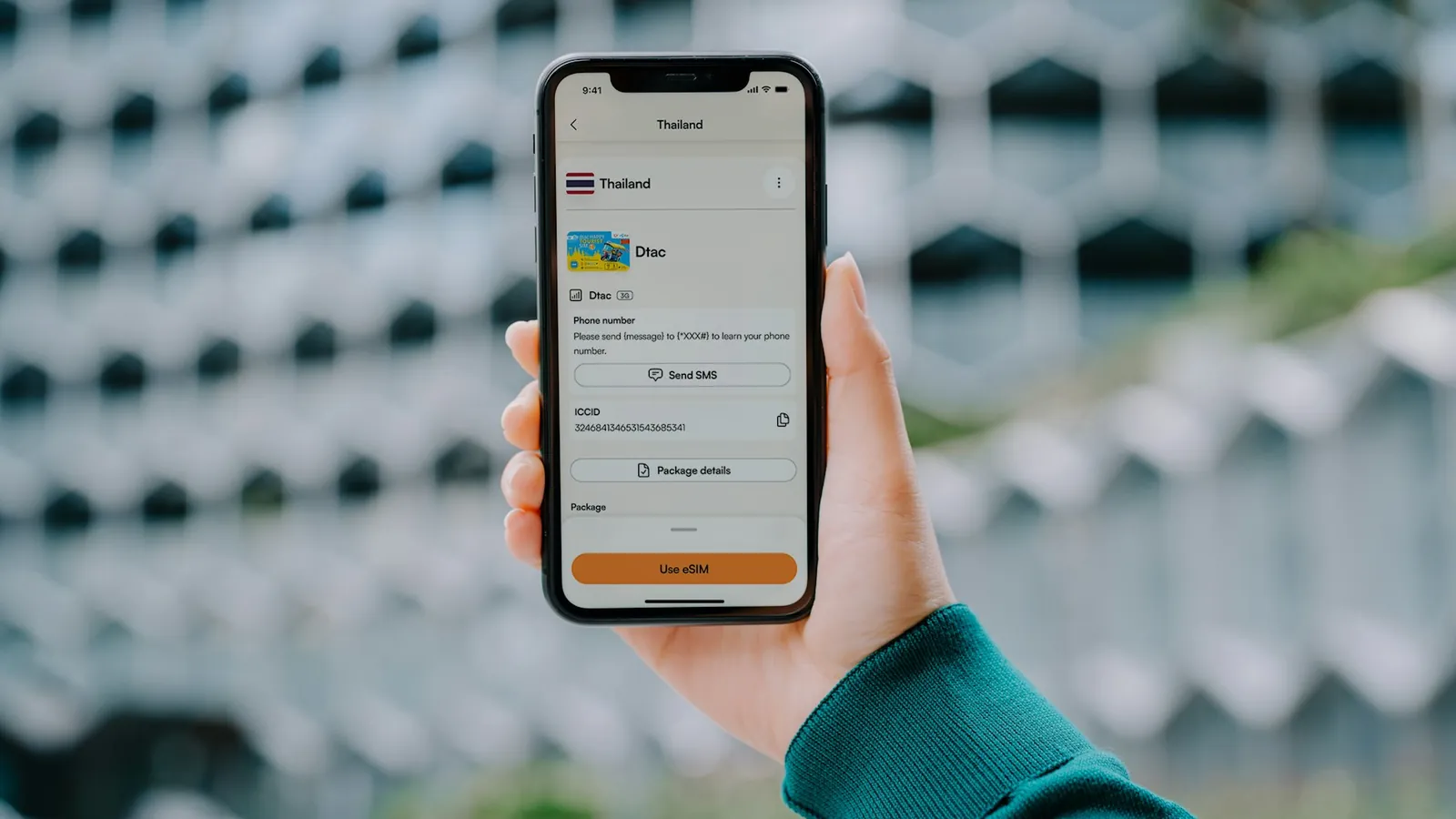
Small country packs from $3.50 for 7 days and 1 GB, for example in Thailand (Indonesia is $4.50 for the same pack; checked on 4 October 2026 on aloSIM's own site, in USD, prices differ per country), 200+ destinations, install straight from the app Read more



What Is an eSIM (and Why Should You Care)?
An eSIM is a digital SIM card that lives in your phone's software instead of a tiny plastic chip. You download a profile, switch networks instantly, and you're done. No hunting for local SIM shops. No waiting for activation. No plastic cards jamming in unfamiliar slot sizes.
For digital nomads this is close to a superpower. With an app like Airalo, switching from Thailand to Vietnam to Indonesia takes maybe 90 seconds per country, without touching your phone's hardware.
The catch: not every phone supports eSIM. Check Apple's list or your Android specs before buying. Some phones look modern but have no eSIM, so check first.

The Top 5 eSIM Providers
1. Airalo: Best Overall

Airalo
The NomadsToolsLab team uses Airalo more than any other provider. It works everywhere we go, the app is genuinely intuitive, and the pricing is transparent without surprise fees.
| Feature | Details |
|---|---|
| Countries/Regions | 200+ |
| Data Plans | From about $4 (Sept 2026) |
| Activation | Instant (usually <5 mins) |
| Customer Support | In-app chat, usually fast |
What we like
- Coverage is broad, with 200+ countries and regions.
- The app shows exactly which networks you're connecting to. No mysteries.
- Country plans start from about $4 (Sept 2026), enough for email and maps.
- You can buy a second profile before your current one expires. Zero downtime.
What could be better
- Premium pricing compared to budget providers. You're paying for reliability, though.
- Data speeds vary by country. Sometimes you get 4G, sometimes it's 3G. Depends on local networks.
- Some countries have data caps that aren't obvious until you look closely.
2. Holafly: Best Unlimited Data

Holafly
Code NOMADSTOOLSLAB gives 5% off at checkout.
If you're streaming videos or doing video calls constantly, Holafly's unlimited plans are genuinely worth the premium.
| Feature | Details |
|---|---|
| Countries | 200+ |
| Unlimited Plans | Price depends on destination and days, check the current price on Holafly |
| Validity | Depends on destination, Holafly lists plans from 1 to 90 days |
| Customer Support | Email, chat (slower than Airalo ) |
| Best For | Long-term travel in one region |
What we like
- Unlimited data with no fixed data allowance. A fair use policy applies, so speed can be reduced temporarily if usage is unusually high.
- Great for creators who need reliable uploads and streaming.
- Choose how many days you need when you buy.
What could be better
- Significantly more expensive than Airalo's standard plans.
- Unlimited plans are overkill if you only need a little data.
3. Nomad eSIM: Best for Short Trips

Nomad eSIM
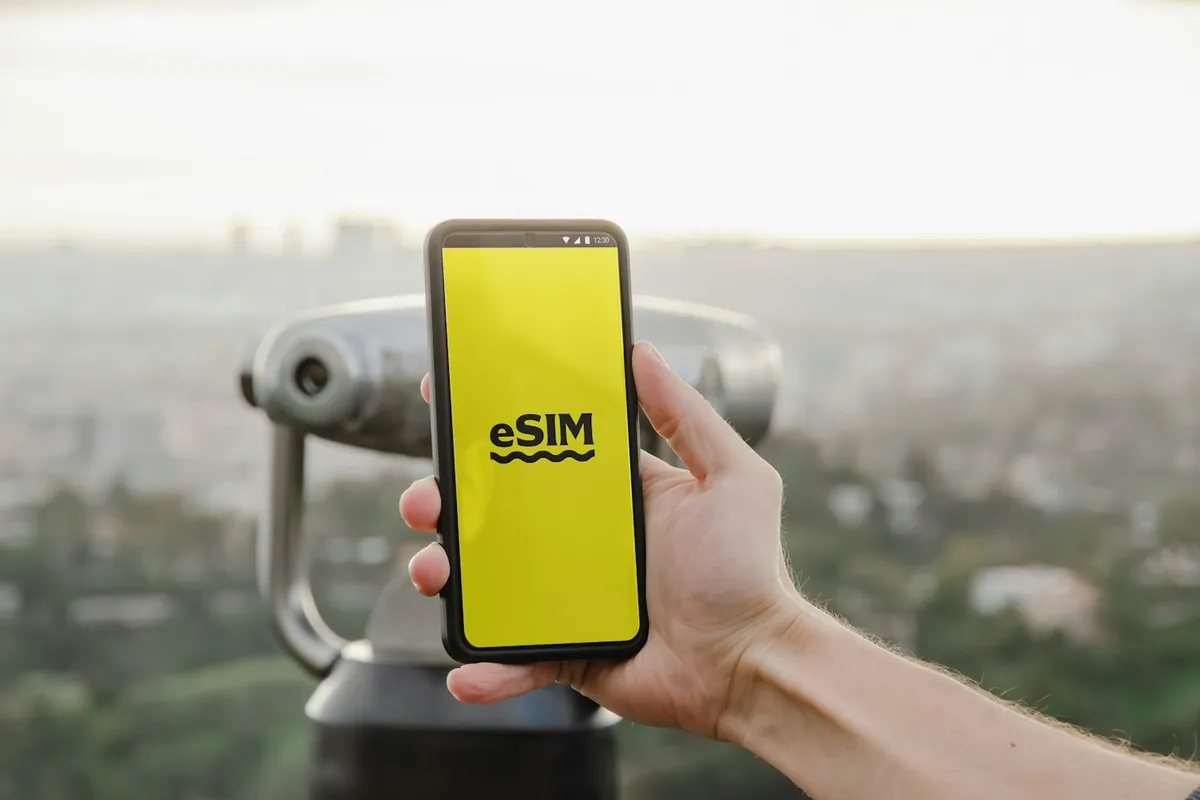
Nomad eSIM covers 200+ destinations, and its regional plans are handy when you move country every few days.
| Feature | Details |
|---|---|
| Coverage | 200+ destinations |
| Regional Plans | $5-$20 |
| Validity | 7-30 days |
| Data Speeds | 4G/LTE standard |
| App Quality | Clean, minimal, fast |
What we like
- Regional approach means cheaper rates for multi-country trips.
- The app is the cleanest we've used. Zero bloat, zero confusion.
- No activation delays. Plans activate within minutes, sometimes seconds.
What could be better
- Coverage is similar to Airalo and Holafly, but check the plan for your exact country before buying.
- Smaller company means less support redundancy. Fewer local teams.
- Data plans are smaller. Designed for light to moderate use.
4. aloSIM: Best Budget
aloSIM
For a night or two when you just need maps, aloSIM has cheap small plans.
Yesim is another eSIM option, with plans for 170+ countries listed on its site.
Saily is another eSIM option, from the team behind NordVPN.
| Feature | Details |
|---|---|
| Countries | 200+ |
| Pricing | From $3.50 for 7 days and 1 GB, e.g. Thailand (checked 4 October 2026) |
| Flexibility | Buy what you need |
| App | Functional but dated UI |
What we like
- Cheap entry point, with plans from $3.50 for 7 days and 1 GB, for example in Thailand (checked 4 October 2026).
- Massive country coverage, 200+ countries.
What could be better
- App design is older. Not as intuitive as competitors.
- Small plans get expensive if you burn data quickly.
- Support is minimal. You're largely on your own.
5. Google Fi: Best for US-Based Nomads

Google Fi
If you're a US citizen with a US phone bill, Google Fi is almost magical.
| Feature | Details |
|---|---|
| Countries | 200+ |
| Base Cost | $20/month |
| Data | $10 per GB on the Flexible plan |
| Activation | Automatic |
| Best For | US-based travelers |
What we like
- Zero activation steps. Your US number just works everywhere.
- Works with your existing Google account and phone number.
- The Flexible plan is $20 a month plus $10 per GB.
What could be better
- Requires a US phone number and Google Play account. Non-US travelers are locked out.
- $20 monthly base fee even if you don't travel.
- Data pricing ($10/GB) is higher than buying eSIM plans upfront.
Quick Comparison: All 5 at a Glance
| Provider | Coverage | Best For | Price Range | Speed |
|---|---|---|---|---|
| Airalo | 200+ | Reliability | From about $4 | Fast |
| Holafly | 200+ | Unlimited Data | Depends on destination and days | Fast |
| Nomad eSIM | 200+ | Short Trips | $5-$20 | Good |
| aloSIM | 200+ | Budget | From $3.50 for 7 days, 1 GB (4 Oct 2026) | Good |
| Google Fi | 200+ | US Travelers | $20+data | Fast |
Why this matters

Why Data Is Your Lifeline
Landing somewhere with a dying phone and no data is a classic travel headache: no maps, no messages to your host, no ride app.
That's when we realized: data is the lifeline of digital nomad life. No data means no maps, no translation apps, no ability to message your host. Just pure panic.
This guide compares the main eSIM providers on what matters when you need data fast.
How to Set Up an eSIM (The Actual Process)
- Check that your phone supports eSIM. Settings > General > About (iPhone) or Settings > About Phone (Android). No eSIM option means these providers will not work.
- Download the provider's app. Search for Airalo, Holafly, Nomad eSIM, aloSIM or Google Fi and create an account.
- Choose your plan. Pick a country or region and a data amount; the app shows the exact cost upfront.
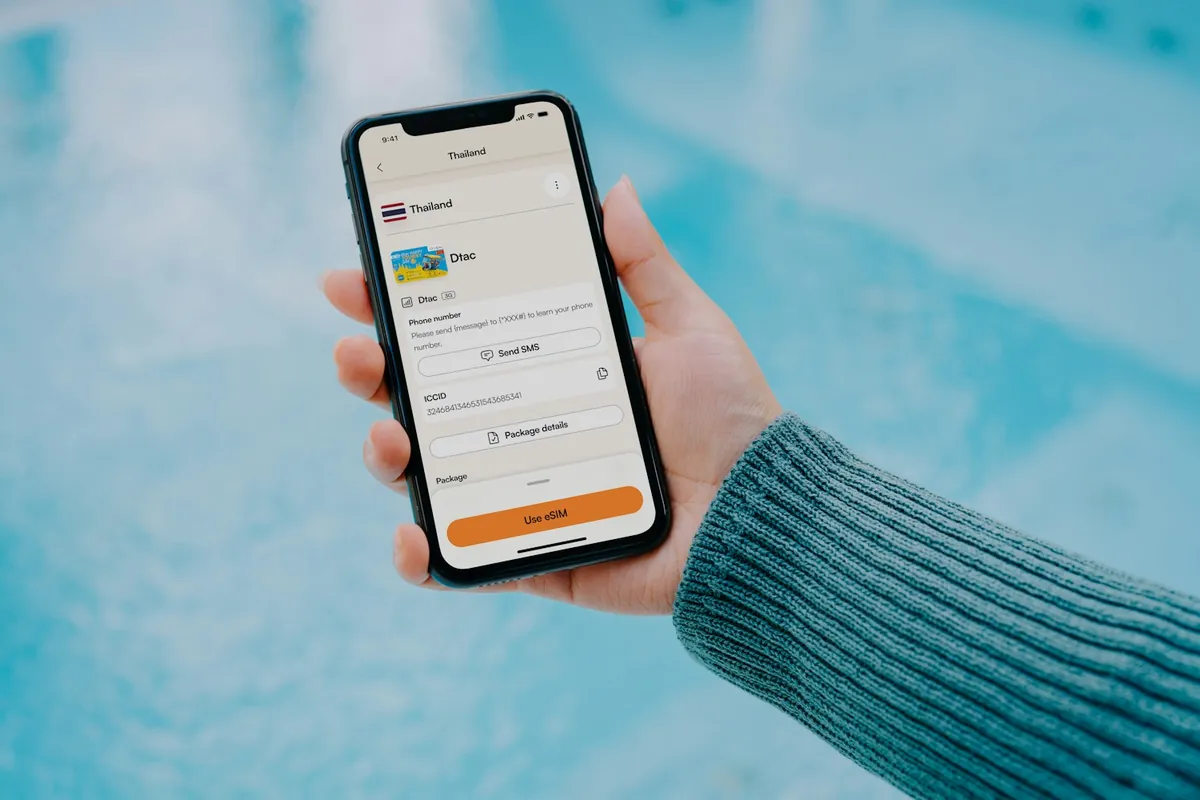
- Install the eSIM profile. Scan the QR code under Settings > Mobile > Add Cellular Plan (or similar). It takes 2 to 5 minutes.
- Switch networks. Toggle between your physical SIM and the eSIM in Settings: one for calls, one for data.

Common Questions
Can I use two eSIMs at once?
On newer phones (iPhone XS+, Samsung S20+), yes. You can have one eSIM for calling and another for data. Older phones can only use one eSIM at a time.
What happens if my eSIM stops working mid-trip?
Switch to your physical SIM immediately. Most providers have in-app support chat. In-app support is usually the fastest route with Airalo.
Is it better than getting local SIM cards?
Honestly, it depends. eSIM is faster and easier, especially if you're moving frequently. Local SIMs are sometimes cheaper if you stay in one country for weeks. For most short stays, the speed and convenience are worth the extra few dollars.
Will an eSIM give me a phone number?
Usually not. Airalo's help center says most of its eSIMs are data only, and some packages include calls and texts; the plan details show which (checked on 5 October 2026). WhatsApp, iMessage and FaceTime calls work on any data plan.
What if my country isn't covered?
Fall back to your home country's roaming plan (usually expensive but available as backup) or buy a physical SIM at the airport. Most countries have airport SIM shops.
Want a closer look at our top pick? Read our Airalo review, or see the Airalo vs Holafly vs local SIM comparison.
Our Verdict
Airalo is the top pick here. It has the reliability and coverage to be the first choice on every new trip. For longer stays with heavy data use, Holafly's unlimited plan is worth switching to.
For budget-conscious travelers, aloSIM works fine if you're light on data. For US-based nomads, Google Fi eliminates the mental overhead, it just works.
The real win: connectivity stops being a worry. You land, turn on the eSIM line and you are connected within minutes.
Updated:
Choosing between providers? See our Airalo vs Holafly vs Nomad eSIM comparison. For plan costs, see our Airalo prices guide.
Affiliate disclosure. This post contains affiliate links. If you click and buy something, this site earns a small commission at no extra cost to you. Picks are based on published specs, independent reviews and manufacturer information, and we only recommend what we would use ourselves. As an Amazon Associate I earn from qualifying purchases. Read the full affiliate disclosure.
Your next step