
Train and Bus Travel in Southeast Asia for Digital Nomads
Some links on this page earn us a small commission, at no extra cost to you. Full disclosure.
Thailand, Vietnam, Malaysia and Indonesia all run their own state or state-linked railway, and all four have a dense network of long-distance buses on top of that. Between them you can cover almost any route without touching a plane. This guide covers train and bus travel in Southeast Asia for digital nomads. Omio is the one booking platform we partner with for trains and buses (resellers like 12Go, Trainline and Busbud are not partners of this site), and every other link below goes straight to the railway or bus company's own official site.
Quick answer
Book state trains directly through each railway's own site (links below per country) and buy bus tickets at the station or through the operator's counter; there is no single site that covers all four countries yet. Whatever you take, pack an eSIM for data at the station, a travel insurance policy that covers the whole trip, comfort gear for the long hauls, and a way to lock a bag you cannot watch on a night bus.
What actually helps on a long train or bus ride
Long-Haul Comfort Gear
Neck pillow, earplugs and a powerbank for the overnight train or bus. Read more


Airalo
Country and regional eSIM plans if aloSIM does not cover your route. Read more


Anti-Theft Travel Kit
A cable lock and a slash-resistant bag for a hold you cannot watch. Read more

Thailand: State Railway of Thailand and Government Buses
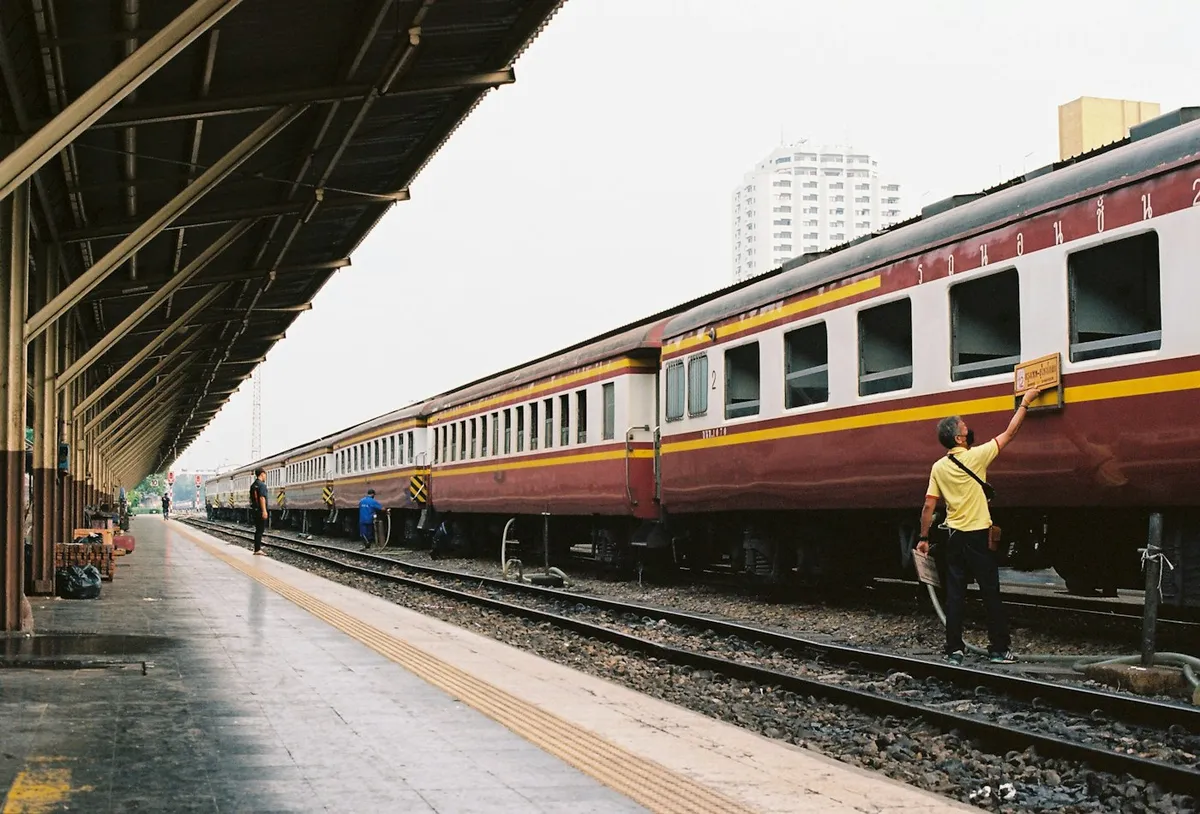
The State Railway of Thailand (SRT) is the country's own operator, running four main lines out of Bangkok: north to Chiang Mai, northeast to the Isaan region and Nong Khai on the Laos border, east toward Cambodia, and south down the peninsula toward Surat Thani, Hat Yai and the Malaysian border. Third class is cheap and slow with open windows and fans; second class adds air conditioning and reclining seats; first class and sleeper berths are worth it on an overnight run like Bangkok to Chiang Mai. Book directly through SRT's own online ticketing portal at dticket.railway.co.th, or in person at any station.
For everywhere the train does not reach, Thailand's state-owned bus company, The Transport Co., Ltd. (บขส., known locally as Bor Kor Sor), runs an extensive network of routes out of Bangkok's main bus terminals. It has operated the country's intercity coach network for decades and is the safest default when you are not sure which private operator to trust. Bangkok's Mo Chit (Northern) terminal covers the north and northeast, while Southern and Eastern terminals cover their respective directions.
Vietnam: The Reunification Express and Sleeper Buses

Vietnam National Railway (Đường Sắt Việt Nam, VNR) runs the famous Reunification Express line, the full length of the country from Hanoi to Ho Chi Minh City, with stops at Hue, Da Nang and Nha Trang along the way. A soft sleeper berth is the standard way to cover an overnight leg like Hanoi to Da Nang without losing a day. Book through the operator's own site at vr.com.vn or the online ticketing portal at dsvn.vn; be aware that plenty of travel agency sites sell Vietnam train tickets and are not the official operator, so check the domain before you pay.
Buses in Vietnam are run by private companies rather than a single state operator. Overnight "giường nằm" (sleeper) buses, with reclining or fully flat berths in place of seats, cover routes a train does not reach, such as Hanoi to Sapa or Ho Chi Minh City down to the Mekong Delta. Buy tickets at the bus company's own office or counter at the departure point; a hotel or hostel front desk can usually point you to the nearest reliable operator for your route.
Malaysia: KTM Electric Train Service and Express Buses
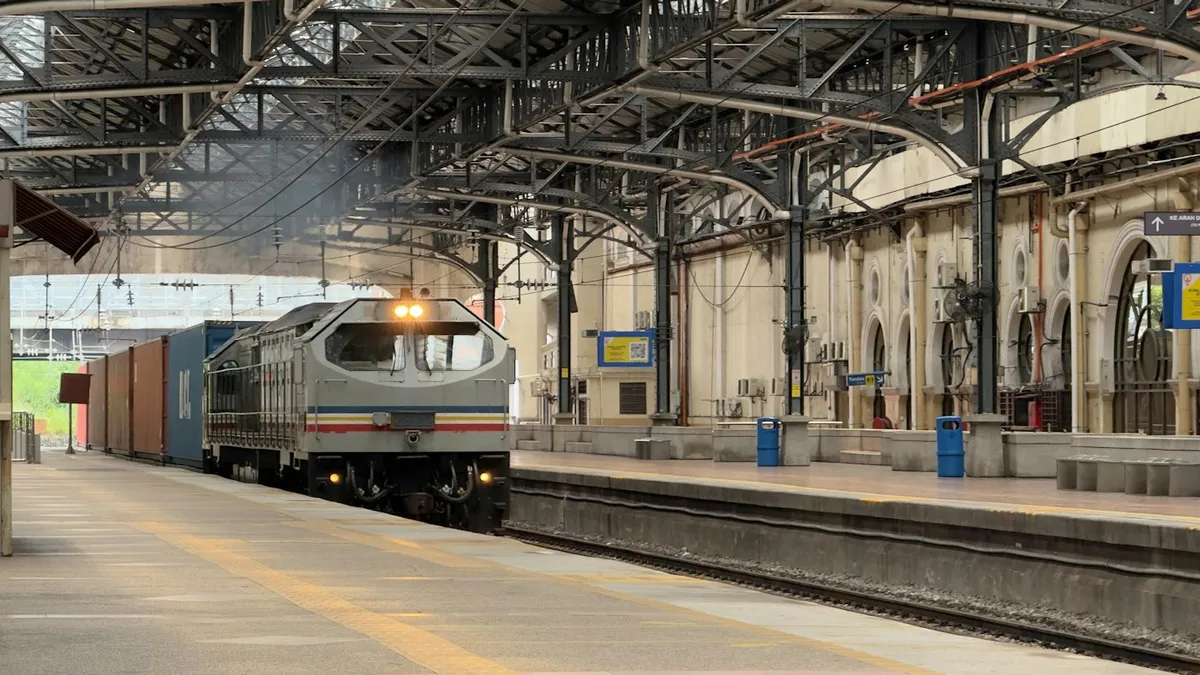
Keretapi Tanah Melayu Berhad (KTMB) runs Malaysia's rail network. The Electric Train Service (ETS) is the fast, comfortable option on the west coast route between KL Sentral, Ipoh, Butterworth (for Penang) and Padang Besar on the Thai border, while the slower KTM Intercity service covers the east coast line down to Johor Bahru near Singapore. Book directly through KTMB's own portal at online.ktmb.com.my.
Long-distance buses are run by a mix of private companies, regulated nationally by the Land Public Transport Agency (Agensi Pengangkutan Awam Darat, APAD). Most intercity coaches leave from Kuala Lumpur's Terminal Bersepadu Selatan (TBS), and cover routes the train skips entirely, including direct services to Singapore and up into southern Thailand. Buy tickets at the terminal counter, which is the simplest way to compare operators and departure times side by side.
Indonesia: PT KAI on Java, and Overnight Buses Between Islands
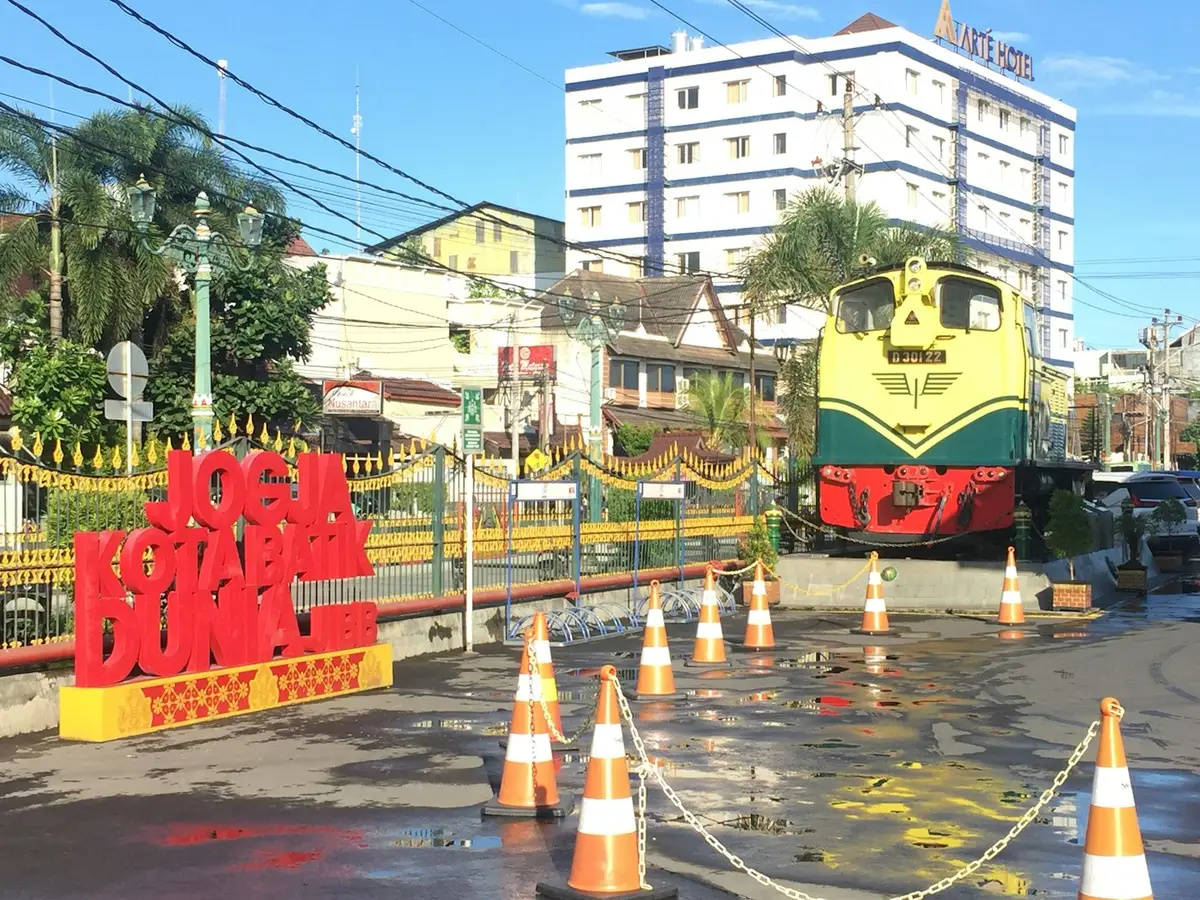
State-owned PT Kereta Api Indonesia (KAI) runs trains across Java, linking Jakarta, Yogyakarta, Solo, Surabaya and Bandung with executive, business and economy classes. It is the easiest way to cover the island without a domestic flight. Book through the official booking.kai.id portal or the KAI Access app; note that Indonesia sits outside Thailand, Vietnam and Malaysia's rail networks entirely, so a train ticket only gets you around Java itself, not to Bali, Sumatra or the other islands.
Beyond Java, overnight buses (bus malam) run by private operators cover the longer overland routes, often combined with a state-run ferry crossing where the route needs one, such as Java to Bali across the Bali Strait, operated by state ferry company ASDP Indonesia Ferry. Indonesia tightened ferry safety inspections and manifest checks during 2026 after a series of accidents, so stick to a licensed operator and make sure your name is actually recorded on the passenger manifest before you board, on a ferry leg or a bus that includes one.
A stay far from the airport? See how to spot a real eco stay.
What Is a Night Bus, and Is Your Luggage Safe on One?
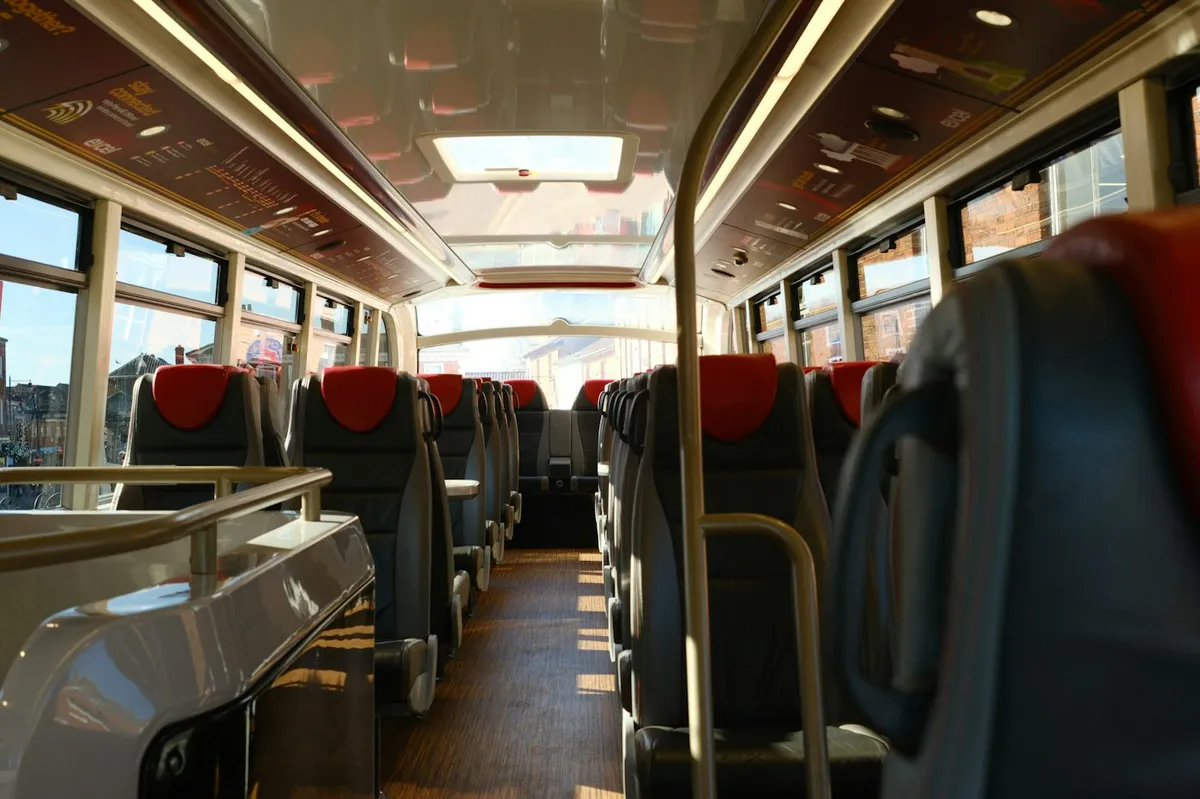
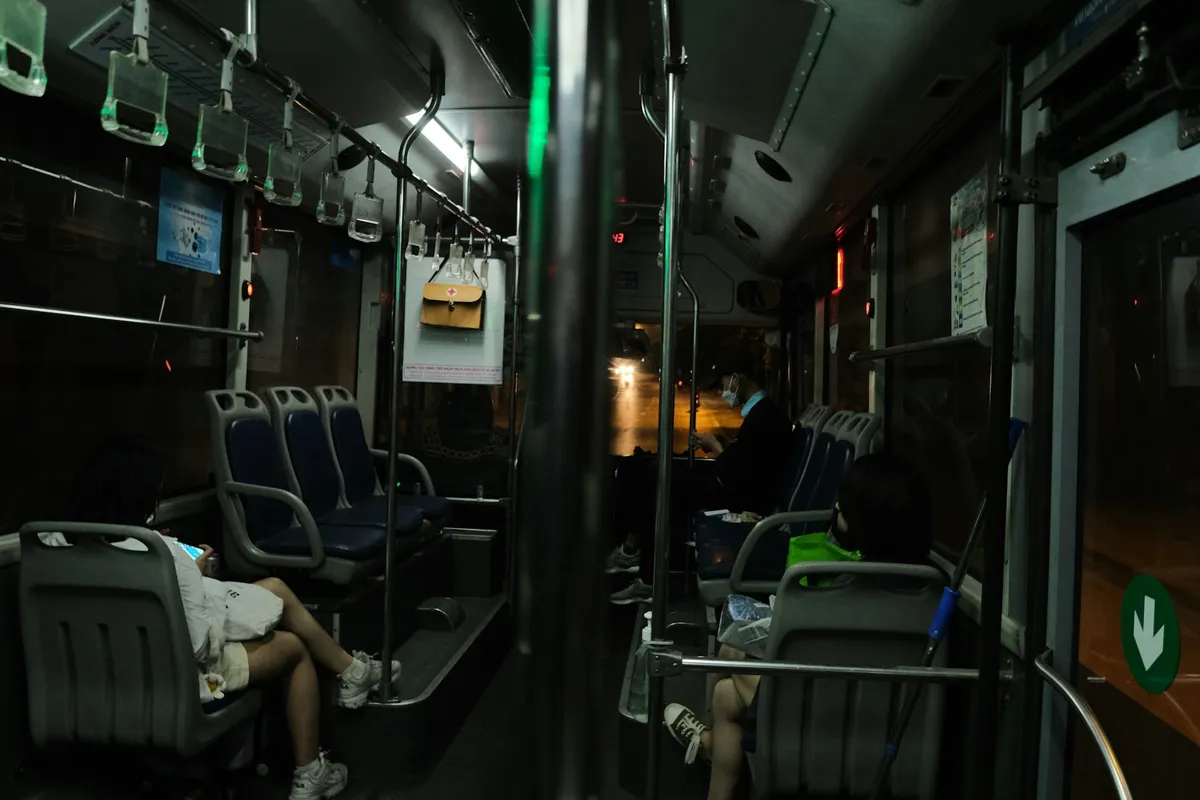
A night bus (sleeper bus) runs on an overnight schedule and swaps the usual upright coach seats for something built to sleep in: deep reclining seats in the simpler versions, or full flat berths stacked in two rows with a narrow aisle in the nicer ones common across Vietnam and Thailand. You get on in the evening, sleep through most of the ride, and step off the next morning close to your destination, saving a night of accommodation in the process.
Your main bag usually goes into a luggage hold underneath the bus, out of sight for the whole journey, which is exactly the situation our anti-theft travel guide covers: a retractable cable lock keeps a zipper shut and a bag clipped to something solid when you cannot watch it yourself. Keep your passport, cards and any electronics in a daypack or a money belt that stays with you in the cabin, never in the hold.
Train or Bus for Each Situation
| Situation | State train, seat class | State train, sleeper berth | Overnight bus | Short local bus |
|---|---|---|---|---|
| Short hop between nearby cities | Yes | Not needed | Not needed | Yes |
| Long overnight leg (8+ hours) | Optional | Yes | Yes | Not needed |
| Tightest possible budget | Yes | Optional | Optional | Yes |
| Comfort is the priority | Optional | Yes | Optional | Not needed |
| Route the railway does not reach | Not needed | Not needed | Yes | Yes |
State trains win on comfort and safety record for the routes they cover. Buses win on reach, since private operators go to towns and border crossings no railway touches.
Omio is a booking platform for trains, buses, flights and ferries, and Southeast Asia is one of the regions it covers. If you want to see the options for a leg in one place, check the route on Omio.
Key takeaways
- Thailand, Vietnam, Malaysia and Indonesia each run their own state (or state-linked) railway, and each has an official online booking portal, not just travel-agency resellers.
- Omio is our one booking partner for trains and buses; every other booking link on this page goes straight to the railway or bus company itself.
- Buses, mostly private operators, cover the routes and border crossings a state railway does not reach.
- On a night bus, your main bag goes into an underfloor hold out of sight; lock it and keep valuables with you in the cabin.
Why We Put This Guide Together
Chenzo has been on the road for 27 years, including 11 years backpacking through South America, where a 24-hour bus ride was just another travel day. That mileage is why this guide sticks to what each railway and bus operator actually publishes on its own site, instead of sending you to a reseller for a route we have not personally checked yet.
Planning the rest of the trip too? Our Thailand, Vietnam, Malaysia and Indonesia guides cover visas, coworking and where to base yourself in each country.

Chenzo, founder of NomadsToolsLab
Related reading: Da Nang Digital Nomad Guide 2026: Costs, Visa, Wifi.
FAQ
Can I book Southeast Asian trains online from outside the country?
Yes, for the four state railways in this guide. Thailand's SRT (dticket.railway.co.th), Vietnam Railways (dsvn.vn) and Malaysia's KTMB (online.ktmb.com.my) all have English-language online booking. Indonesia's KAI Access app covers Java but can be fussier for foreign cards and numbers, so booking a Java train in person at the station is a reliable backup.
Is my luggage safe on an overnight bus?
Your main bag usually rides in an underfloor hold you cannot see during the trip. A retractable cable lock on the zipper and clipped to something solid cuts the risk of an opportunistic grab. Keep your passport, cards and electronics with you in the cabin, never in the hold.
What is the difference between a state train and a private overnight bus?
The state railway (SRT, Vietnam Railways, KTMB or PT KAI) is run and regulated by the government of that country, with one official booking site. Overnight buses are almost always run by private companies, so quality and safety standards vary more between operators than they do between train classes.
How far ahead should I book a sleeper berth or overnight bus?
A day or two ahead is usually enough outside of national holidays. Around major holidays such as Songkran in Thailand or Tet in Vietnam, sleeper berths and popular bus routes sell out well in advance, so book as early as your dates allow.
Updated:
Affiliate disclosure. This post contains affiliate links. If you click and buy something, this site earns a small commission at no extra cost to you. Picks are based on published specs, independent reviews and manufacturer information, and we only recommend what we would use ourselves. Read the full affiliate disclosure.
Your next step
 Thailand Digital Nomad Guide