Portugal Digital Nomad Visa (D8) 2026: The Honest Application Guide
As an Amazon Associate I earn from qualifying purchases. Some links on this page earn us a small commission, at no extra cost to you. Full disclosure.
Quick answer
The Portugal D8 digital nomad visa lets you live in Portugal on remote income of at least four times the Portuguese minimum wage (about 3,480 EUR a month on 2025 figures; with the 2026 minimum wage of 920 EUR it is 3,680 EUR a month). You apply from home, then convert the visa at AIMA in Portugal. The permit runs two years at first and can lead to permanent residence after five years. Citizenship now takes longer: since a law change in force from 19 May 2026, it generally needs 10 years of legal residence (7 for EU and CPLP citizens). Income figure and visa fee checked on 9 October 2026 on vistos.mne.gov.pt.
Quick links
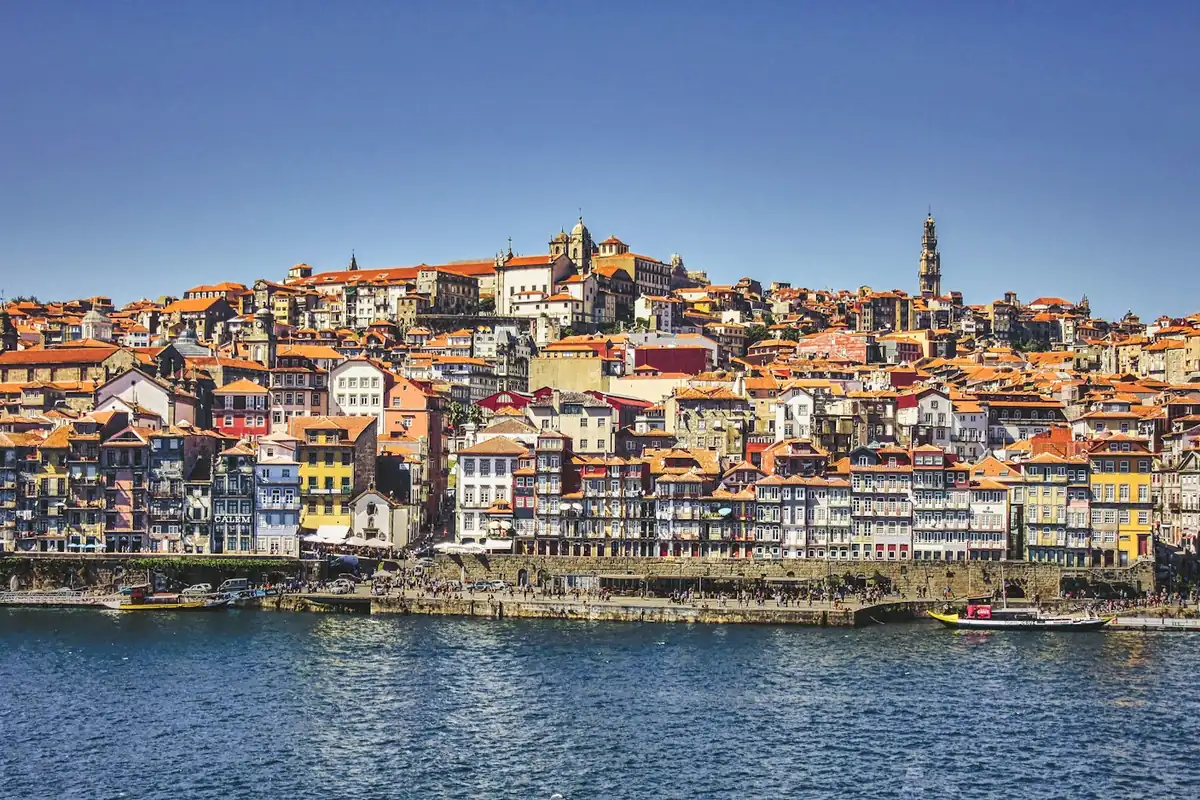
The Portugal digital nomad visa (D8) is why so many remote workers now base themselves in Lisbon, Porto or Madeira instead of Bali or Chiang Mai. It gives you a legal way to live in an EU country while working for clients or an employer abroad, with a route to permanent residency and eventually citizenship. Most nomad visas elsewhere let you stay a year and then send you home.
Below: what the D8 is, who qualifies in 2026, the documents and steps, what changed on tax after NHR ended, and insurance and banking. Thresholds, fees and processing times change often, so treat the numbers as a planning guide and confirm them with your consulate or AIMA before you submit.
What the D8 actually is (vs D7, vs Golden Visa)
The D8 is Portugal's residency visa for remote workers, in place since October 2022. It is for people who earn from outside Portugal, as an employee of a foreign company or as a freelancer or business owner with clients abroad, and who want to actually live in Portugal. People often mix it up with two other visas:
| Visa | Who it's for | Income source | Do you need to live in Portugal? |
|---|---|---|---|
| D8 | Remote employees and self-employed workers | Foreign salary or freelance/business income | Yes, this is a residency visa |
| D7 | Retirees and people with passive income | Pensions, rental income, dividends, royalties | Yes, this is also a residency visa |
| Golden Visa | Investors | Capital, not work income | No, minimum stay is around 7 days a year |
The D7 came first and was built for retirees living off pensions or investments. Freelancers used it before the D8 existed, and some lawyers still suggest it. It can work, but the D8 is designed for remote work income, with clearer documentation around employment or client contracts.
The Golden Visa is residency through investment (real estate no longer qualifies since the 2023 reform, but certain investment funds and other categories do) and does not require you to live in Portugal. Moving to Portugal to work? The D8 is your visa.

Who qualifies for the Portugal D8 visa in 2026 (income and remote work proof)
Two things decide eligibility: what you earn and how you prove your work is remote. The income threshold is four times the Portuguese minimum wage, which is reviewed every January. As an anchor, the minimum wage was 870 EUR a month in 2025, putting the D8 threshold at roughly 3,480 EUR a month (about 41,760 EUR a year). Expect a similar or slightly higher figure for 2026 and confirm the official number, because consulates use the current year. Update: Portugal's minimum wage rose to 920 EUR a month on 1 January 2026, so four times that is 3,680 EUR a month (about 44,160 EUR a year).
On the remote work side, you need to show one of two things:
- Employment: a contract or declaration from your employer confirming you work remotely and can do so from Portugal, plus recent payslips.
- Self-employment or business ownership: proof of an active freelance business or company, invoices or contracts with clients based outside Portugal, and bank statements showing consistent income.
Income must be stable and traceable. One big invoice from six months ago will not do; most consulates want three to six months of bank statements showing income arriving regularly, plus contracts or a declaration that the arrangement is ongoing.
Do you qualify?
- Income of at least four times the Portuguese minimum wage.
- Proof of remote work: an employer declaration, or an active freelance business or company.
- Three to six months of bank statements showing the income arriving regularly.
Documents you need
Requirements vary slightly by consulate, but the core document list looks like this:
- Valid passport with at least six months' validity beyond your planned stay
- Completed national visa application form
- Passport photos meeting Portuguese visa photo specs
- Proof of income meeting the threshold (payslips, contracts, invoices, or a mix)
- Bank statements for the last three to six months
- Proof of accommodation in Portugal, this can be a lease, an Airbnb booking for your first weeks, or a signed declaration from someone hosting you
- A criminal background check from your home country (and any country you've lived in recently), usually needs to be apostilled or legalized
- Proof of travel and health insurance valid in Portugal (more on this below)
- A Portuguese NIF (tax identification number), which you'll typically need before you can even open a bank account or sign a lease
- Visa application fee payment receipt
Do not underestimate the NIF. You can get it before you travel through a Portuguese fiscal representative, sometimes remotely, but it takes coordination, so start early.
For a stay of a few months, HousingAnywhere is a platform for mid to long-term rentals.
Find a mid-term rental on HousingAnywhere

Step-by-step application process
The D8 process happens in two distinct phases, one before you move and one after you land.
Phase 1: In your home country
Phase 1 at a glance
1
Get your NIF and, ideally, a Portuguese bank account or clear proof of funds.
2
Gather and legalize your documents (criminal record, proof of income, insurance).
3
Book an appointment. In many countries VFS Global handles intake for the consulate; elsewhere you deal with the consulate directly. Check which applies to you.
4
Submit your application and biometrics.
5
Wait for a decision: anywhere from a few weeks to a few months depending on the consulate. Do not book a one-way flight for the week after your appointment.
6
Once approved, you receive a national visa (not yet the residence permit), usually valid for about four months, to complete phase 2.
Phase 2: In Portugal
Phase 2 at a glance
1
Enter Portugal on your national visa.
2
Register with AIMA (Agência para a Integração, Migrações e Asilo), which replaced SEF in October 2023, to convert your visa into a residence permit.
3
Book your AIMA appointment as early as possible. Availability has been a real bottleneck since the transition.
4
Attend the appointment, give biometrics and any updated documents.
5
Receive your residence permit card, usually for two years at first and renewable.
The worst part of the D8, according to most nomads, is not the visa approval but the AIMA backlog. Check recent community reports (forums, Facebook groups, Reddit threads) on appointment availability before you set a move date.
Taxes: what changed after NHR ended
The Non-Habitual Resident (NHR) regime, with a flat 20% rate on certain Portuguese income and exemptions on much foreign income for ten years, closed to new applicants at the end of 2023, with some transitional cases into 2024.
Its replacement, IFICI or "NHR 2.0", is narrower: mainly scientific research, higher education, qualified roles in certain industries and startups. Outside those categories you pay Portugal's standard progressive income tax once you are tax resident (more than 183 days a year, or your main home is there), which can run well above the old NHR rate.
This area is complicated and has changed more than once in two years. Talk to a Portuguese tax advisor before you move, especially if your home country also taxes you. This is a starting point for your questions, not tax advice.
Insurance requirements
You need proof of health insurance valid in Portugal both at the visa application stage and, practically speaking, for the period before you're eligible for the Portuguese public healthcare system (SNS) as a resident.
A lot of nomads use SafetyWing because it is flexible, affordable and easy to buy online without a home address. It works for many D8 applicants, but not every consulate accepts the same wording: some want no deductible, specific coverage amounts, or a policy that names Portugal instead of "worldwide." Check what your consulate wants before you buy, and keep the policy document handy.

SafetyWing
If you want a side-by-side look at how SafetyWing compares to another popular nomad insurance option, we've got a full breakdown here: SafetyWing vs World Nomads.
If you are staying abroad for longer, HelloSafe has an Expat option when you compare plans. It is an independent comparison of 40+ insurers, and the certificate is instant once you pick a plan.

HelloSafe
Banking
You'll need a way to move money and pay for things in Portugal, and ideally proof of funds tied to a real account when you apply.
Revolut is a common choice: an EU based multi-currency account you can open before you land, handy for holding euros and paying bills. It is not a traditional Portuguese bank, though, so for AIMA proof of address or some leases and utilities you may still need a local account (Millennium bcp, ActivoBank or Novobanco) next to Revolut.

Revolut
Wise is another multi-currency option a lot of nomads use for the same reason, mainly for its exchange rates on transfers. If you want a proper comparison of Revolut and Wise for this kind of use case, see Revolut vs Wise.

Best cities for D8 holders
Where you settle matters more for cost of living and daily quality of life than for the visa process itself, since the D8 doesn't tie you to a specific city.

- Lisbon is the default choice for most first-time D8 holders. Biggest nomad community, most coworking options, best transport links, but also the highest rents in the country by a wide margin. Full guide: Digital Nomad Guide to Lisbon. If you're working out of coworking spaces there, this one's useful too: Best Coworking Spaces in Lisbon.
- Porto is the city a lot of people wish they'd chosen instead of Lisbon once they've lived in both. Cheaper, smaller, walkable, with its own growing nomad scene. Full guide: Digital Nomad Guide to Porto.
- Madeira is the island option, built around Ponta do Sol's dedicated digital nomad village. Slower pace, stunning scenery, but a smaller job and social market and less variety in day-to-day life than a mainland city. Full guide: Digital Nomad Guide to Madeira.
Whichever city you land in, you'll probably want a car at some point, especially outside central Lisbon. Here's what that process looks like: How to Rent a Car in Portugal.
Cost breakdown
Two separate cost questions matter here: what the application itself costs, and what it costs to actually live in Portugal on a D8.

| Item | Approximate cost |
|---|---|
| National visa application fee | 110 EUR on the official Portuguese visa portal (checked 9 October 2026), confirm the current fee when you book |
| AIMA residence permit fee | A separate fee is charged at the residence permit stage, amounts vary, check with AIMA directly |
| Apostille/legalization of documents | Usually a small per-document fee, varies by country |
| Immigration lawyer (optional) | Roughly €500 to €1,500+ if you hire help with the full process, entirely optional but common |
| NIF setup via fiscal representative (if used) | Often a modest one-time or annual fee, varies by provider |
Monthly living costs depend on city and lifestyle. A single remote worker in a one-bedroom apartment might spend roughly 1,500 to 2,500 EUR a month in Lisbon, somewhat less in Porto, and around 1,200 to 1,800 EUR in Madeira or smaller towns. Rents have moved a lot, so check current listings for your neighborhood.
Before you go
Two things to sort before your consulate appointment: health insurance that matches your consulate's wording, and an account that holds euros from day one.
Power plugs: Portugal uses Type C, E and F sockets, so a Type C adapter such as the TESSAN European adapter (2 pack) covers it.

FAQ
Can I bring my family on a D8 visa?
Yes, family reunification is available for spouses and dependent children, though it involves its own separate application and documentation once your D8 is approved or in parallel with it, depending on your consulate's process.
Do I need to speak Portuguese to get a D8?
No, there's no language requirement for the visa or the residence permit itself. Language does become relevant later if you go for permanent residency or citizenship, which typically requires an A2-level Portuguese test.
Can I switch to a D8 while already in Portugal on a tourist visa?
This is a gray area that's been handled inconsistently. Some people have managed it, but it's not the standard route and depends heavily on current AIMA policy and individual circumstances. The intended process is to apply from your home country first. Talk to an immigration lawyer if you're already in Portugal and considering this.
How long does the D8 residence permit last, and does it lead to citizenship?
The initial residence permit is typically issued for two years and is renewable. After five years of legal residency, you can generally apply for permanent residency. Portuguese citizenship now takes longer: under the nationality law reform in force since 19 May 2026, naturalisation generally requires 10 years of legal residence (7 years for EU and CPLP citizens), plus requirements like the A2 Portuguese language test.
What happens if my income drops below the threshold after I'm approved?
This isn't heavily documented in a single official source, and enforcement in practice varies. In principle, you're expected to continue meeting the income requirement to renew your residence permit, so a sustained drop could be a problem at renewal time even if it doesn't cause immediate issues. Keep records and talk to an immigration lawyer if your income situation changes significantly.
Is the D8 the same thing as Portugal's "digital nomad visa"?
Yes, the D8 is what people mean when they say Portugal's digital nomad visa. There isn't a separate visa category with that exact name, the D8 is the official title.

Affiliate disclosure. This post contains affiliate links. If you click and buy something, this site earns a small commission at no extra cost to you. Picks are based on published specs, independent reviews and manufacturer information, and we only recommend what we would use ourselves. As an Amazon Associate I earn from qualifying purchases. Read the full affiliate disclosure. Amazon and the Amazon logo are trademarks of Amazon.com, Inc. or its affiliates.