Vanlife Car Rental: Best Sites for Long-Term Nomad Rentals
Some links on this page earn us a small commission, at no extra cost to you. Full disclosure.
If you want to taste vanlife without committing to buying a van, long-term rentals are the answer. After researching the vanlife rental market across Portugal, Spain, New Zealand, Australia, Germany, and Iceland, here is what actually works in 2026 for a long term campervan rental.
Quick answer
Either rent a small car for 30+ days and sleep in it, or rent a pre-converted camper van for road trips of 2 to 8 weeks. Always buy excess insurance, check the mileage cap and document the van at pickup.
Compare and set up
Vanlife Car Rental: Two Routes to a Rented Van
Route A: Convert a long-term rental car
Rent a station wagon or small SUV for 30+ days. Buy a foam mattress, pack minimal gear, sleep in the car at campgrounds or stealth spots, use public showers. This is the cheapest option, the most flexible, and the easiest to set up. Most cars can fit a 190x130 cm mattress with the seats folded.
Best vehicles: VW Caddy, Renault Kangoo, Citroen Berlingo, Ford Tourneo Connect, Dacia Dokker. Diesel versions get better range. Reserve early - these compact "stealth" vans book out fast in summer.
Best platforms: EconomyBookings for budget rentals, Localrent for Southern Europe and Caucasus, DiscoverCars for the largest selection compared in one search.

EconomyBookings

Localrent
Route B: Actual camper van rental
Pre-converted camper vans you rent monthly. More expensive but you get a real bed, kitchenette, sometimes a toilet. Best for road trips of 2-8 weeks where you want the full vanlife experience without owning a van.
Best platforms for camper vans:
- Outdoorsy: AirBnB for camper vans, owner-rented. Wide selection but variable quality.
- Roadsurfer: Strong in Europe, professionally maintained, includes basic kitchen kit.
- Indie Campers: Wide coverage, 100+ locations on 3 continents according to its website.
- Jucy: Popular in New Zealand and Australia.
- Britz: Premium option for NZ/Australia, better appliances.
- Spaceships: Budget option for NZ, basic but functional.
- Wicked Campers: Cheap, painted with graffiti, best for younger crowd.

Need a place to park the van? Eco campsites often carry an ECOCAMPING, Green Key or EU Ecolabel certificate.
Cost comparison: Route A vs Route B
| Item | Route A (small car) | Route B (camper van) |
|---|---|---|
| Rental per day (30+ days) | 25-40 EUR | 70-150 EUR |
| Fuel | 40-60 EUR/week | 80-120 EUR/week |
| Mattress + bedding | 50-80 EUR one-time | included |
| Cooking gear | 30 EUR camping store | included (basic) |
| Campground fees | 10-25 EUR/night | 15-40 EUR/night |
| Showers / facilities | 3-5 EUR per shower | often included |
| 30-day total | 1,200-1,800 EUR | 2,800-5,000 EUR |
The 5 rules for long-term van rentals
1. Check the mileage cap before booking
Some "unlimited mileage" promises become 200 km/day in the small print. For a road trip that is restrictive. Ask explicitly. Excess mileage typically costs 0.20-0.50 EUR per km.
2. Test the connectivity setup
If you need to work from the van, you need solid internet. Airalo eSIM gives you data in 200+ countries. For longer routes, a dedicated travel router with external antenna improves signal in rural areas. Full setup in our vanlife internet guide.

Airalo
3. Always buy excess insurance
Van damage deductibles can be 2,000-5,000 EUR. Excess insurance covers this for a daily fee. Not optional for long-term rentals. DiscoverCars Full Coverage for the underlying rental is one option to compare, but check that it covers campervans and the vehicle class you book.
The 5 rules in short
- Check the mileage cap, some unlimited deals become 200 km a day in the small print.
- Test your connectivity setup before you rely on it for work.
- Buy excess insurance, deductibles can be 2,000 to 5,000 EUR.
- Photograph and film the whole van at pickup.
- Make sure your travel insurance includes personal liability while driving.
4. Pick up clean, document everything
Photo and video the entire van inside and out before driving off. Note every scratch, dent, scuff, smell, missing item in the rental agreement. Operators can claim pre-existing damage as yours, especially with camper vans where wear and tear is common. Defend yourself with evidence.
5. Travel insurance with personal liability
Standard travel insurance often does not cover driving accidents. Liability for damage you cause while driving normally comes from the rental's own liability insurance, so check its limit. Travel insurance such as SafetyWing is for your medical costs; read its exclusions for driving. If you carry expensive gear in the van, compare gear limits with other insurers.

SafetyWing

World Nomads
If you want to compare more insurers side by side, HelloSafe is an independent comparison of 40+ insurers, and the certificate is instant once you pick a plan.

HelloSafe
Best regions for rented vanlife in 2026
Portugal (Algarve coast)
Overnight parking and wild camping with campervans are restricted by Portuguese law, with fines in protected areas, so plan on campsites and official motorhome areas. There are plenty along the coast. The drive from Lisbon south to Faro is the classic route, with cliffs, beaches and surf spots along the way.
Best operators: Localrent for budget vans in Faro and Lisbon. Indie Campers lists both Faro and Lisbon as destinations.
Localrent
Best season: April-June and September-October. Avoid August (heat + crowds + double pricing).
New Zealand (South Island)
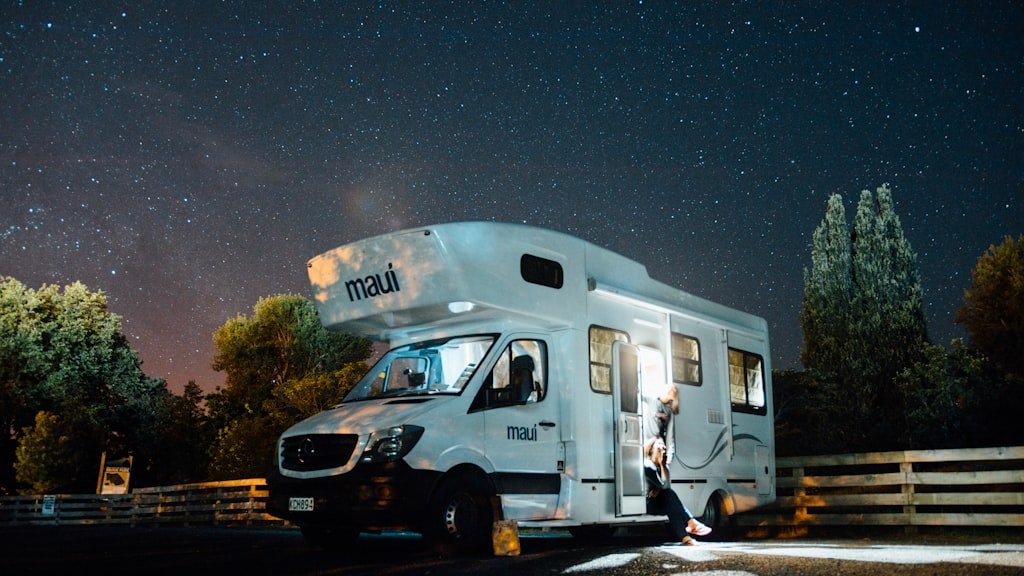
The ultimate vanlife destination. Freedom camping rules are strict and certified self-contained vans have more options, so check the local council and Department of Conservation rules for each spot. New in 2026: according to New Zealand's Department of Conservation, from 7 June 2026 a vehicle needs a "green warrant" to count as certified self-contained, the warrant card must be displayed when you camp in restricted areas, and portable toilets can no longer be certified (doc.govt.nz, read 5 October 2026). Ask your rental company whether the van has a valid warrant before you book. Backpacker-budget Jucy and Spaceships are popular. Britz and Maui for premium.
Best season: November-March (Southern hemisphere summer). Booking 3-6 months ahead is normal.
Spain (Andalucia + Costa Brava)
Mediterranean coastline with strong vanlife infrastructure. Indie Campers lists Barcelona as a destination. Rules for overnight parking and wild camping differ per region and town, so check local rules before you park for the night.
Iceland (ring road)
The most famous van road trip in the world. Route 1 circles the island in about 1,309 km. Camping with a campervan is only allowed at designated campsites. The Environment Agency of Iceland says it is illegal to spend the night in a camper van outside organised campsites or urban areas unless the landowner has given permission, and many protected areas ban it outright (ust.is, read 5 October 2026). Vans available from Happy Campers, KuKu Campers and Go Campers, among others.
Best season: June-August only. Outside summer the ring road can be closed by snow.
Germany (rentals + autobahn)
A big vanlife rental market, with many Roadsurfer stations across the country. Wild camping is generally not allowed; use campsites or official Stellplätze (parking spots for motorhomes).
Australia (East Coast + Outback)
Jucy, Britz, Apollo, Spaceships. The Cairns-to-Melbourne East Coast drive is classic. Long distances mean fuel costs add up fast. Free camping spots called "rest areas" widely available.
Insurance for camper vans specifically
Camper van insurance has unique considerations:
- Height clearance damage: Camper vans are taller than normal cars. Hitting low bridges, trees, or low parking garages is common. Confirm coverage.
- Interior damage: Spilled wine, broken cabinet, sand inside everything. Some policies cover, some do not.
- Awning damage: Wind can rip awnings. Often a separate exclusion.
- Towing damage: If your van breaks down and needs towing, who pays? Usually the operator but confirm.
For camper-specific insurance gaps, check whether a standalone excess insurer (such as Insurance4CarHire) covers campervans and motorhomes before you rely on it; not every policy does.

Setting up the work-from-van life
If you actually need to work from the van (not just vacation), here is the minimum setup:
- Dual data plans: Airalo eSIM active + a local SIM as backup
- Power inverter: 300W+ pure sine wave to charge laptop from 12V
- Portable monitor: Doubles your screen real estate without taking much space
- Noise-cancelling headphones: For calls in parking areas or campgrounds
- Travel router: Combine multiple cellular signals for redundancy
- Battery backup: 100W+ power bank to survive a flat starter battery
Airalo
Common vanlife rental mistakes
- Booking peak season last-minute (price doubles)
- Not checking mileage caps before signing
- Skipping excess insurance to save 15 EUR/day
- Not understanding which "free camping" spots are actually legal
- Underestimating fuel costs on long road trips
- Not having backup power for work emergencies
- Ignoring weight limits (overloading the van voids insurance)
- Assuming wild camping is allowed everywhere (it is not)
FAQ
Can I take a camper van across European borders?
Usually yes within Schengen. Some operators charge a cross-border fee. Always declare cross-border driving when you book.
Are camper van rentals worth it for less than 14 days?
Usually not. Short rentals have higher per-day rates and you spend more time setting up than enjoying. For under 2 weeks, Route A (regular car + sleep gear) makes more sense unless the experience itself is the goal.
Do camper vans have wifi?
Almost never. Bring your own with eSIM + travel router. Some premium camper companies offer wifi as add-on but quality varies wildly.
What if I damage the camper?
Without Full Coverage insurance: you pay the excess (2,000-5,000 EUR) plus any amount over policy limits. With Full Coverage: usually zero out of pocket, but read the policy for exclusions like cooking damage, kids' damage, etc.
Related reviews
Can I sleep in a rented camper van anywhere in Iceland?
No. The Environment Agency of Iceland says it is illegal to spend the night in a camper van outside organised campsites or urban areas unless the landowner has given permission, and several national parks ban it completely. Plan your route around campsites.
Do I need a self-contained camper van for freedom camping in New Zealand?
In some areas, yes: the Department of Conservation says some places limit camping to certified self-contained vehicles, and from 7 June 2026 a vehicle needs a "green warrant" for that certification. Obey the signs, because breaking the rules can mean a fine.
Updated:
Affiliate disclosure. This post contains affiliate links. If you click and buy something, this site earns a small commission at no extra cost to you. Picks are based on published specs, independent reviews and manufacturer information, and we only recommend what we would use ourselves. As an Amazon Associate I earn from qualifying purchases. Read the full affiliate disclosure.