
Jackery 240 v2 vs Anker C300 DC: Do You Need AC?
As an Amazon Associate I earn from qualifying purchases. Some links on this page earn us a small commission, at no extra cost to you. Full disclosure.
The jackery 240 v2 vs anker c300 choice starts with a familiar moment: your laptop needs charging, and its original charger needs a 230 V socket. For laptop work, camping or a van weekend, check that connection before comparing battery capacity.
Quick answer
Checked on 19 October 2026. Choose the Jackery Explorer 240 v2 if you need a 230 V AC socket, with output up to 300 W. Choose the Anker SOLIX C300 DC if your equipment runs from USB or a 12 V car socket and you want two 140 W USB-C ports. The Anker has more battery capacity on paper, but it has no AC outlet.
All 4 picks at a glance
Jackery Explorer 240 v2 Portable Power Station
One 300 W AC outlet for equipment that needs a mains socket, plus 100 W USB-C. Read more
Anker SOLIX C300 DC Power Station
Two 140 W USB-C ports and a 288 Wh battery, with no AC outlet. Read more
EcoFlow RIVER 3 Portable Power Station
A 300 W AC outlet, 100 W USB-C and a switch to battery in under 20 ms. Read more
BLUETTI Elite 30 V2 Portable Power Station
A 600 W continuous AC output and 140 W USB-C, with a higher weight of 4.3 kg. Read more
How we compared them
The NomadsToolsLab team compared the Jackery UK, Anker SOLIX, EcoFlow UK and BLUETTI manufacturer pages on 19 October 2026. The team also checked all four Amazon UK listings with a UK address, where each product was sold by its brand. The key finding is practical: the Anker has more Wh on paper but no AC socket, while the Jackery provides AC and limits USB-C output to 100 W.
AC socket or DC only: the real difference

A laptop that needs its original 230 V charger cannot use that charger with the Anker C300 DC. The Jackery provides an AC outlet rated at 300 W, so check your charger's requirements against that limit. Both are over 160 Wh, so neither can fly with you: see FAA PackSafe.
If your laptop accepts USB-C charging, compare its required wattage with each station's USB-C output. The Jackery offers 100 W USB-C, while the Anker has two 140 W USB-C ports. The Anker's 300 W total output rating does not mean it has an AC socket.
The four side by side
| Power station | Capacity | AC socket | Fastest USB-C | Weight |
|---|---|---|---|---|
| Jackery Explorer 240 v2 | Capacity: 256 Wh LiFePO4 | AC socket: 1 x 300 W | Fastest USB-C: 100 W | Weight: 7.7 lb (about 3.5 kg) |
| Anker SOLIX C300 DC | Capacity: 288 Wh LiFePO4 | AC socket: None (DC only) | Fastest USB-C: 2 x 140 W | Weight: 2.8 kg |
| EcoFlow RIVER 3 | Capacity: 245 Wh LiFePO4 | AC socket: 1 x 300 W | Fastest USB-C: 100 W | Weight: 3.55 kg |
| BLUETTI Elite 30 V2 | Capacity: 288 Wh LiFePO4 | AC socket: 600 W | Fastest USB-C: 140 W | Weight: 4.3 kg |
Figures from the makers' pages, read on 19 October 2026: Jackery UK, Anker SOLIX, EcoFlow UK and BLUETTI.
Jackery Explorer 240 v2: for equipment that needs AC
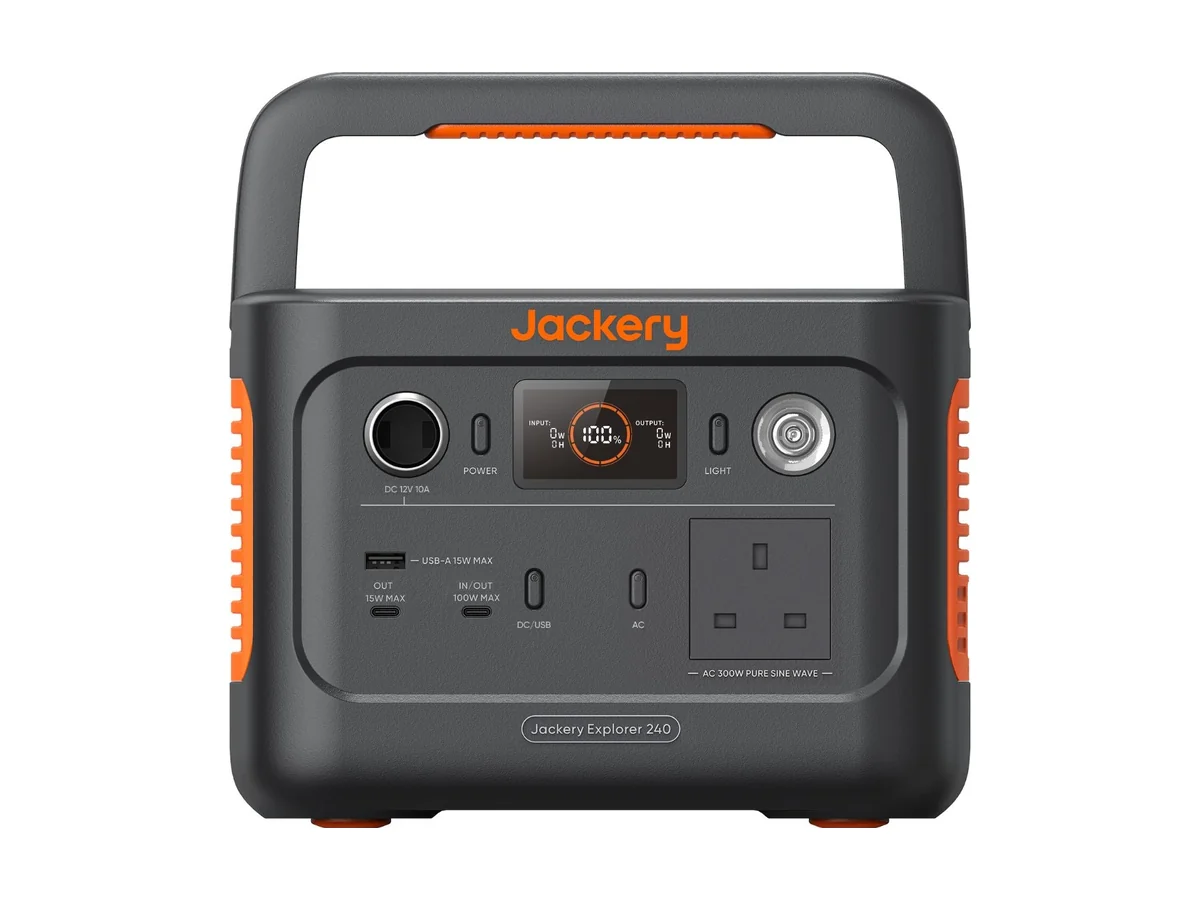
Jackery Explorer 240 v2 Portable Power Station
The Jackery Explorer 240 v2 has a 256 Wh LiFePO4 battery, one 300 W AC outlet, one USB-C port and one USB-A port. Its USB-C port supports charging in and out at up to 100 W.
Jackery lists a full charge in about one hour using emergency fast charging, activated in the app. The manufacturer also lists 3,000 charge cycles and a weight of about 3.5 kg. Check your laptop's charging requirements if you plan to use USB-C instead of its AC charger.
Anker SOLIX C300 DC: for USB-C and 12 V equipment
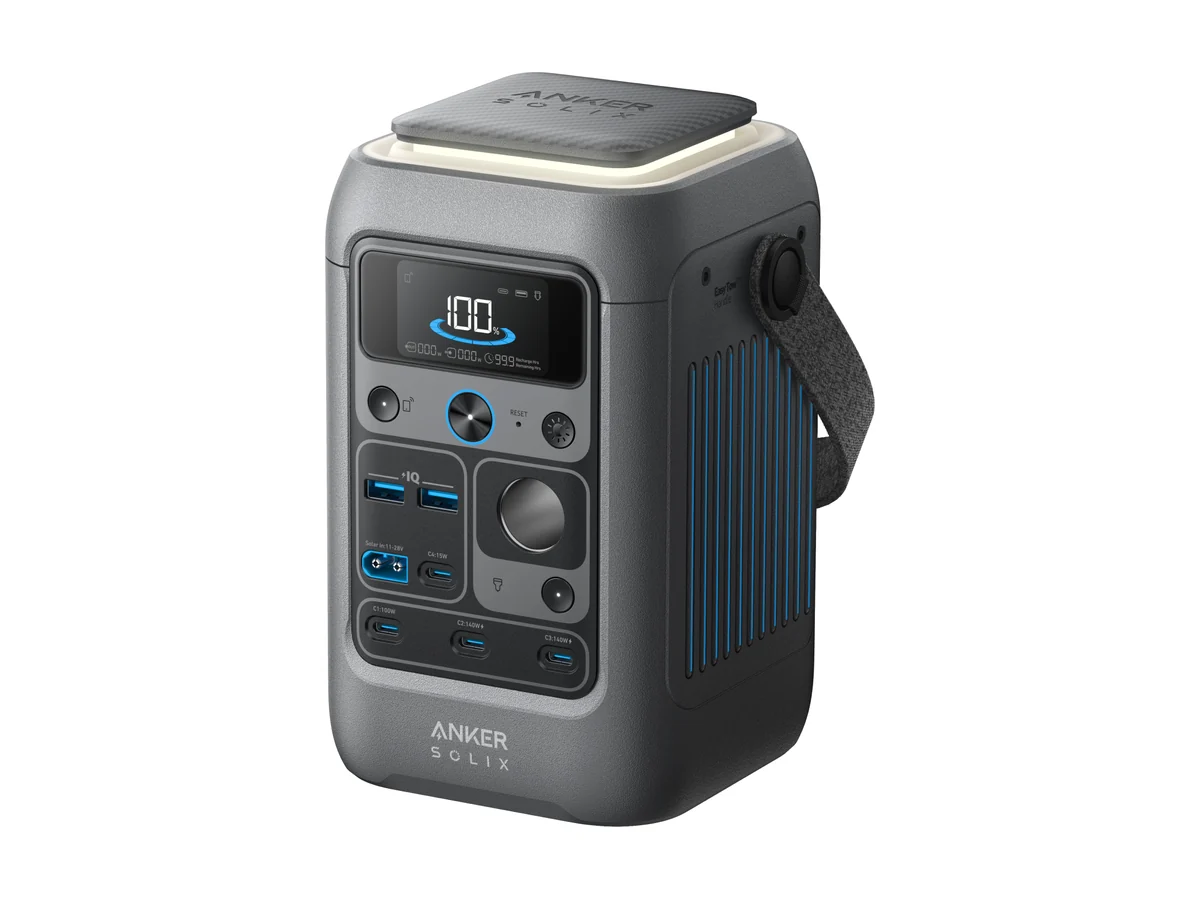
Anker SOLIX C300 DC Power Station
The Anker SOLIX C300 DC, model A1726, has a 288 Wh LiFePO4 battery and 300 W total output. Connections include two 140 W USB-C ports, another USB-C port, USB-A and a 120 W 12 V car socket.
Anker lists charging to 80% in about an hour when both 140 W USB-C ports are used for input at once. Solar input is up to 100 W through XT60, and the manufacturer lists 3,000+ cycles to 80% capacity. Its lack of AC is the deciding limit if your laptop needs a 230 V charger.

Also worth a look: EcoFlow RIVER 3
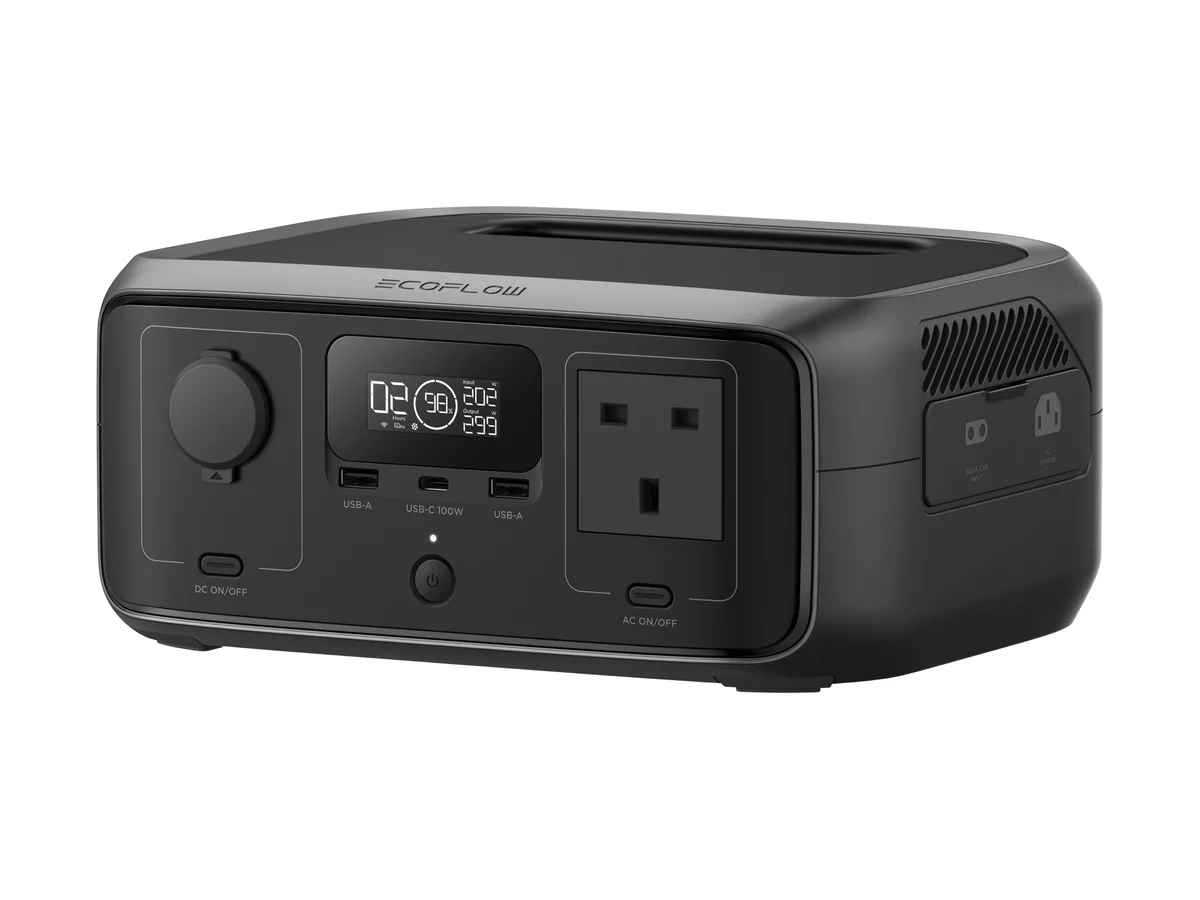
EcoFlow RIVER 3 Portable Power Station
The EcoFlow RIVER 3 has a 245 Wh LiFePO4 battery, one 300 W AC outlet and one 100 W USB-C port. It also includes two 12 W USB-A ports and a 126 W car output.
EcoFlow lists 3,000 cycles to 80% capacity and a weight of 3.55 kg. Its UPS function switches to battery in under 20 ms if mains power drops. X-Boost supports up to 600 W for some appliances, so do not treat that figure as its standard AC output.
Also worth a look: BLUETTI Elite 30 V2
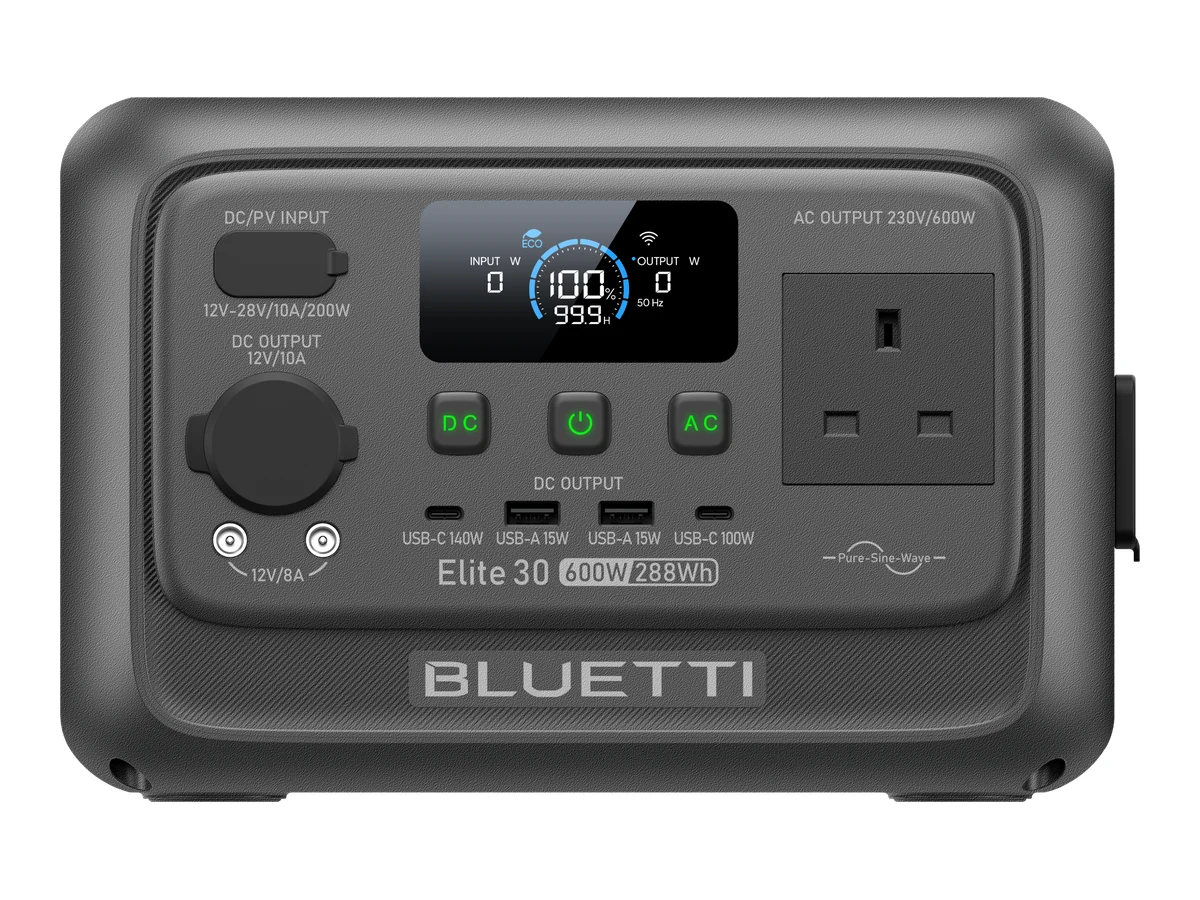
BLUETTI Elite 30 V2 Portable Power Station
The BLUETTI Elite 30 V2 has a 288 Wh LiFePO4 battery and nine outputs. Its 600 W continuous AC output gives it a higher AC rating than the Jackery or EcoFlow here.
BLUETTI lists 140 W USB-C, solar input up to 200 W and 3,000+ charge cycles. The manufacturer also lists a five-year warranty. At 4.3 kg, it is the heaviest of these four options.
Choose around your charger and your weekend
For a laptop that requires its original 230 V charger, start with the Jackery and check the charger's wattage against its 300 W AC limit. For a USB-C setup, the Anker offers higher USB-C output and weighs less. Its extra capacity on paper does not establish how long your particular laptop will run.
Match the battery capacity to the devices and hours you need; a laptop and lights can use very different amounts of energy. The EcoFlow adds UPS switching, while the BLUETTI offers higher continuous AC output with extra carrying weight. Need more capacity for the van? Our power stations for van life guide and Jackery vs EcoFlow go bigger.
- The Jackery has one 300 W AC outlet. The Anker C300 DC has no AC outlet.
- The Jackery supports 100 W USB-C, while the Anker has two 140 W USB-C ports.
- The EcoFlow adds UPS switching in under 20 ms. The BLUETTI offers 600 W continuous AC output.
- All four exceed 160 Wh and cannot travel in hand luggage or checked bags under FAA PackSafe guidance.
Watch: Jackery 240 v2 vs Anker C300 DC
Versopolis published “Anker Solix C300 DC vs Jackery Explorer 240 v2 Technical Comparison” on 28 August 2025. It is a specification comparison to accompany the connection and output differences above.
Video by Versopolis.
Bush Business published “Anker Solix C300 DC Review” on 29 May 2026. The video is described as unsponsored and focuses on the DC model.
Video by Bush Business.
FAQ
Does the Anker SOLIX C300 DC have a 230 V socket?
No. Model A1726 is DC only, with USB connections and a 12 V car socket. Its 300 W total output rating does not provide AC power.
Can either station charge a laptop through USB-C?
Both offer USB-C charging output. The Jackery supports up to 100 W, and the Anker has two 140 W USB-C ports. Check your laptop's USB-C charging requirements before choosing.
Will the Anker run a laptop longer because it has more Wh?
No runtime conclusion follows from Wh alone. The Anker has 288 Wh compared with the Jackery's 256 Wh. Match capacity to the devices and hours you need.
Which one charges faster?
The manufacturers describe different charging milestones. Jackery lists a full charge in about one hour with app-activated emergency fast charging, while Anker lists 80% in about an hour using both 140 W USB-C inputs at once. Those figures do not establish a direct full-charge comparison.
Affiliate disclosure. This post contains affiliate links. If you click and buy something, this site earns a small commission at no extra cost to you. Picks are based on published specs, independent tests and manufacturer information. As an Amazon Associate I earn from qualifying purchases. Read the full affiliate disclosure. Amazon and the Amazon logo are trademarks of Amazon.com, Inc. or its affiliates.
Your next step