Best Solar Panels for Camper Van (2026)
As an Amazon Associate I earn from qualifying purchases. Some links on this page earn us a small commission, at no extra cost to you. Full disclosure.
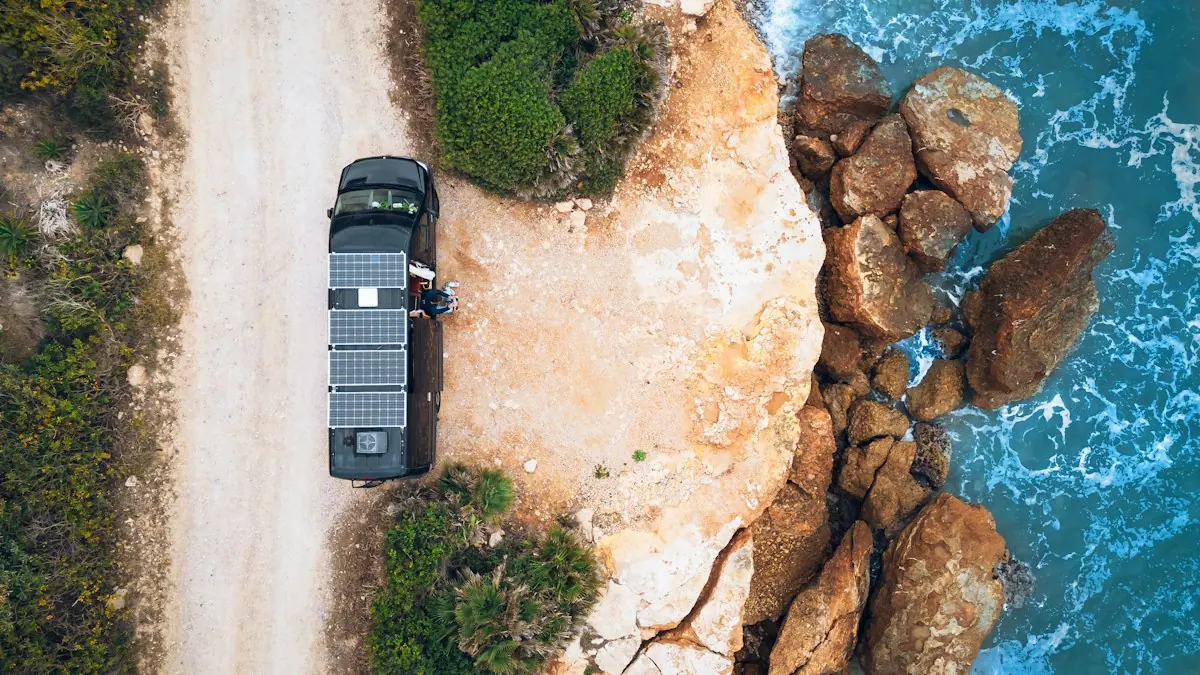
Solar panels for a camper van are a choice between three shapes: a rigid panel on the roof, a thin flexible one for a curved roof, and a folding panel you carry outside. Below are the best solar panels for camper van roofs and campsites. Panels also changed a lot in the last five to ten years, so advice from an old van forum may point you at the wrong one. This guide first shows what changed, with sources, then compares four panels that each suit a different roof. For a bag-sized panel for travel, see our portable solar panels guide.
Quick answer
Pick the Rich Solar MEGA 200 for one simple rigid panel, the Renogy 200W N-Type twin pack if your roof has vents and a rack to work around, the Renogy 200W Flexible for a curved roof, and the Jackery SolarSaga 200W as a loose panel for parking in shade. Use the Read more links to jump to each one.
All four, with a buy button each
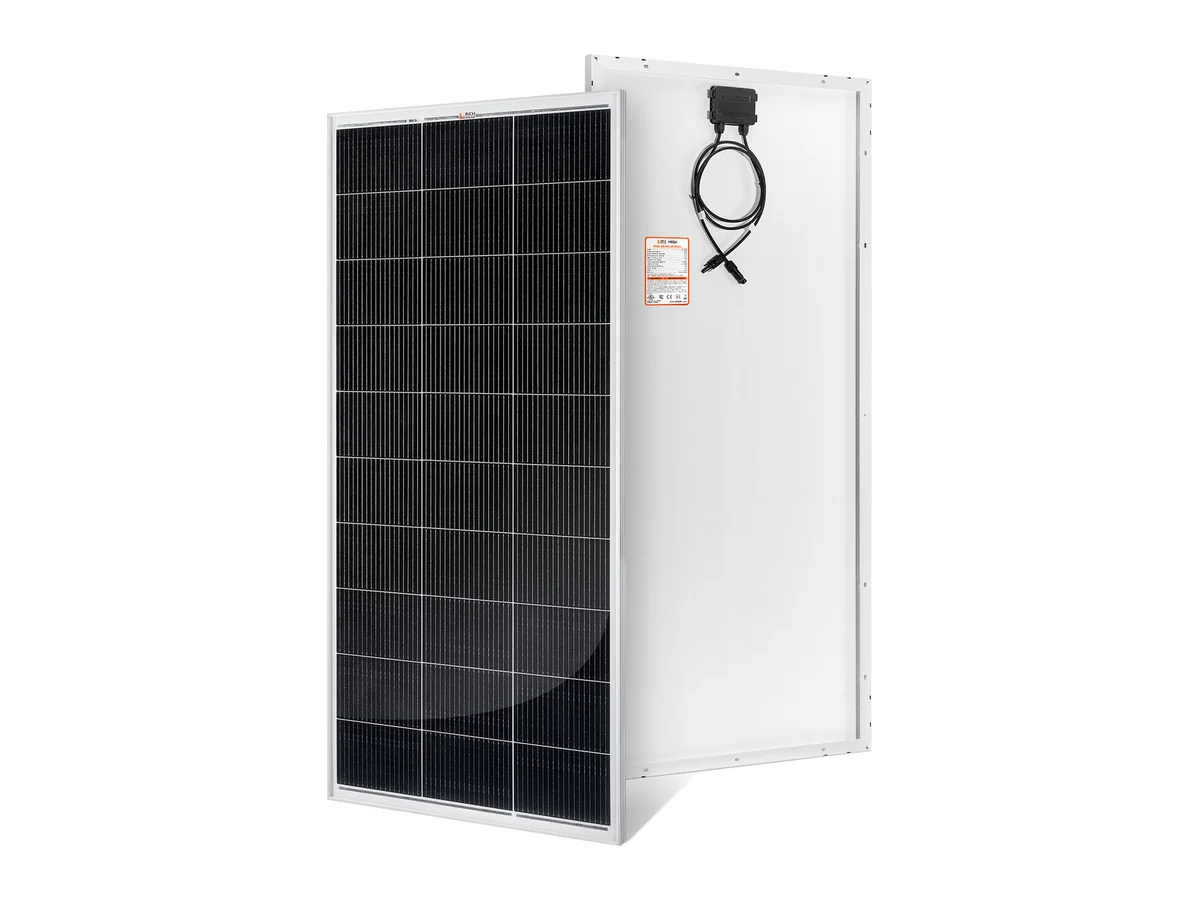
Rich Solar MEGA 200
One 200 W, 12 V rigid panel for a flat roof with room. Read more
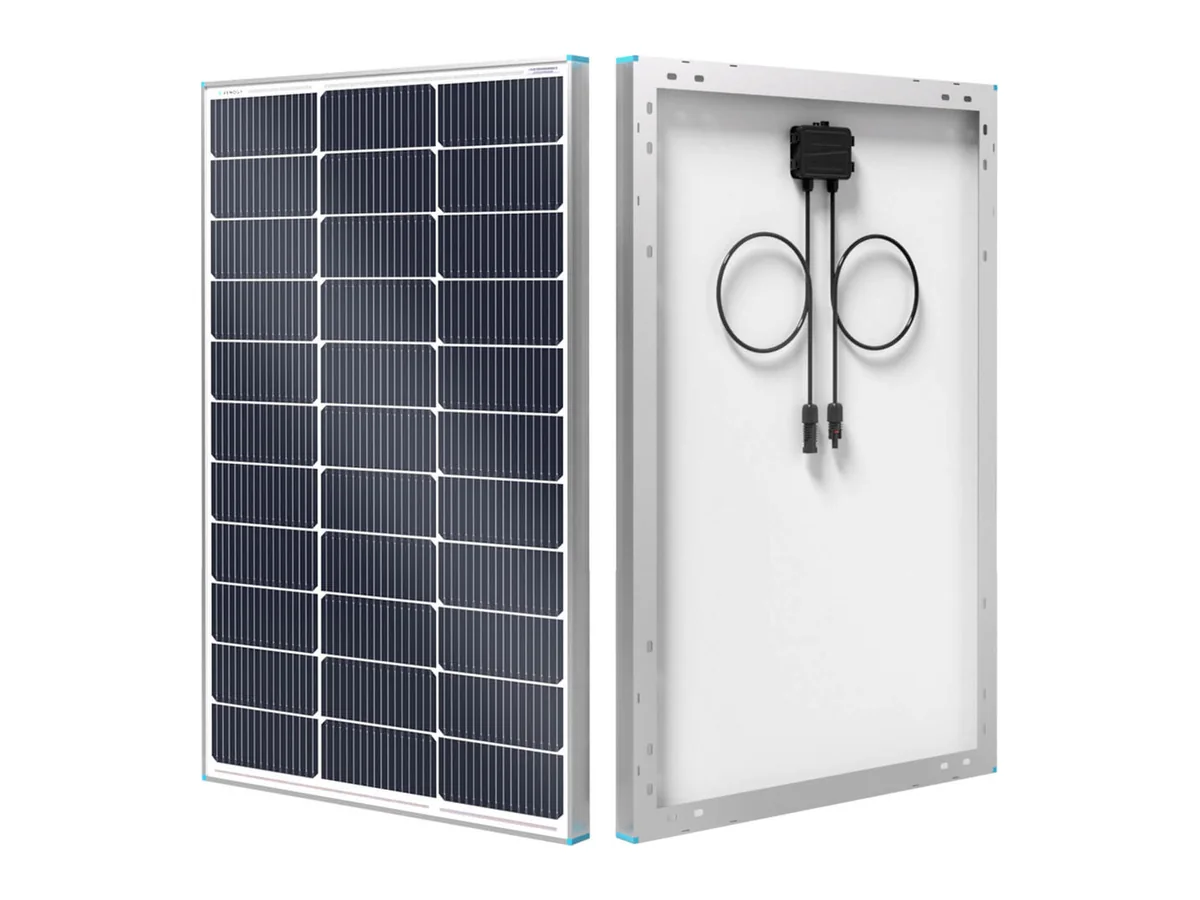
Renogy 200W N-Type (2 x 100 W)
Two 100 W panels fit around vents and racks more easily than one. Read more
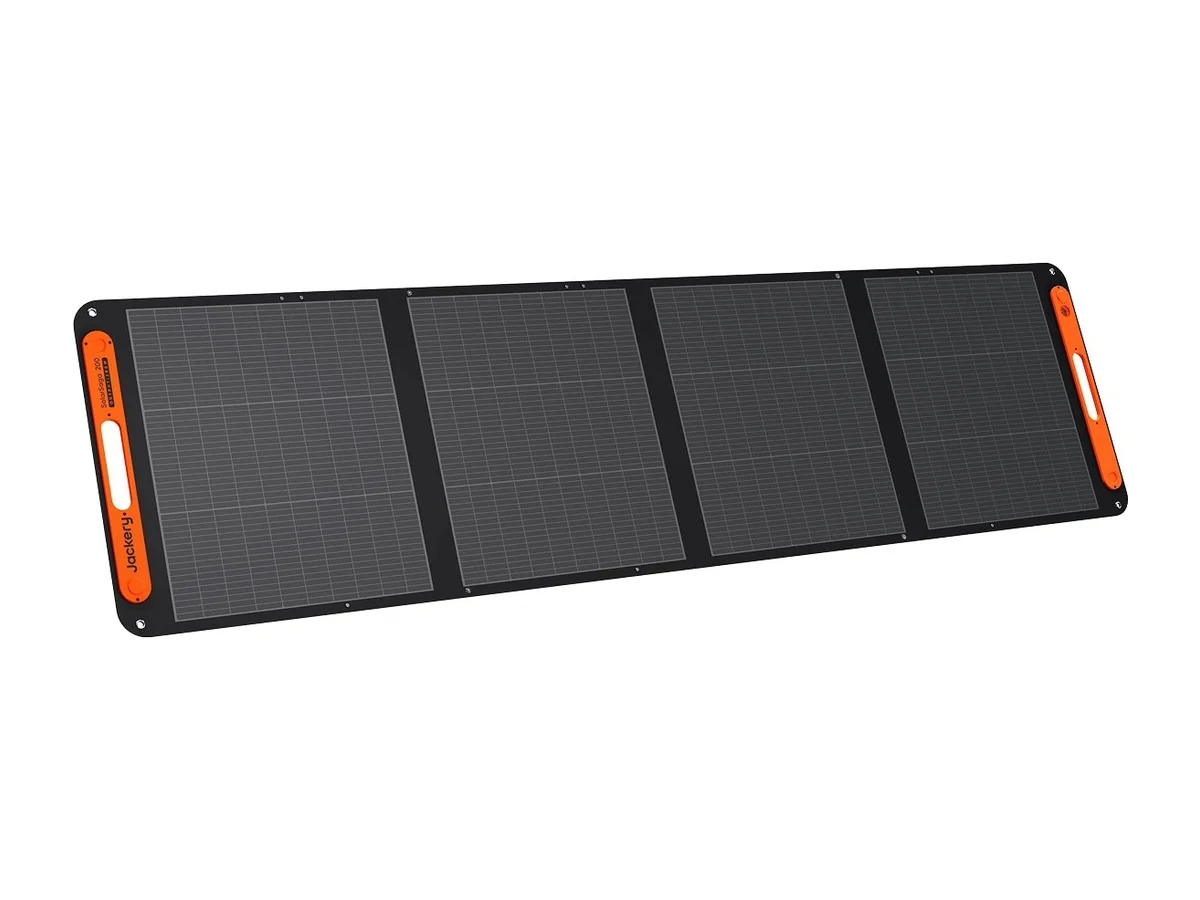
Jackery SolarSaga 200W
Folds, comes with a cable and sits in the sun while the van is in shade. Read more
How solar panels changed in 5 to 10 years
- Efficiency went up. The Fraunhofer ISE Photovoltaics Report (14 July 2026) says the efficiency of commercial silicon modules made from monocrystalline wafers rose from about 17% to just under 25% over the past decade. Compare best with best and the same roof area can now make roughly 45% more power.
- The cell type changed. The same report says multi-crystalline silicon has in practice disappeared from the market, and that n-type TOPCon cells have become dominant, replacing p-type PERC. In 2025, n-type wafers had an 86% share.
- Van panels run behind the headline numbers. Those figures are for the best commercial modules. Small 12 V van panels list lower: Renogy lists 19.2% module efficiency for its PERC 200 W panel, 20% for its N-type 100 W panel and 16.7% for its flexible 200 W panel.
- Read "25%" carefully. A listing that says 25% usually means the cell. The panel (module) is lower because of frames, gaps and wiring: Renogy lists 22% for the cells of its flexible panel and 16.7% for the panel itself.
- What did not change: your roof area. A van roof only fits so many panels, so efficiency matters most when space, not budget, is your limit.
Roof panels or a loose panel?
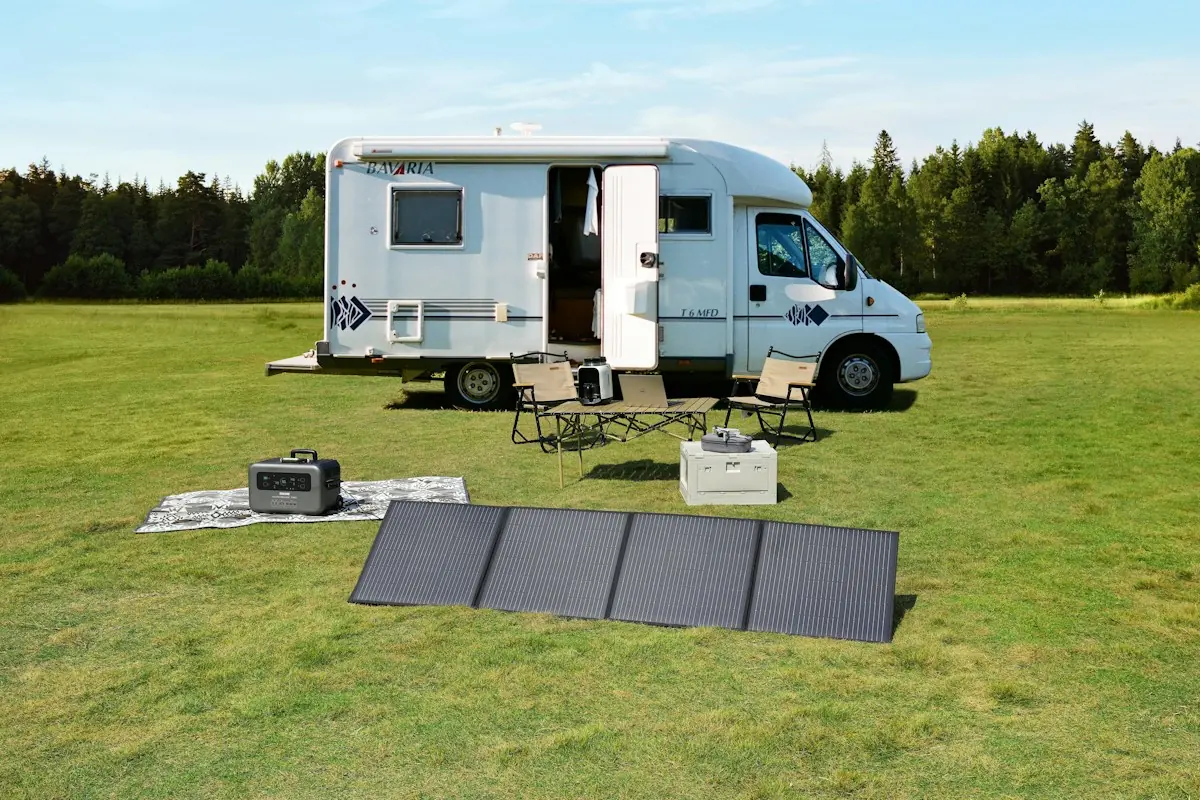
Most vans end up with both. Roof panels charge while you drive and while you work, with no setup. A loose panel on a long cable can be moved into the sun when the van is parked in shade, which a roof panel never can. Roof panels feed a battery or a charge controller; a loose panel plugs straight into a portable power station. Our power station guide for van life explains which station accepts how much solar, and the best portable solar panels guide covers the folding ones. To pick the controller, see Victron vs Renogy charge controller. Whichever panels you pick, the controller matters: our MPPT vs PWM comparison shows why panel voltage decides between the two types.
The four panels, one by one
1. Rich Solar MEGA 200: the simple rigid panel
Rich Solar MEGA 200
The Rich Solar MEGA 200 is one 200 W, 12 V rigid panel with an anodized aluminum frame and tempered glass. Rich Solar lists it at 58.7 x 26.8 x 1.2 inches and 24.0 lb, UL certified, with a 25-year output warranty, and quotes up to 24.8% maximum cell efficiency. It is the easiest to wire and the hardest to place: one long panel needs a clear stretch of flat roof, so measure before you order.
2. Renogy 200W N-Type twin pack: easier to fit around roof gear
Renogy 200W N-Type (2 x 100 W)
The Renogy 200W N-Type twin pack is two 100 W panels. The Renogy UK page for its 16BB N-type 100 W panel lists 20% module efficiency, 5.9 kg and 34.1 x 22.8 inches, and the Amazon listing quotes 25% for the cells; check the size on the listing before you order. Two small panels are easier to place around a roof vent, fan or rack than one long one, and this is the one here that uses the newer N-type cells described above.
3. Renogy 200W Flexible: for curved roofs and light weight
Renogy 200W Flexible
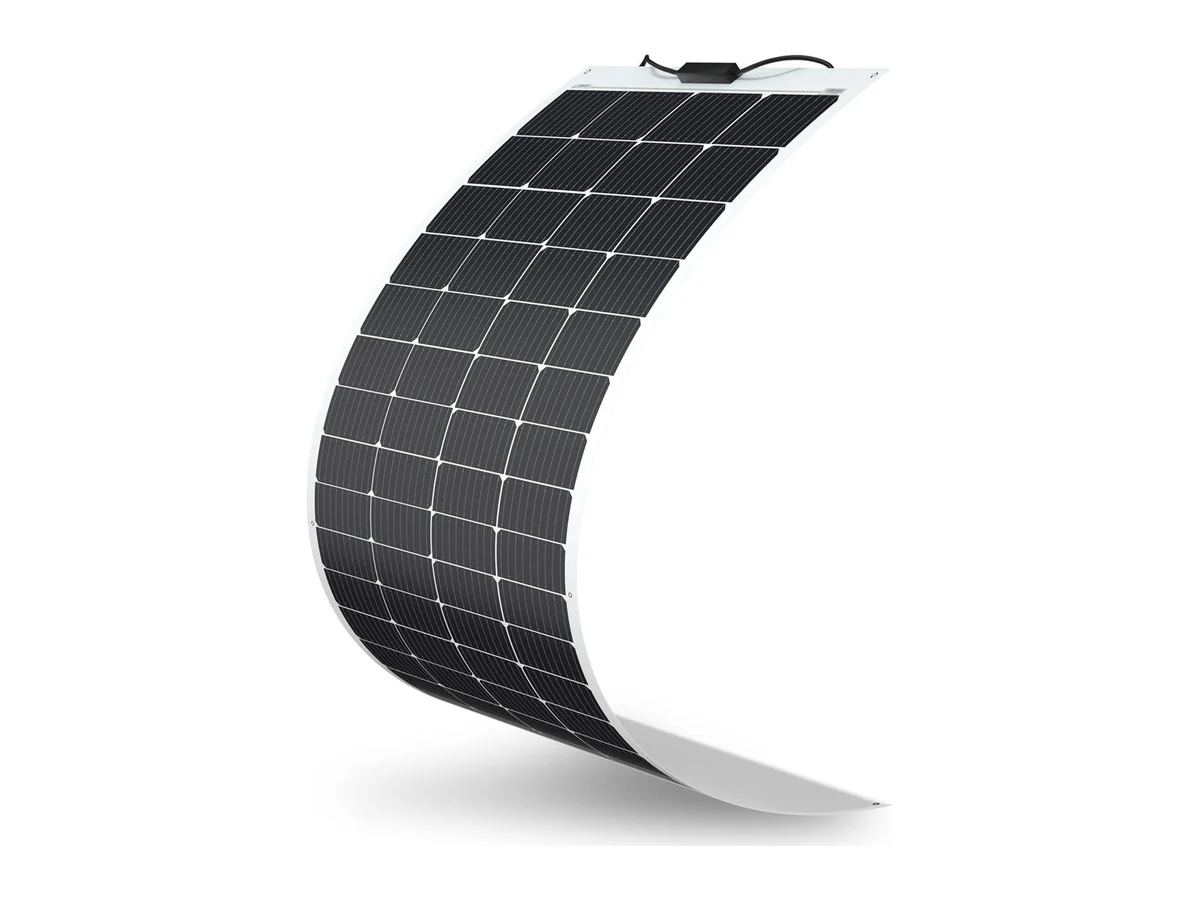
The Renogy 200W Flexible is 200 W at 12 V, 63.2 x 29.4 inches and only 0.1 inch thick, and weighs 10.8 lb (4.9 kg). It bends up to 240 degrees, which suits a curved or ribbed roof where a rigid frame will not sit flat. Renogy lists 16.7% module efficiency, the lowest of the four, so you need more roof area for the same watts. Its warranty is 5 years at 90% output. Renogy also sells the lithium battery that these panels charge; our Renogy vs LiTime guide compares its Core Mini with a LiTime.
4. Jackery SolarSaga 200W: the loose panel
Jackery SolarSaga 200W
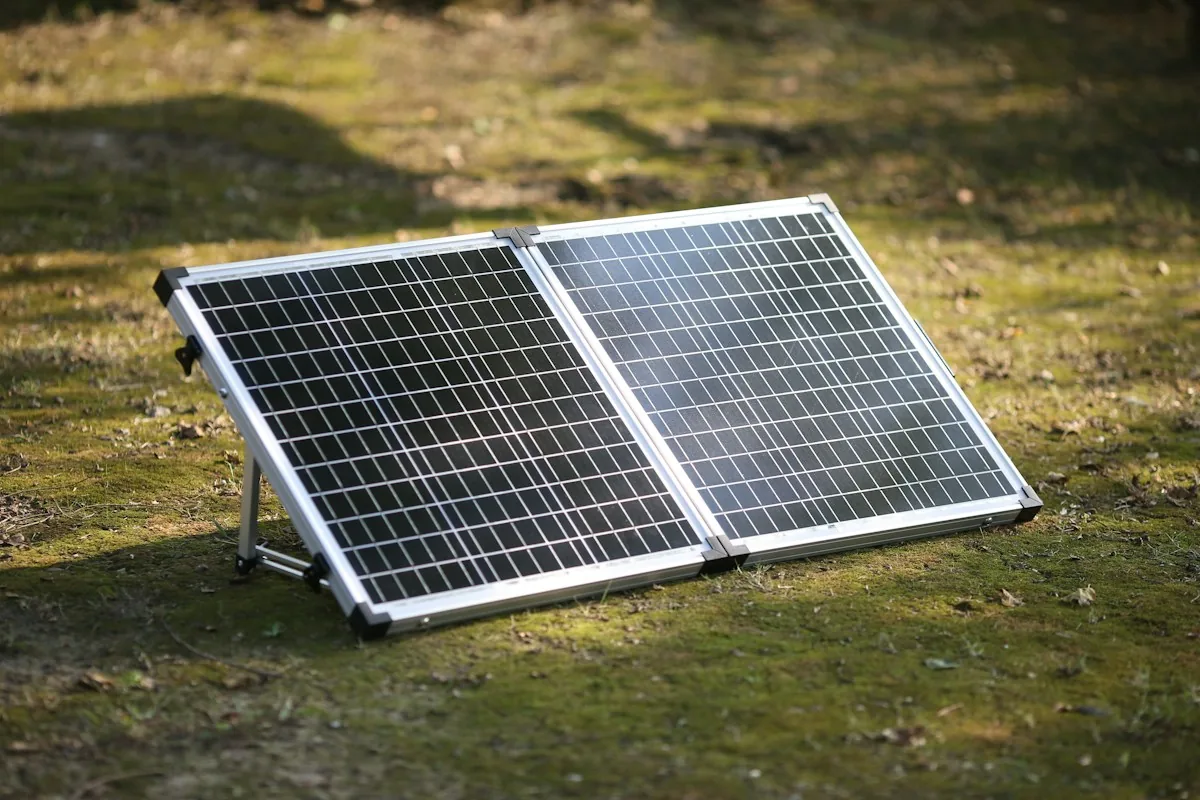
The Jackery SolarSaga 200W folds, weighs 6.5 kg and unfolds to 89.8 x 23.5 inches. Jackery lists TOPCon cells at about 25% conversion, a bifacial design that also collects light on the back, an IP68 rating and a 3 meter cable in the box. It is made for Jackery power stations, so check the connector before you pair it with another brand. For more folding panels, see our portable solar panels guide.
| Rich Solar MEGA 200 | Renogy 200W N-Type | Renogy 200W Flexible | Jackery SolarSaga 200W | |
|---|---|---|---|---|
| Type | Rigid, 12 V | Rigid, two 100 W panels | Flexible, bends 240 degrees | Folding, loose |
| Efficiency as listed | Up to 24.8% (cell) | 20% (panel, UK page), 25% (cell) | 16.7% (panel), 22% (cell) | About 25% conversion |
| Weight | 24.0 lb | 5.9 kg each | 10.8 lb (4.9 kg) | 14.33 lb (6.5 kg) |
| Size | 58.7 x 26.8 x 1.2 in | 34.1 x 22.8 x 1.2 in each | 63.2 x 29.4 x 0.1 in | 89.8 x 23.5 x 1.0 in unfolded |
| Warranty on the maker's page | 25-year output | See the Amazon listing | 5-year, 90% output | 3 + 2 years |
Specs come from each maker's own page, checked 2 October 2026. The Rich Solar MEGA 200 figures (200 W, 58.7 x 26.8 x 1.2 in, 24 lb, 25-year performance warranty, up to 24.8% cell efficiency) were read again on richsolar.com on 5 October 2026 and match. Prices change daily, so we list none: check the current one on Amazon.
Which panel for which roof
| Your situation | Rich Solar MEGA 200 | Renogy 200W N-Type | Renogy 200W Flexible | Jackery SolarSaga 200W |
|---|---|---|---|---|
| Flat roof with a long clear stretch | Yes | Optional | Optional | Loose, not for the roof |
| Roof with vents, a fan or a rack | Hard to place | Yes | Optional | Not needed |
| Curved or ribbed roof | Rigid | Rigid | Yes | Not needed |
| Weight on the roof matters | 24.0 lb | 26 lb for two | 10.8 lb | Not for the roof |
| Parking in shade a lot | Fixed | Fixed | Fixed | Yes, move it to the sun |
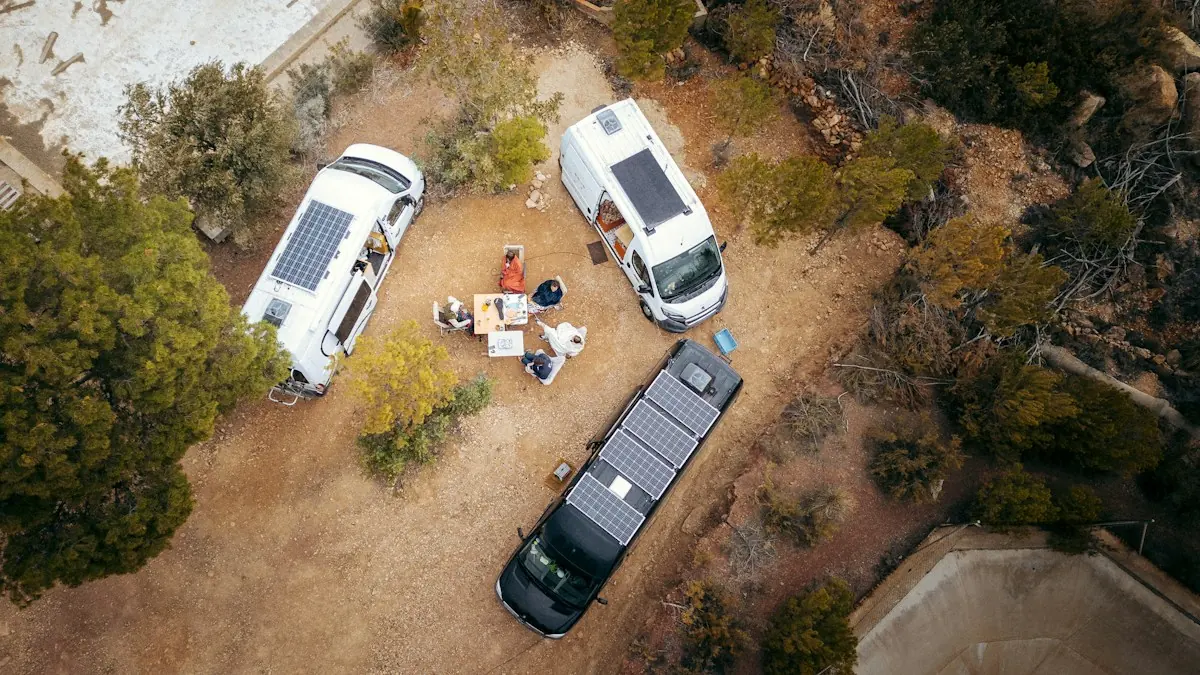
For most vans, one rigid or flexible roof setup plus one loose panel is the sensible mix. Start with the roof, then add the loose panel if you park in shade. Want a flexible and a rigid 200 W panel head to head? See our BougeRV vs Renogy comparison.
Key takeaways
- Panel efficiency rose from about 17% to just under 25% for the best commercial modules in a decade (Fraunhofer ISE, July 2026). Van panels list lower, so compare module efficiency, not the cell figure.
- Measure the roof first: a long rigid panel, two small ones, or a flexible one is decided by vents, racks and curves.
- A loose panel on a long cable fixes the problem a roof panel cannot: parking in shade.
- Fit the right fuses and check plus and minus before you connect anything.
Wiring and safety: two things that went wrong
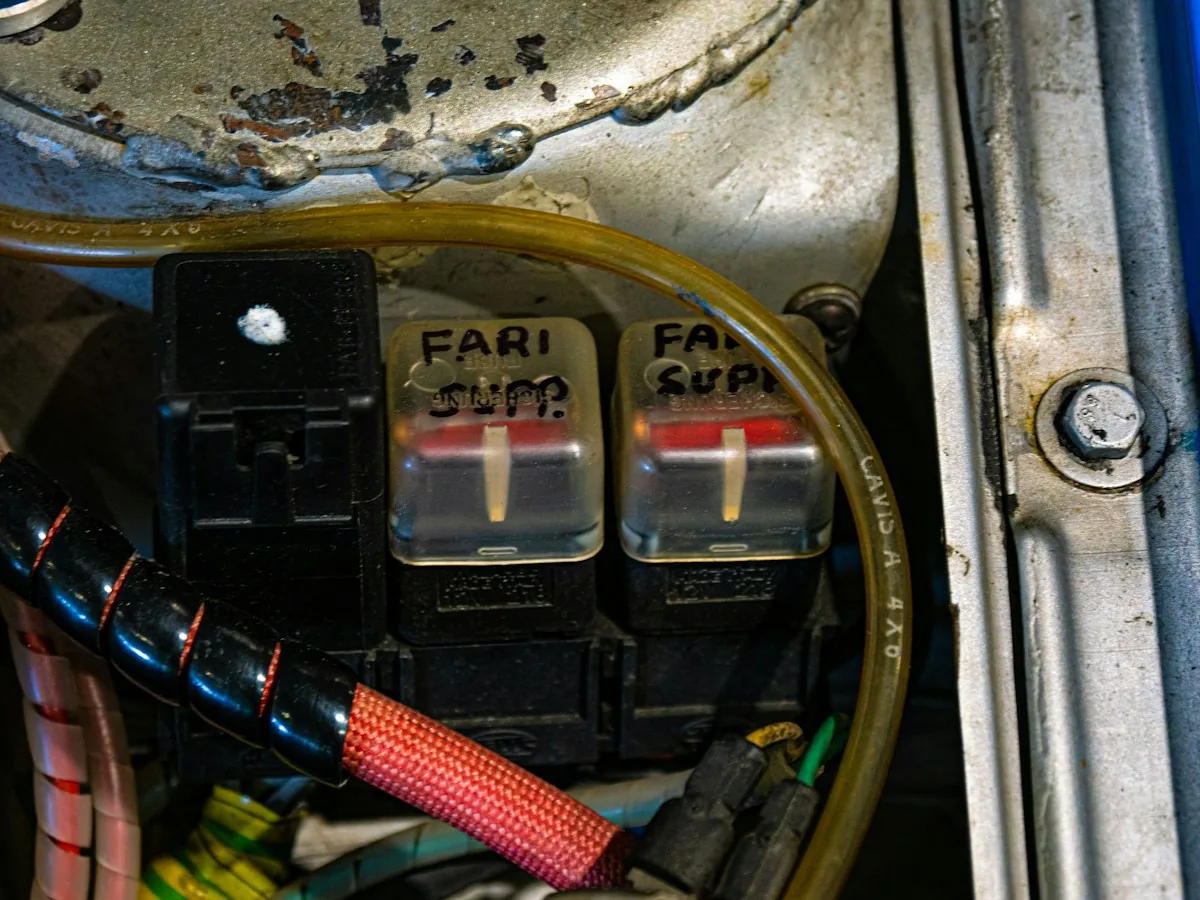
Two things went wrong in my van, and both are easy to avoid. First, rats ate my cables. Second, while we were fitting the plugs on the cables, a friend who was helping turned the plus and minus around. Not nice. So be careful for fire, really careful, and please use the right fuses. That can save your life. You do not want to be in a burning van or a burning caravan.
Our rules after that: use the fuse rating the manufacturer specifies, check plus and minus before every connection, keep cables where rodents cannot chew them, and have a qualified installer check fixed wiring.
Why we put this list together

Chenzo, founder of NomadsToolsLab
I lived in a van, a trailer and an old French caravan, and I traveled for seven years in Europe, off grid. The van was a Renault Master, the newest model, and I built everything inside myself.
I had solar panels on the roof, and I also had one really strong panel. It was not super big, but it was big, and that one I just put outside, mobile, with a long cable. I did not have a generator: the panels charged a mobile power station, and I plugged everything inside into it. We lived like this in Portugal and Spain.
That mix of roof panels and one loose panel is why this guide covers both.
Where to go next
Panels are half of the system. Next, pick the station in our best portable power station for van life, read the best vanlife internet setup to see how much power your router will use, or go back to the power station guide for digital nomads.
Wondering whether a place is really green? See our guide to eco stays and labels.
Building a whole camper? Read cargo van conversion for beginners in 5 steps, and the same panel logic on the water in houseboat electricity and water for beginners.
Related reading: How to Wire a Camper Van: Fuse Block, Cables and Lights.
A flat battery can end a trip too: see the best jump starter for a diesel van.
FAQ
How many watts of solar does a camper van need?
It depends on your daily use. Add up your devices in Wh per day, then divide by the hours of strong sun you can expect. Renogy gives a rule of thumb on its page: a 200 W panel makes about 1,000 Wh a day with 5 to 6 hours of direct sun. Shade and winter give less.
Are rigid or flexible panels better for a van roof?
Rigid panels list higher module efficiency in Renogy's range (19.2% against 16.7% for the flexible one) but are heavier and need a flat roof. Flexible panels weigh about half and bend over a curved roof, but need more area for the same watts.
Is a loose solar panel worth it as well as roof panels?
Yes if you park in shade. A loose panel on a long cable can sit in the sun while the van stays in the shade, and it plugs straight into a portable power station.
Do I need fuses on a van solar system?
Yes. Use the fuse rating the manufacturer specifies, never swap plus and minus, and protect the cables. A wiring mistake can start a fire, so have a qualified installer check fixed wiring.
Affiliate disclosure. This post contains affiliate links. If you click and buy something, this site earns a small commission at no extra cost to you. Picks are based on published specs, independent reviews and manufacturer information, and we only recommend what we would use ourselves. As an Amazon Associate I earn from qualifying purchases. Read the full affiliate disclosure. Amazon and the Amazon logo are trademarks of Amazon.com, Inc. or its affiliates.
Your next step
 Best Portable Power Station for Digital Nomads