
Best Portable Power Station for Van Life (2026)
As an Amazon Associate I earn from qualifying purchases. Some links on this page earn us a small commission, at no extra cost to you. Full disclosure.
Four power stations can all say "1 kWh" on the box and still behave very differently once they are wired into a van. One takes twice the solar of another, one refills from the wall in under an hour, one is the only one you can add batteries to later. This guide to the best portable power station for van life explains the differences in plain language first, then compares four stations that each win at something different. If you only need to keep a laptop and phone alive, our guide to portable power stations for digital nomads is the better fit. This one is for living in a van.
Quick answer
Pick the Jackery Explorer 1000 v2 if weight matters most, the BLUETTI Elite 100 V2 if you plan a lot of solar, the Anker SOLIX C1000 Gen 2 for the highest output and the quickest wall recharge, and the EcoFlow DELTA 3 for the most outlets and room to add batteries later. All four hold about 1,000 Wh and use LiFePO4 cells. Use the Read more links to jump to each one.
Checked on 5 October 2026 against the makers' own pages: Anker SOLIX C1000 Gen 2 (1,024Wh, 2,000W, 49 minute wall recharge, 24.9 lb) and BLUETTI Elite 100 V2 (1,024Wh, 1,800W, up to 1,000W solar input). Prices change daily, so we list none.
All four, with a buy button each
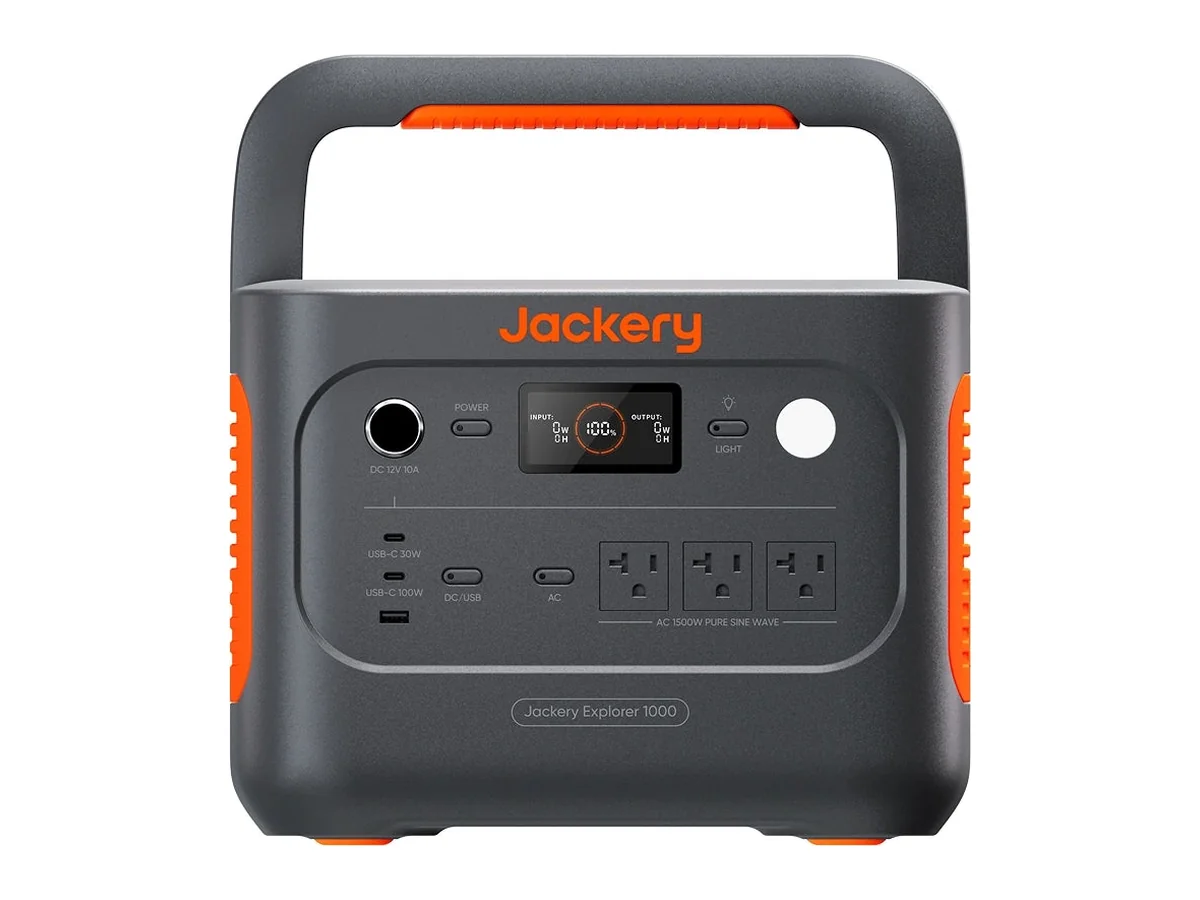
Jackery Explorer 1000 v2
The lightest here at 10.8 kg, simple and easy to lift in and out of a van. Read more
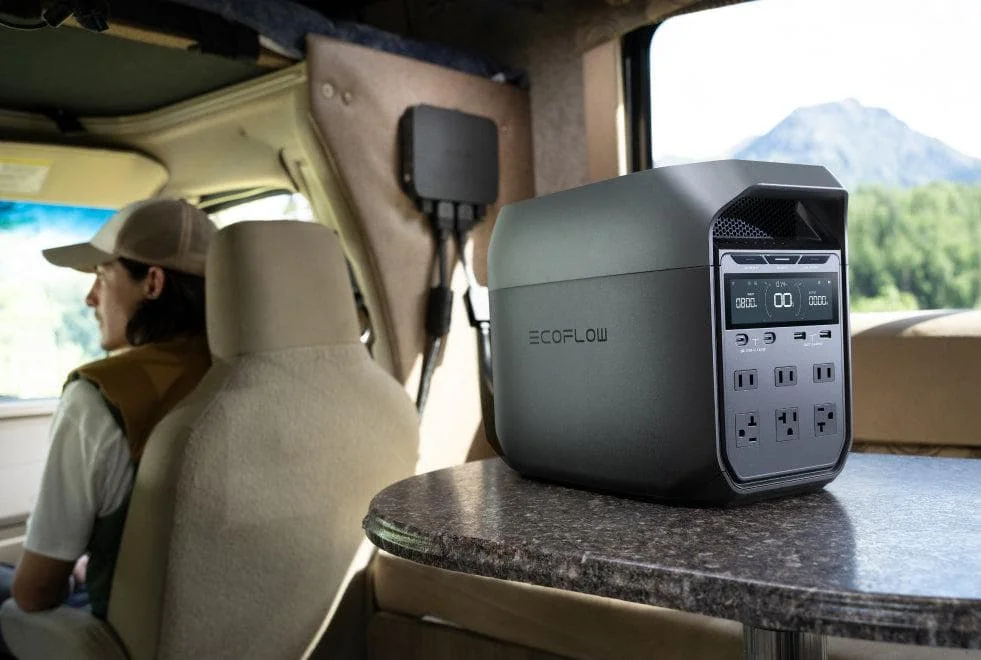
EcoFlow DELTA 3
Six AC outlets, and extra batteries can be added later. Read more
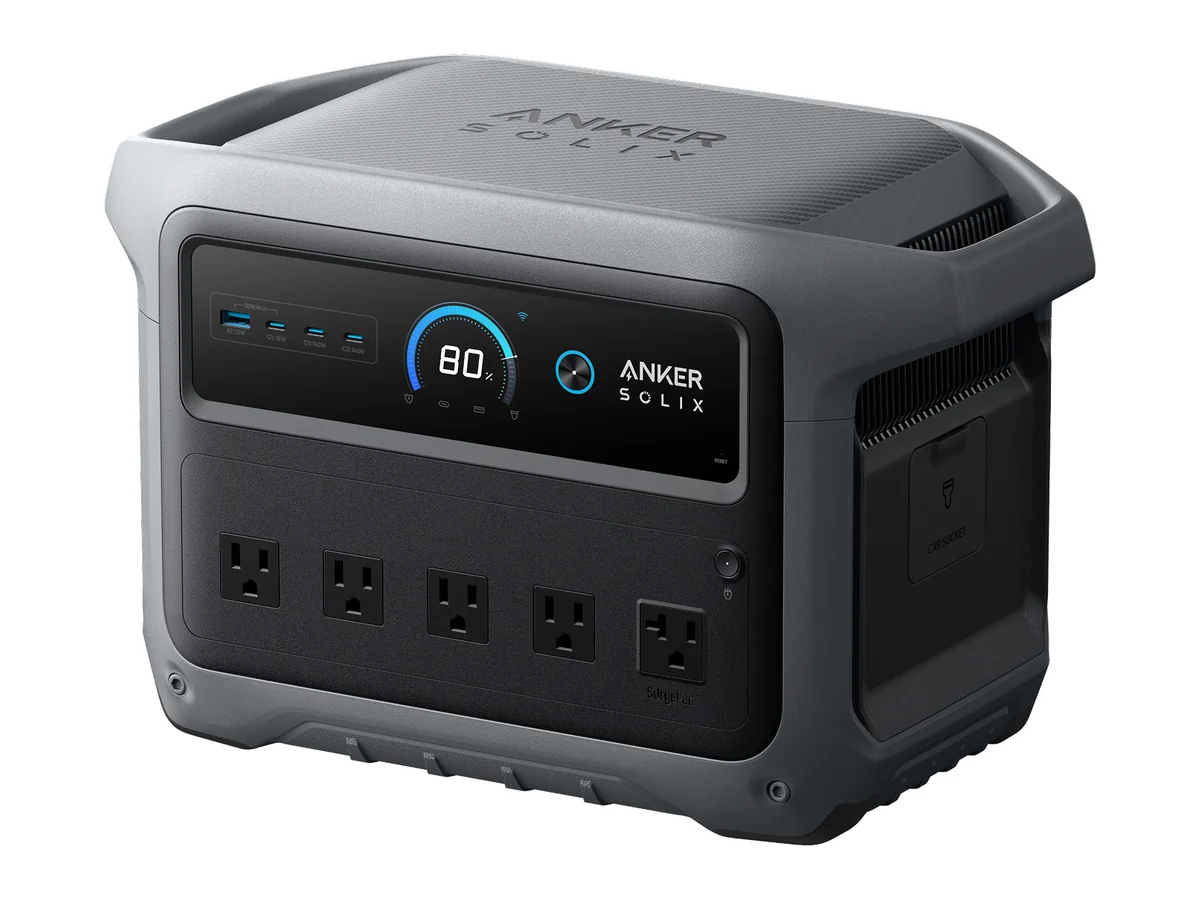
Anker SOLIX C1000 Gen 2
2,000 W output and a full wall recharge in 49 minutes. Read more
What the numbers on the box really mean
- Capacity (Wh) is the size of the tank. Watt-hours are watts multiplied by hours. A 60 W laptop running for 5 hours uses about 300 Wh. All four stations below hold roughly 1,000 Wh, so the real differences are elsewhere.
- Output (W) is how much you can draw at the same moment. Two 1,000 W appliances at once need a station that can deliver 2,000 W. The four range from 1,500 W to 2,000 W.
- Battery type decides how long it lasts. All four use LiFePO4 (lithium iron phosphate) cells, which the makers rate at 4,000 cycles. Older lithium-ion (NMC) stations are rated far lower: Jackery lists 800 cycles to 80% for its older Explorer 1000, and 4,000 cycles to 70% for the LiFePO4 Explorer 1000 v2. The end points differ, so always check what a maker means by a "cycle".
- Solar input is how fast the sun can refill it. It is the most panel watts the station accepts: 400 W for the Jackery, 500 W for the EcoFlow, 600 W for the Anker, 1,000 W for the BLUETTI. Panels beyond that limit add nothing.
- Connections. Count the AC outlets, and look for a 12 V car port and USB-C ports that can charge a laptop. These specs are for the US models sold on amazon.com (120 V). In Europe, check the maker's page for the regional model, because voltage and outlets differ.
- Weight. The four weigh between 10.8 kg and 12.5 kg (24 to 28 lb). It matters when you lift the station out of the van to charge or work outside.
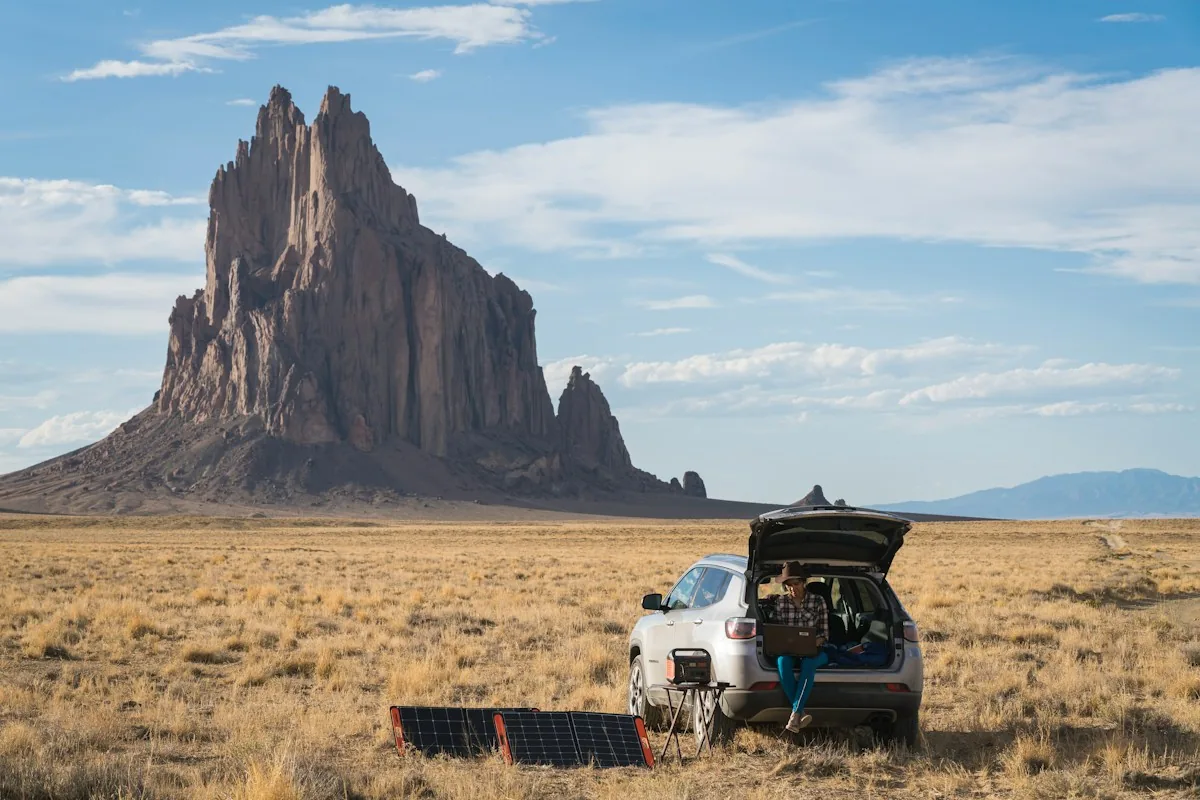
The four stations side by side
| Jackery Explorer 1000 v2 | EcoFlow DELTA 3 | Anker SOLIX C1000 Gen 2 | BLUETTI Elite 100 V2 | |
|---|---|---|---|---|
| Capacity | 1,070 Wh | 1,024 Wh | 1,024 Wh | 1,024 Wh |
| AC output | 1,500 W (3,000 W surge) | 1,800 W (3,600 W surge) | 2,000 W (3,000 W peak) | 1,800 W |
| Battery and rated cycles | LiFePO4, 4,000 to 70%+ | LiFePO4, 4,000 to 80%+ | LiFePO4, 4,000 to 80% | LiFePO4, 4,000+ to 80% |
| Max solar input | 400 W (2 x 200 W) | 500 W | 600 W | 1,000 W |
| Wall recharge | About 1.6 hours | 56 minutes | 49 minutes | 70 minutes to full |
| AC outlets | 3 | 6 | 5 | 4 |
| Weight | 10.8 kg (23.8 lb) | 12.5 kg (27.6 lb) | 11.3 kg (24.9 lb) | 11.5 kg (25 lb) |
Specs are from each maker's own product page, checked 2 October 2026. Prices change daily, so we list none: check the current one on Amazon.
The four stations, one by one
1. Jackery Explorer 1000 v2: the lightest
Jackery Explorer 1000 v2
At 10.8 kg the Jackery Explorer 1000 v2 is the lightest of the four, and the one to pick if you carry the station in and out of the van every day. It holds 1,070 Wh and delivers 1,500 W with three AC outlets, two USB-C ports (100 W and 30 W) and a 12 V car port. The trade-off is at the other end of the table: it has the lowest output and the lowest solar input (400 W), and Jackery lists about 1.6 hours for a wall recharge. Warranty is 3 plus 2 years on Jackery's page.
2. EcoFlow DELTA 3: most outlets, room to grow
EcoFlow DELTA 3
The EcoFlow DELTA 3 is the one with the most ways to plug in: six AC outlets, 13 outputs in total, and a 12 V car port. It is also the only one of the four that is built to grow, with extra batteries supported up to 5 kWh on EcoFlow's page. It recharges from the wall in 56 minutes, accepts 500 W of solar, and carries a 5-year warranty. It is the heaviest of the four at 12.5 kg, and EcoFlow rates it at about 30 dB at 600 W, which matters when the bed is two meters away. Torn between just these two brands? Read Jackery vs EcoFlow.
3. Anker SOLIX C1000 Gen 2: highest output, fastest recharge
Anker SOLIX C1000 Gen 2
The Anker SOLIX C1000 Gen 2 delivers 2,000 W (3,000 W peak) from 1,024 Wh, the highest output here, and recharges fully from the wall in 49 minutes. It takes up to 600 W of solar, has five AC outlets and three USB-C ports (one rated 140 W), and weighs 11.3 kg. The catch, stated on Anker's own FAQ: it has no expansion option, so what you buy is the capacity you keep.
4. BLUETTI Elite 100 V2: most solar input
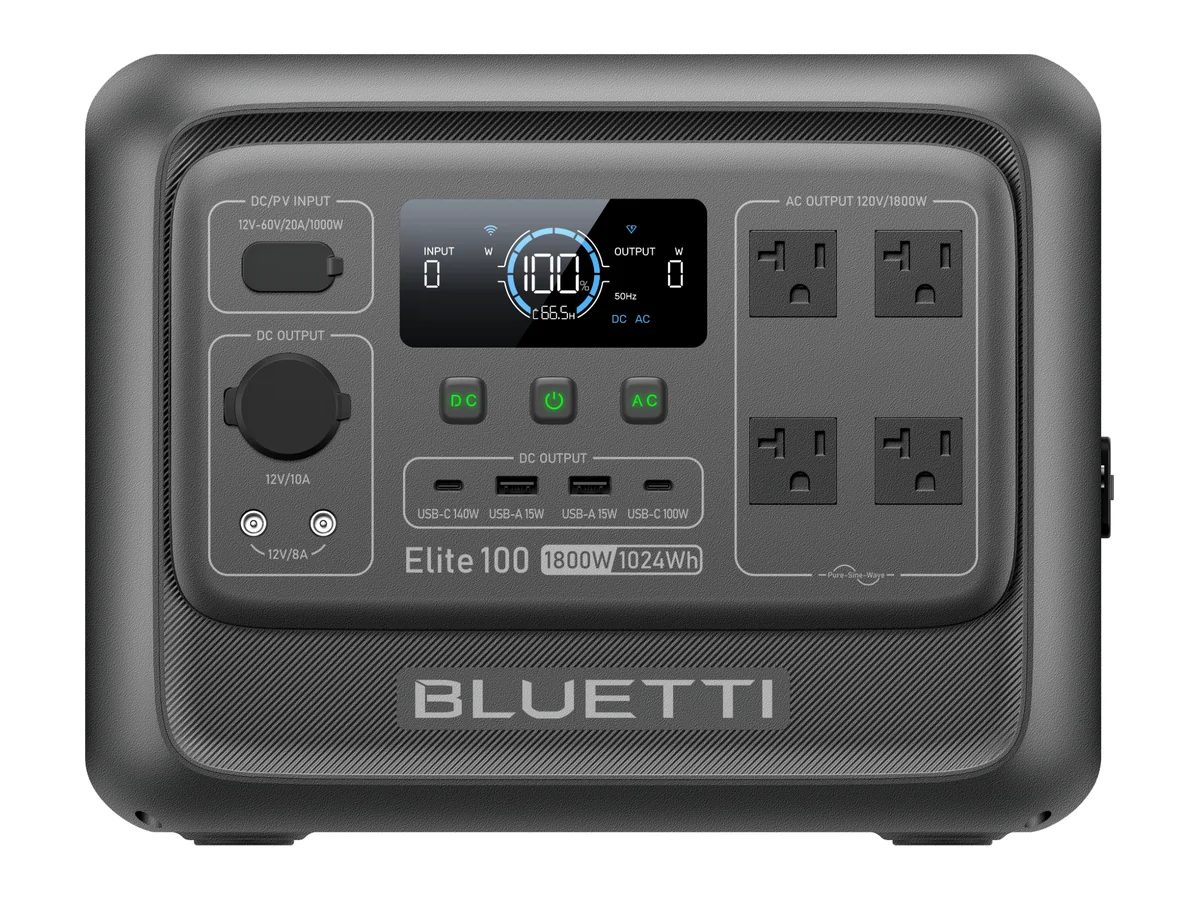
BLUETTI Elite 100 V2
The BLUETTI Elite 100 V2 accepts up to 1,000 W of solar (12 to 60 V), more than twice the Jackery, which makes it the pick if your plan is a big array on the roof. It delivers 1,800 W from 1,024 Wh, reaches 80% from the wall in 45 minutes and full in about 70, weighs 11.5 kg, and switches to battery in 10 ms if you use it as a backup. For the engine route, BLUETTI also sells the BLUETTI Charger 2, a 1,200 W alternator charger, separately.
Charging in a van: solar, engine or shore power

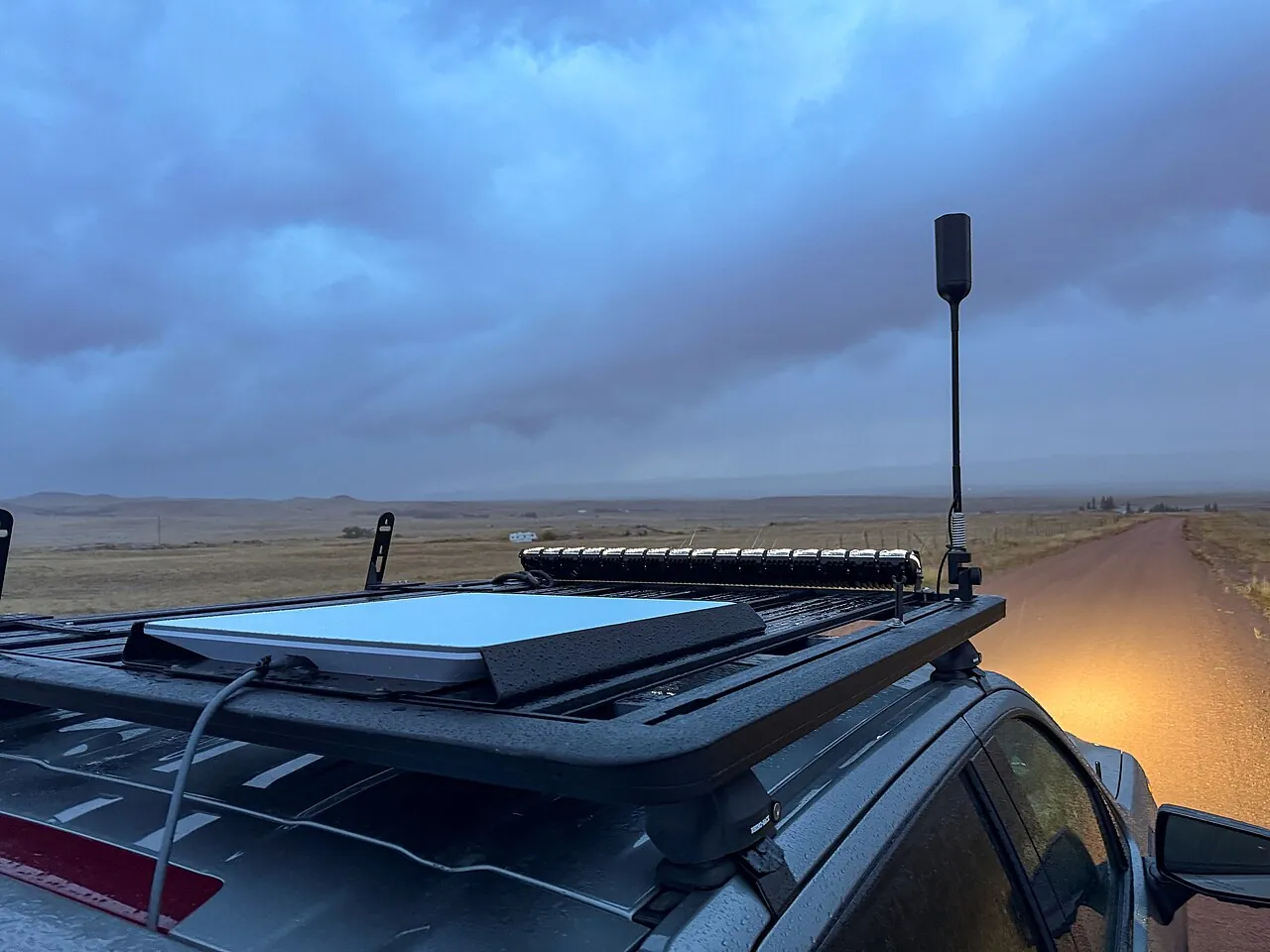
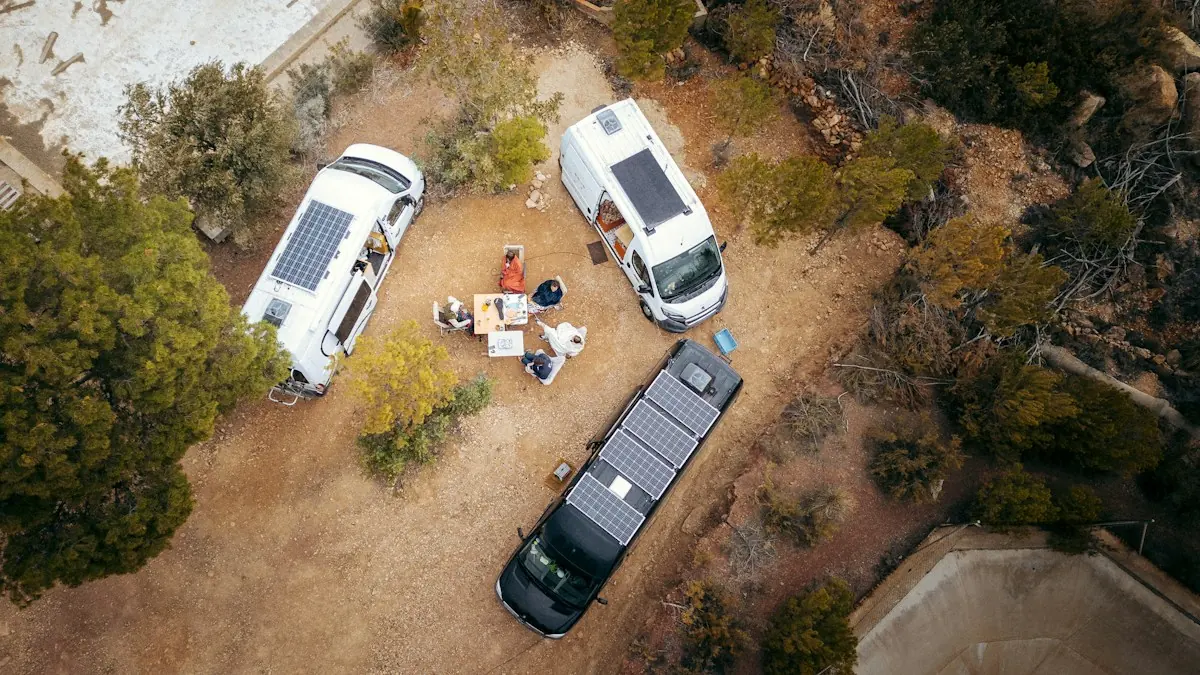
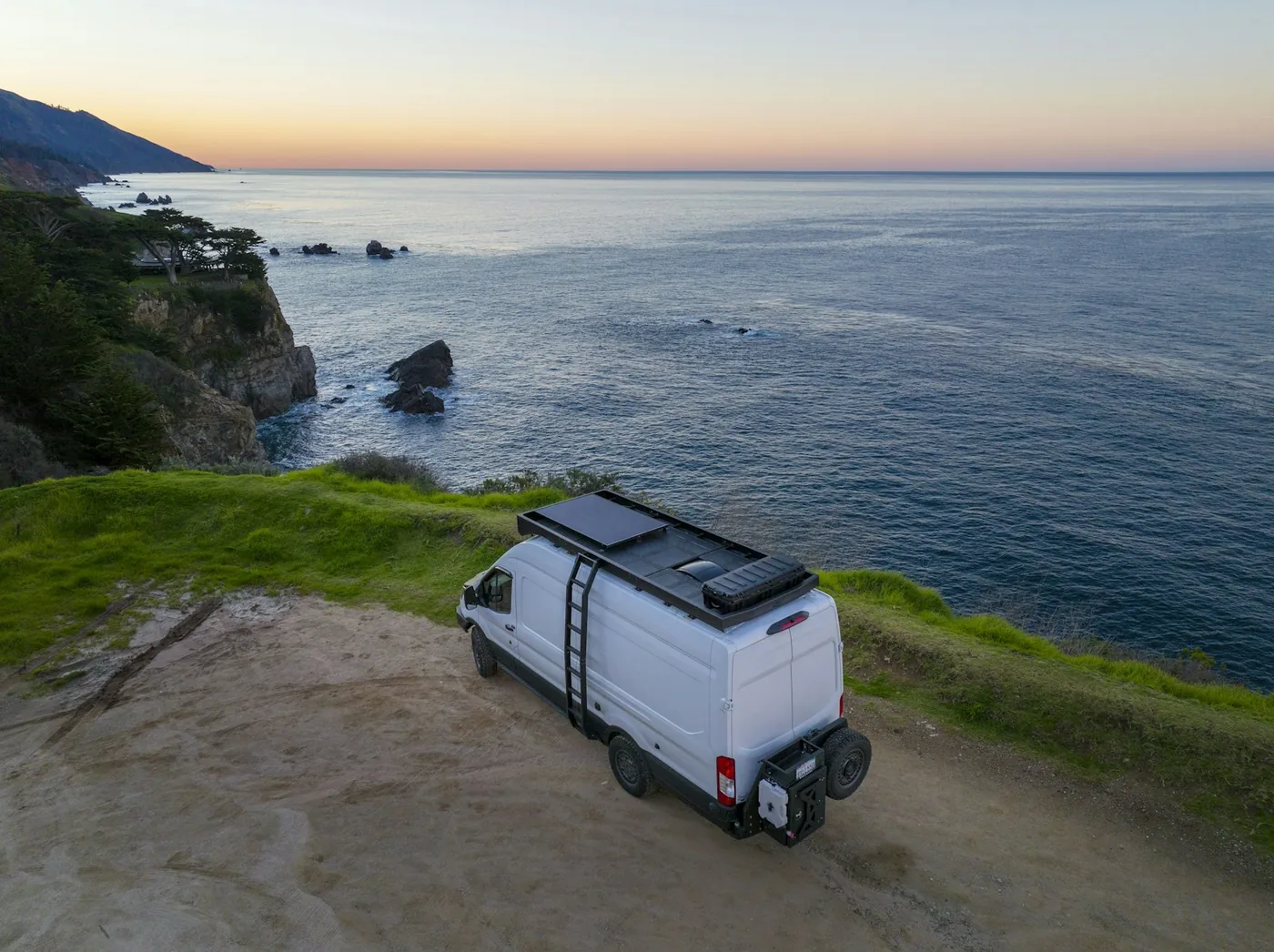
A station is only useful if you can refill it, and in a van there are three routes: the wall at a campsite, solar, and the engine. The wall is covered in the table above. Solar is limited by the input figure, so read the panels guide before you buy: our best solar panels for a camper van compares the roof options and the portable solar panels guide covers the loose ones.
The engine is where the stations differ most. Jackery lists 12 hours to recharge from its car adapter, which tells you that the 12 V socket is a trickle. EcoFlow lists 800 W car charging for the DELTA 3, about 1.3 hours on its page. BLUETTI sells a dedicated alternator charger. If you drive most days and park in the shade, check this before you buy, not after. If you plan to run a 12 V fridge from one of these, ICECO vs BougeRV compares two popular compressor fridges and what they list for power.
Staying at an eco campsite or glamping dome? Ask about power before you pay.
A power station also keeps the small things running. Our guides to the best Bluetooth speaker for van life and the best headlamp for camping say which of those charge over USB-C.
Which one for which use
| Use | Jackery 1000 v2 | EcoFlow DELTA 3 | Anker C1000 Gen 2 | BLUETTI Elite 100 V2 |
|---|---|---|---|---|
| Carrying it in and out often | Yes, lightest | Heaviest | Middle | Middle |
| A big solar array on the roof | Max 400 W | Up to 500 W | Up to 600 W | Up to 1,000 W |
| Heavy appliances at once | 1,500 W | 1,800 W | 2,000 W | 1,800 W |
| Fast top-up at a campsite | About 1.6 h | 56 min | 49 min | 70 min |
| Many devices plugged in at once | 3 AC outlets | 6 AC outlets | 5 AC outlets | 4 AC outlets |
| Adding batteries later | Not stated | Up to 5 kWh | Not possible | Not stated |
"Not stated" means the maker's page does not list it, not that it is impossible. For a first van, the lightest or the one with the most solar input is usually the better choice. Adding batteries is for people who already know they will outgrow 1 kWh. Choosing between two of these brands? Our Bluetti vs EcoFlow comparison puts the Delta 3, Elite 100 V2 and AC180 side by side.
Key takeaways
- Capacity is the tank (Wh), output is the tap (W). Add up your devices before you choose, not after.
- All four use LiFePO4 cells rated for 4,000 cycles. The real differences are solar input, output, recharge speed, outlets, weight and expandability.
- A big solar plan points to the BLUETTI, heavy appliances to the Anker, the easiest lift to the Jackery, and the most plugs plus room to grow to the EcoFlow.
- Charging from the engine is where stations differ most. Check it first if you drive often.
Why we put this list together

Chenzo, founder of NomadsToolsLab
I lived in a van, with a trailer and an old French caravan, and I traveled for seven years in Europe, off grid. I could park anywhere and still have light, electricity and internet. The van was a Renault Master, the newest model, and I built everything inside myself.
I did not have a generator. I had solar panels on the roof and one really strong panel that I put outside, on a long cable. It plugged into a mobile power station that charged its battery, and I plugged everything inside into that. For internet we had SIM cards and a router with a SIM card. We lived like this in Portugal and Spain.
That is why this guide starts with the differences instead of one winner. The right station depends on how much roof you have, how you drive and what you plug in.
Where to go next
A station is half of the system. Next, pick the panels in our best solar panels for a camper van, or read the best vanlife internet setup to see how much power your router and Starlink will take. For a smaller station that fits a laptop-only setup, go back to the power station guide for digital nomads. Heading off the grid? A flat tire is the other thing that can strand you, so read our camper van tires guide too. Compare Starlink Mini vs Standard for what each kit draws.

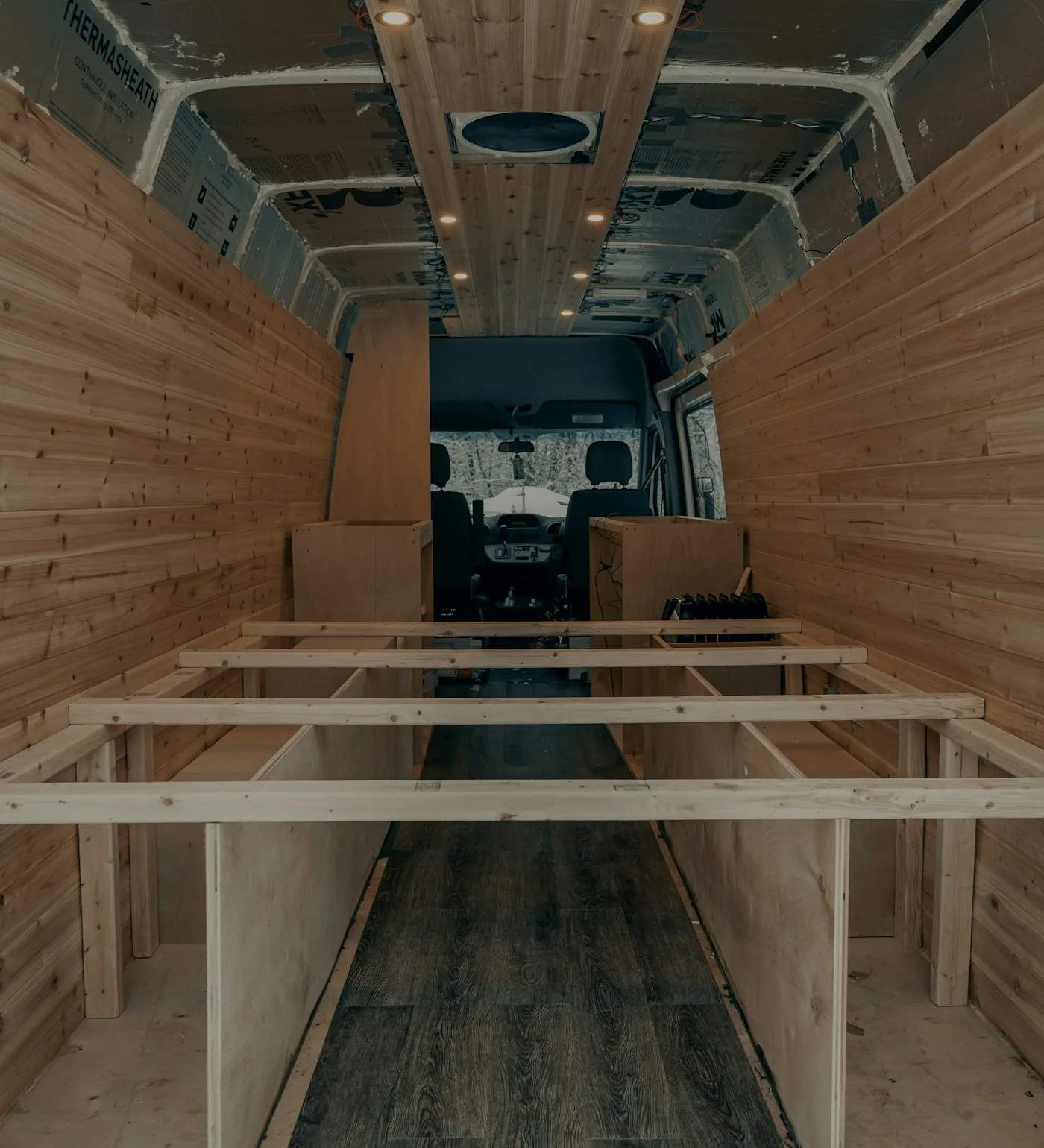
Planning the whole van? Read cargo van conversion for beginners in 5 steps, and how to stop rats chewing wires in a van.
Related reading: How to Wire a Camper Van: Fuse Block, Cables and Lights.
FAQ
How big a power station do I need for a camper van?
Add up every device's watts multiplied by the hours it runs per day. That daily total in Wh is what the station must cover between charges. A 60 W laptop running for 5 hours is about 300 Wh.
Is LiFePO4 better than lithium-ion for a van?
On paper, yes. Jackery lists 800 cycles to 80% for its older lithium-ion Explorer 1000 and 4,000 cycles to 70% for the LiFePO4 Explorer 1000 v2.
Can I charge a power station from the van's engine?
Yes, but the 12 V socket is slow. Jackery lists 12 hours for its car adapter. A dedicated alternator charger is much faster: BLUETTI sells a 1,200 W one, and EcoFlow lists 800 W car charging for the DELTA 3.
Do I need a fuse between the panels, the station and the van?
Yes. Use the fuses the manufacturer specifies and never swap plus and minus: a wiring mistake can start a fire. Follow the manual, and for fixed wiring in a van ask a qualified installer.
Can I take a portable power station on a plane?
No. The FAA does not allow lithium battery devices over 160Wh on passenger aircraft, and all four stations here hold about 1,000Wh (FAA PackSafe, read on 5 October 2026). Buy at your destination instead.
How long will a 1,000Wh power station run a laptop?
A 60W laptop running 5 hours a day uses about 300Wh, so 1,000Wh covers about three such days, and less once you add a phone, router and lights.
Watch: the Jackery Explorer 1000 v2 after 3 months
Video by Hawkins Hikes.
Seen enough? Here is the Jackery Explorer 1000 v2 from this article.
Jackery Explorer 1000 v2
Planning the rest of the electrical system? See our lithium vs AGM battery comparison for camper vans.
Affiliate disclosure. This post contains affiliate links. If you click and buy something, this site earns a small commission at no extra cost to you. Picks are based on published specs, independent reviews and manufacturer information, and we only recommend what we would use ourselves. As an Amazon Associate I earn from qualifying purchases. Read the full affiliate disclosure. Amazon and the Amazon logo are trademarks of Amazon.com, Inc. or its affiliates.
Your next step
 Best Portable Power Station for Digital Nomads