Jackery vs EcoFlow: Which Power Station for Van Life?
As an Amazon Associate I earn from qualifying purchases. Some links on this page earn us a small commission, at no extra cost to you. Full disclosure.
Jackery vs EcoFlow: the EcoFlow Delta 3 holds 1,024 Wh and gives 1,800 W from six AC outlets, while the Jackery Explorer 1000 v2 holds 1,070 Wh and gives 1,500 W from three, in a lighter box. We read both maker pages and both Amazon listings on 5 October 2026, and the numbers below come from the makers' own pages. If you want the full buying guides, see our power stations for van life and power stations for working off grid; this page only answers Jackery or EcoFlow.

Quick answer
Checked on 5 October 2026. Choose the EcoFlow Delta 3 if you want fast charging (56 minutes from a wall socket per EcoFlow), six AC outlets and a 5-year warranty. Choose the Jackery Explorer 1000 v2 if you want the lighter box (23.8 lb per Jackery) and a bit more capacity. Both use LiFePO4 cells rated for 4,000 cycles.
Both, with a buy button each
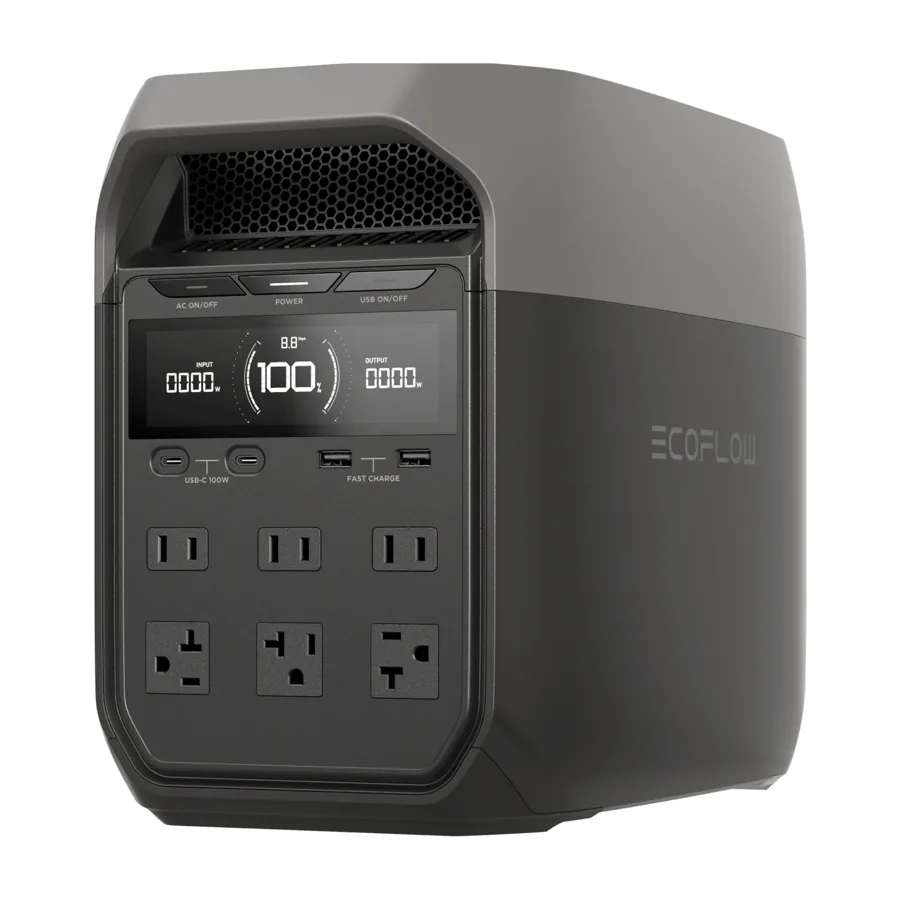
EcoFlow Delta 3
Lists 1,024 Wh, 1,800 W, 56 minute AC charge and a 5-year warranty. Read more
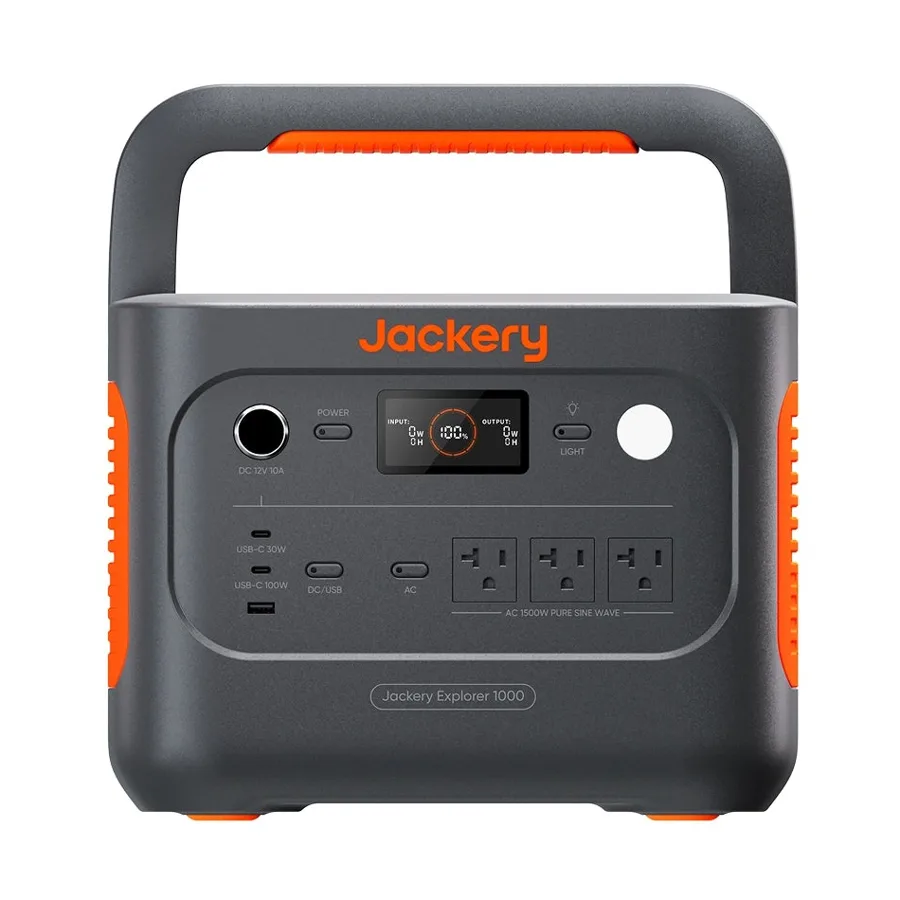
Jackery Explorer 1000 v2
Lists 1,070 Wh, 1,500 W, 23.8 lb and a 30 dB quiet-running claim. Read more
How we compared them
The NomadsToolsLab team read both makers' product pages and spec tables on 5 October 2026 and checked both Amazon pages with a US delivery address. What surprised us: the independent lab OutdoorGearLab scored both stations the same, 67 out of 100, in reviews published on 23 July 2026, yet they win in different places. Its testers measured the EcoFlow recharging in 50 minutes, faster than the 56 minutes EcoFlow claims, while the Jackery took 1.58 hours. In return the Jackery weighed 24.4 lb against 28.1 lb for the EcoFlow, and delivered 910 Wh of measured capacity against 870 Wh, out of the 1,070 and 1,024 Wh on the labels. The testers also noted that only three of the EcoFlow's six AC outlets are grounded. Every number in the table comes from the makers' own pages.
Our conclusion: neither is the winner on paper. Pick the EcoFlow if speed and outlet count matter, the Jackery if weight and simplicity do, and count the grounded outlets before you plug in anything that needs one.
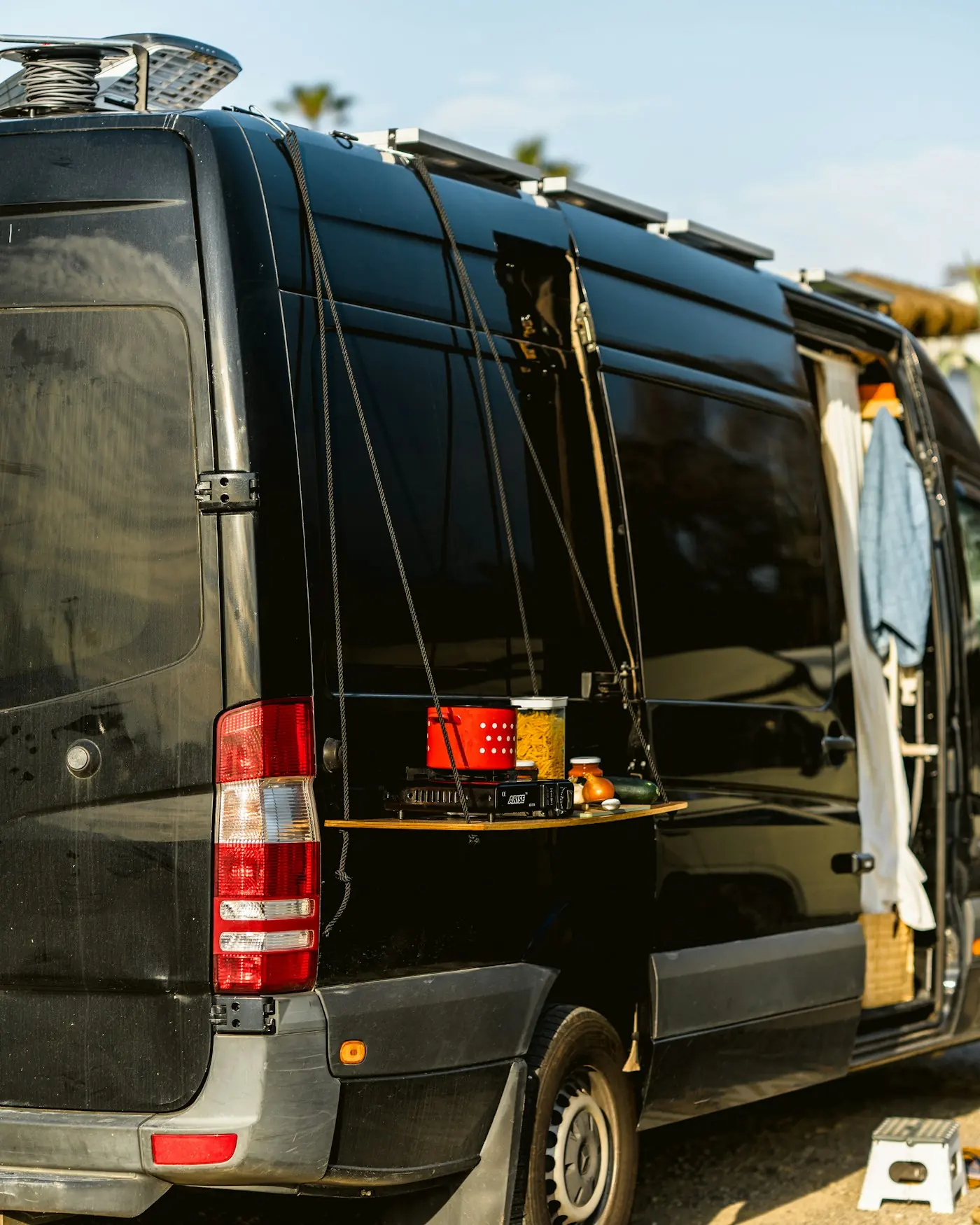
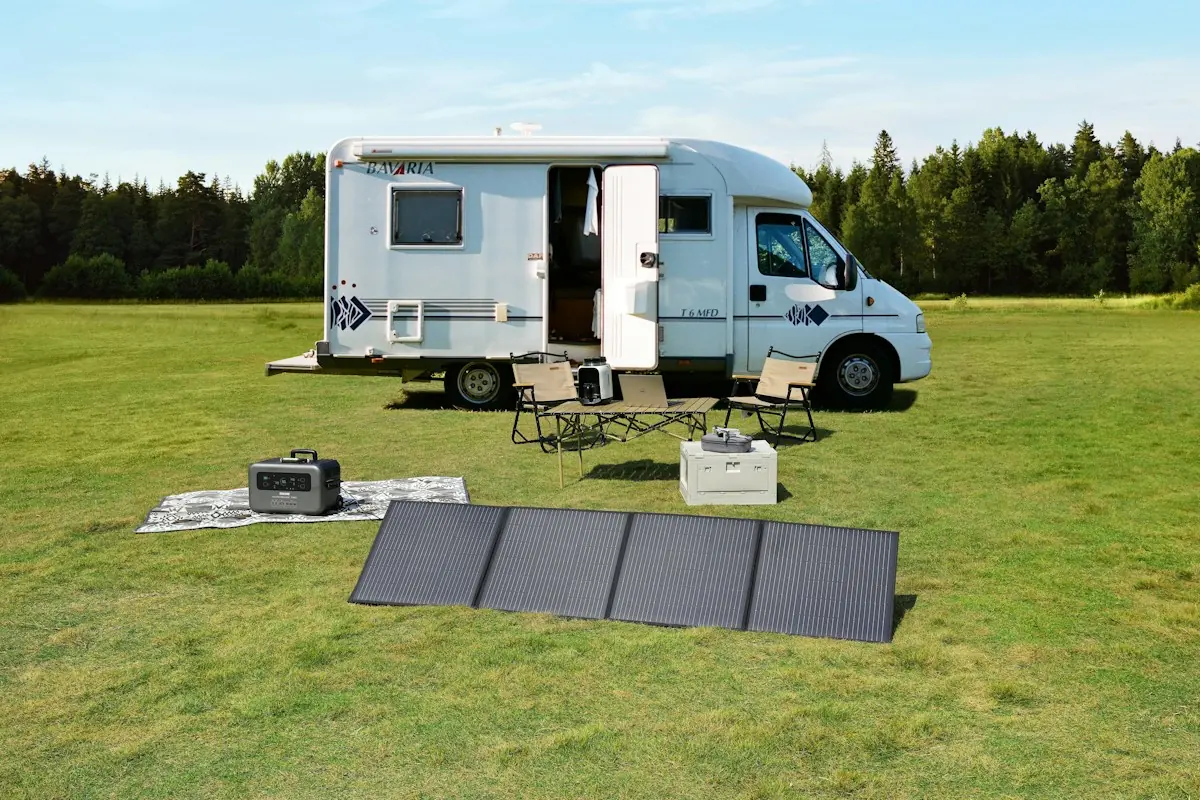
From the road: I had sun panels on the roof. And I had also a really strong one, it was not super big, but it was big, and that one I just put outside. It was mobile, with a long cable. I had this thing where you can plug into the solar panels and it was charging the battery inside, and then you can plug in everything inside.

Jackery vs EcoFlow at a glance
| Pick | Capacity | Output | Weight | Wall charging | Warranty | Shop |
|---|---|---|---|---|---|---|
| Capacity: 1,024 Wh | Output: 1,800 W, 6 AC outlets | Weight: 27.6 lb | Wall charging: 56 min (1,500 W) | Warranty: 5 years | Get yours on Amazon |
| Capacity: 1,070 Wh | Output: 1,500 W, 3 AC outlets | Weight: 23.8 lb | Wall charging: 1.58 h (AC adapter) | Warranty: 3+2 years | Get yours on Amazon |
Both list LiFePO4 cells rated for 4,000 cycles: EcoFlow to 80% or more of capacity, Jackery to 70% or more. EcoFlow says its figures come from its internal testing. Jackery lists a 3-year warranty plus 2 free years, and its product description says the extra two are exclusive to jackery.com, so ask what applies to an Amazon purchase.

1. EcoFlow Delta 3: fast charging and more outlets
EcoFlow Delta 3
EcoFlow lists the Delta 3 at 1,024 Wh, 1,800 W rated with a 3,600 W surge, LiFePO4 cells rated for 4,000 cycles to 80% or more, and 27.6 lb. It has 13 outputs: six AC outlets, two 100 W USB-C, two 18 W USB-A, a car outlet and two DC5521 ports.
Charging is its strength on paper: 56 minutes from 0 to 100% with 1,500 W in, or 500 W from solar in about two hours. Switchover is listed at under 10 ms, noise at under 30 dB up to 600 W, and the battery pack is listed IP65. EcoFlow gives a 5-year warranty. Details are on the EcoFlow product page.
On Amazon on 5 October 2026 it showed In Stock with an Add to cart button, shipped and sold by Amazon.com, ranked #1,396 in Patio, Lawn & Garden and #4 in Outdoor Generators.
2. Jackery Explorer 1000 v2: lighter and quiet
Jackery Explorer 1000 v2
Jackery lists the Explorer 1000 v2 at 1,070 Wh, 1,500 W rated with a 3,000 W surge, LiFePO4 cells rated for 4,000 cycles to 70% or more, and about 23.8 lb (12.87 x 8.82 x 9.72 in). Outputs are three AC outlets, one 30 W and one 100 W USB-C, and a USB-A port.
It recharges in 1.58 hours with the AC adapter and in 12 hours from a car adapter. Solar input is listed at up to 400 W with two panels. Jackery lists power switching in under 20 ms and says it runs as quietly as 30 dB. Read the Jackery product page for the rest.
On Amazon on 5 October 2026 it showed In Stock with an Add to cart button, shipped and sold by Jackery Inc, ranked #638 in Patio, Lawn & Garden and #2 in Outdoor Generators.

Also worth a look: Anker SOLIX C1000 Gen 2
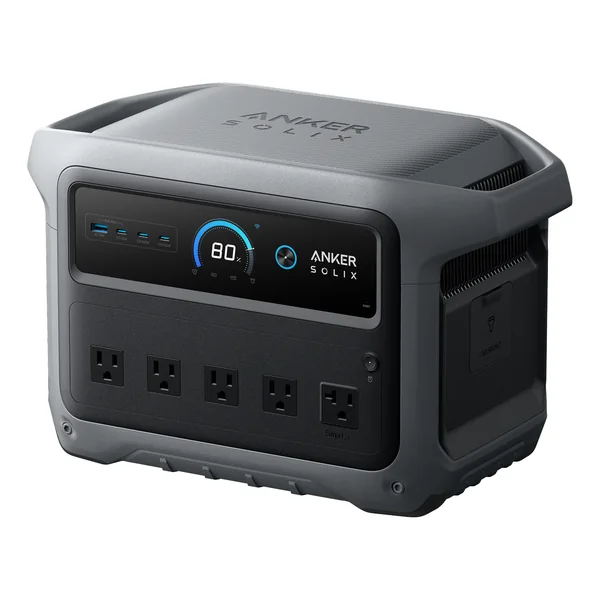
Anker SOLIX C1000 Gen 2
The Anker SOLIX C1000 Gen 2 is listed by Anker at 1,024 Wh, 2,000 W (3,000 W peak), 24.9 lb and 15.12 x 8.19 x 9.61 in, with a 10 ms UPS and up to 600 W (60 V) of solar input, more than the 400 W Jackery lists. Anker lists charging from 32°F to 104°F and discharging from -4°F to 104°F, and says the battery keeps at least 80% after 4,000 cycles. At 24.9 lb it sits between the Jackery (23.8 lb) and the EcoFlow (27.6 lb). On 9 October 2026 the Amazon listing was in stock with an Add to cart button for a US address.
Cold, solar and outlets: what to check
Cold: Jackery lists charging at 32 to 113 F (0 to 45 C) and discharging at 14 to 113 F (-10 to 45 C). EcoFlow's product page lists no temperature range, so read the manual before winter use. Solar: EcoFlow lists up to 500 W in, Jackery up to 400 W with two panels. Outlets: if a heavy appliance needs a grounded plug, count the grounded outlets on the front of the unit first.
If you plug panels in yourself, take the wiring seriously. Chenzo's van taught him this the hard way: use the right fuses, watch plus and minus, and protect the cables from rats. Our guide to wiring a camper van and the one on solar panels for a camper van go deeper.
Which one to pick
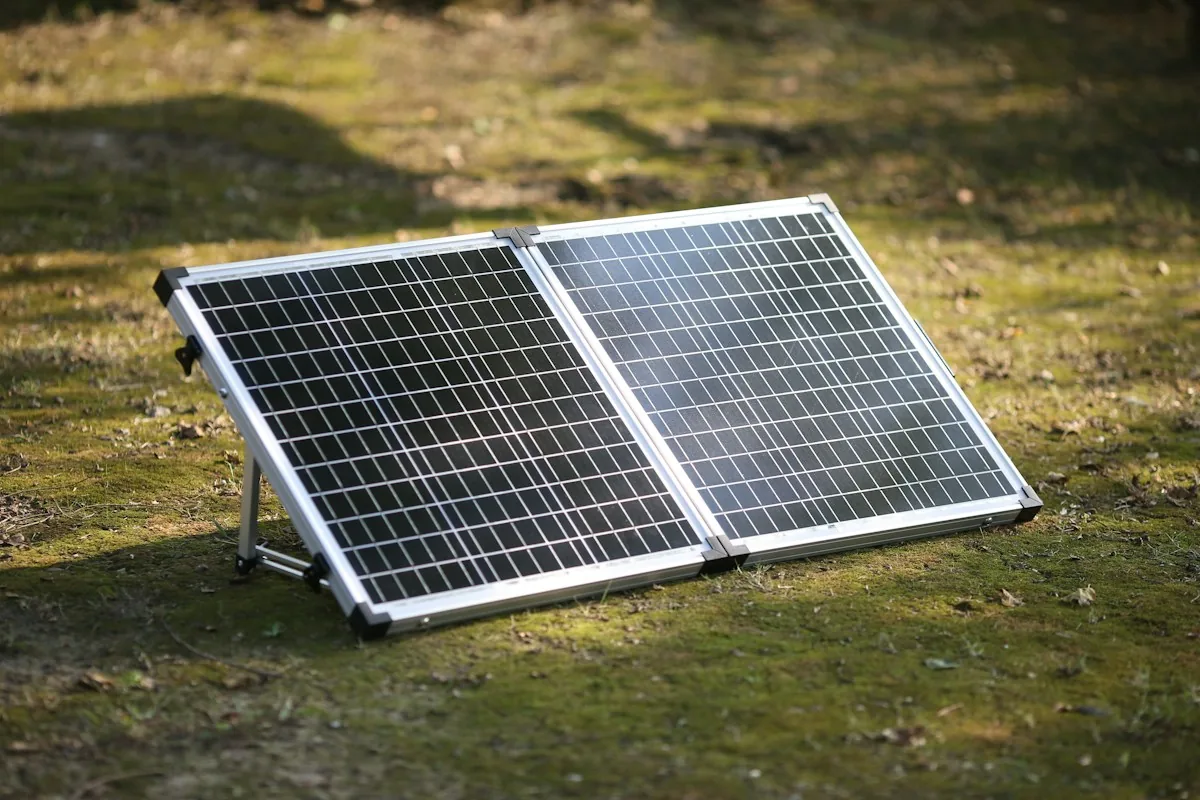
Van life with laptops and a kettle now and then: the EcoFlow, for six outlets and quick top-ups between drives. Carrying it often, or a smaller van: the Jackery, at 23.8 lb. Longer panels-only stays: compare solar input, 500 W for EcoFlow and 400 W for Jackery. More options, including other brands, are in our power stations for van life guide and the off-grid guide for digital nomads. Charging from the roof? See BougeRV vs Renogy 200W solar panels and MPPT vs PWM charge controllers.
- EcoFlow Delta 3: 1,024 Wh, 1,800 W, six AC outlets, 27.6 lb, 56 minute wall charge, 5-year warranty.
- Jackery Explorer 1000 v2: 1,070 Wh, 1,500 W, three AC outlets, 23.8 lb, 1.58 hour wall charge, 3+2 year warranty.
- OutdoorGearLab scored both 67 out of 100 on 23 July 2026; it measured the EcoFlow at 50 minutes to charge and noted only three of its six AC outlets are grounded.
- Jackery lists a charging range of 0 to 45 C; EcoFlow's page lists none.
- On 5 October 2026 both were in stock on Amazon with an Add to cart button.

Watch the Jackery in action
Video by Jackery on YouTube. Made by the maker of the product.
FAQ
Is Jackery or EcoFlow better for van life?
EcoFlow lists faster charging (56 minutes), six AC outlets and a 5-year warranty. Jackery lists a lighter box (23.8 lb) and slightly more capacity. OutdoorGearLab scored both 67 out of 100.
How much do the Jackery Explorer 1000 v2 and EcoFlow Delta 3 weigh?
Jackery lists 23.8 lb and EcoFlow lists 27.6 lb. OutdoorGearLab weighed them at 24.4 lb and 28.1 lb.
How fast does each one charge from a wall socket?
EcoFlow lists 56 minutes with 1,500 W in, and OutdoorGearLab measured 50 minutes. Jackery lists 1.58 hours with the AC adapter, which OutdoorGearLab also measured.
Can I charge them from solar panels?
EcoFlow lists solar input up to 500 W. Jackery lists up to 400 W with two panels. Check panel voltage against each maker's input range.
Can I use them in cold weather?
Jackery lists charging at 0 to 45 C and discharging at -10 to 45 C. EcoFlow's product page lists no range, so check the manual.
Looking at a different brand? See our Bluetti vs EcoFlow power station comparison.
Affiliate disclosure. This post contains affiliate links. If you click and buy something, this site earns a small commission at no extra cost to you. Picks are based on published specs, independent tests and manufacturer information. As an Amazon Associate I earn from qualifying purchases. Read the full affiliate disclosure. Amazon and the Amazon logo are trademarks of Amazon.com, Inc. or its affiliates.
Your next step

 Best Portable Power Station for Digital Nomads: Working Off the Grid