Espar vs Webasto: Which Diesel Heater for a Camper Van?
As an Amazon Associate I earn from qualifying purchases. Some links on this page earn us a small commission, at no extra cost to you. Full disclosure.
Espar vs Webasto is a contest between two compact 2 kW diesel air heaters that look alike on a spec sheet and carry the same warning in their manuals: exhaust fumes can poison you. The Espar Airtronic S3 D2L, built by Eberspächer, lists a heat range of 0.85 to 2.2 kW. The Webasto Air Top 2000 STC lists 0.9 to 2.0 kW. We read both makers' documents and both Amazon pages on 9 October 2026, and this guide turns them into a pick.
Quick answer
Checked on 9 October 2026. Pick the Espar Airtronic S3 D2L if you want the wider heat range (0.85 to 2.2 kW) and the one that ranks higher on Amazon (#36 against #129 in RV Heaters & Furnaces). Pick the Webasto Air Top 2000 STC if you want a maker that calls its heater suitable for continuous heating (Eberspächer says its own is not meant for that). Both makers say a trained workshop should install the heater and that it must never run in a closed space.
Both, with a buy button each
Espar (Eberspächer) Airtronic AS3 D2L Diesel Heater Kit
Maker lists 0.1 to 0.27 l/h and about 2.5 kg. Third-party seller on Amazon. Read more
Webasto Air Top 2000 STC Diesel Air Heater Kit
Maker lists 0.9 to 2.0 kW, 0.12 to 0.24 l/h and 2.6 kg. 30-day returns on this listing. Read more
Where to go deeper

Carbon Monoxide Detector for Camper Van: 5 Things to Buy
Read this before you fit any fuel-burning heater. Read more
How we compared them
The NomadsToolsLab team read both makers' documents end to end on 9 October 2026: Eberspächer's Airtronic 3 technical description (April 2024) and Webasto's Air Top 2000 STC operating instructions and datasheet (2024). We also checked both Amazon pages with a US address. What surprised us: the two makers disagree about continuous use. Webasto's datasheet lists the Air Top 2000 STC as suitable for continuous heating. Eberspächer's document says its air heater does not replace a controlled heating system and is not suitable for the continuous heating of vehicle interiors at low outdoor temperatures.
Dan at Rambling Ambition (YouTube, August 2025) installed an Espar S3 D2L in a Sprinter van and calls the wiring the hardest part of the job: the heater needs a 20 amp fuse and its controller a 5 amp fuse, and he says the kit comes without instructions and the maker's download is confusing. Kate Moore at ParkedInParadise compared Propex, Espar and Webasto in an article from 2020 (written in 2018, she says). She picked Espar for diesel buyers, partly for easier parts and support in the US, and had read more long-term complaints about Webasto, such as fan problems and plugged filters. That is old, and her own comments say Webasto's US network has improved since.
Our conclusion: on paper the heaters are twins, so the decision is about the heat range, how you want to run it, the seller's return policy and above all a safe installation. Every number in the table comes from the makers' own documents.

Espar vs Webasto at a glance
| Espar Airtronic S3 D2L | Webasto Air Top 2000 STC | |
|---|---|---|
| Heat output (maker) | Espar Airtronic S3 D2L: 0.85 to 2.2 kW (850 to 2,200 W) | Webasto Air Top 2000 STC: 0.9 to 2.0 kW, stepless |
| Fuel use (maker) | Espar Airtronic S3 D2L: 0.1 to 0.27 l/h | Webasto Air Top 2000 STC: 0.12 to 0.24 l/h on diesel |
| Weight (maker) | Espar Airtronic S3 D2L: About 2.5 kg | Webasto Air Top 2000 STC: 2.6 kg |
| Voltage | Espar Airtronic S3 D2L: 12 V or 24 V | Webasto Air Top 2000 STC: 12 V or 24 V |
| Fuel (maker) | Espar Airtronic S3 D2L: Diesel EN 590, HVO, GtL | Webasto Air Top 2000 STC: Diesel EN 590, biodiesel EN 14214, HVO |
| Power draw (maker) | Espar Airtronic S3 D2L: 27 W at full power, 6 W at minimum (12 V) | Webasto Air Top 2000 STC: Not listed in the datasheet we read |
| Continuous heating (maker) | Espar Airtronic S3 D2L: Not suitable for continuous heating of a vehicle interior at low outdoor temperatures | Webasto Air Top 2000 STC: Listed as suitable for continuous heating |
| Amazon listing, 9 Oct 2026 | Espar Airtronic S3 D2L: In stock, #36 in RV Heaters, not returnable | Webasto Air Top 2000 STC: In stock, #129 in RV Heaters, 30-day returns |
Both makers quote heat output and fuel use over their own control range, so read the two as direction, not as a score.
1. Espar Airtronic S3 D2L
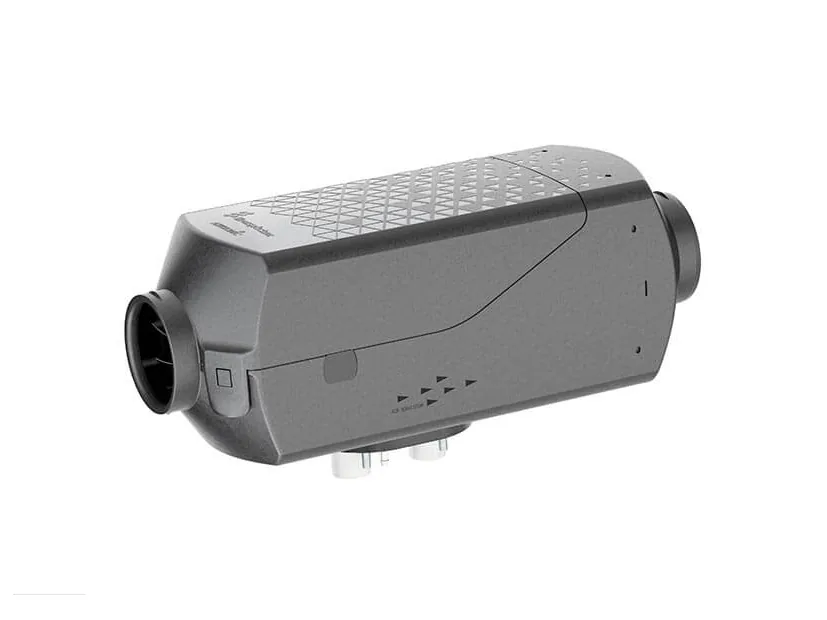
Espar (Eberspächer) Airtronic AS3 D2L Diesel Heater Kit
The Espar Airtronic S3 D2L is the small heater in Eberspächer's Airtronic 3 range. The maker's technical description (Airtronic 3, April 2024) lists a heat flow of 2,200 W at maximum and 850 W at minimum, fuel use of 0.27 l/h at maximum and 0.1 l/h at minimum, and a weight of about 2.5 kg. It runs on 12 V or 24 V. On 12 V it lists an average draw of 27 W at full power, 6 W at the lowest setting and 90 W while starting.
Espar began in 1973 as Eberspächer's independent sales company for heaters in Canada, and Amazon sellers still list these kits as "Eberspacher Espar". On 9 October 2026 the AS3 D2L kit we link showed In Stock with an Add to cart button, sold by a third-party seller (PW Holdings). It ranked #36 in RV Heaters & Furnaces, was marked non-returnable, and carried a note that shipping is subject to hazardous materials rules. The page showed no bought-in-the-past-month line.
Eberspächer's document is plain about use: the heater is not approved for long-term continuous operation, for example heating living rooms, garages or weekend homes, and it does not replace a controlled heating system. It also says the heater should be installed only by a service partner authorised by the maker.
2. Webasto Air Top 2000 STC
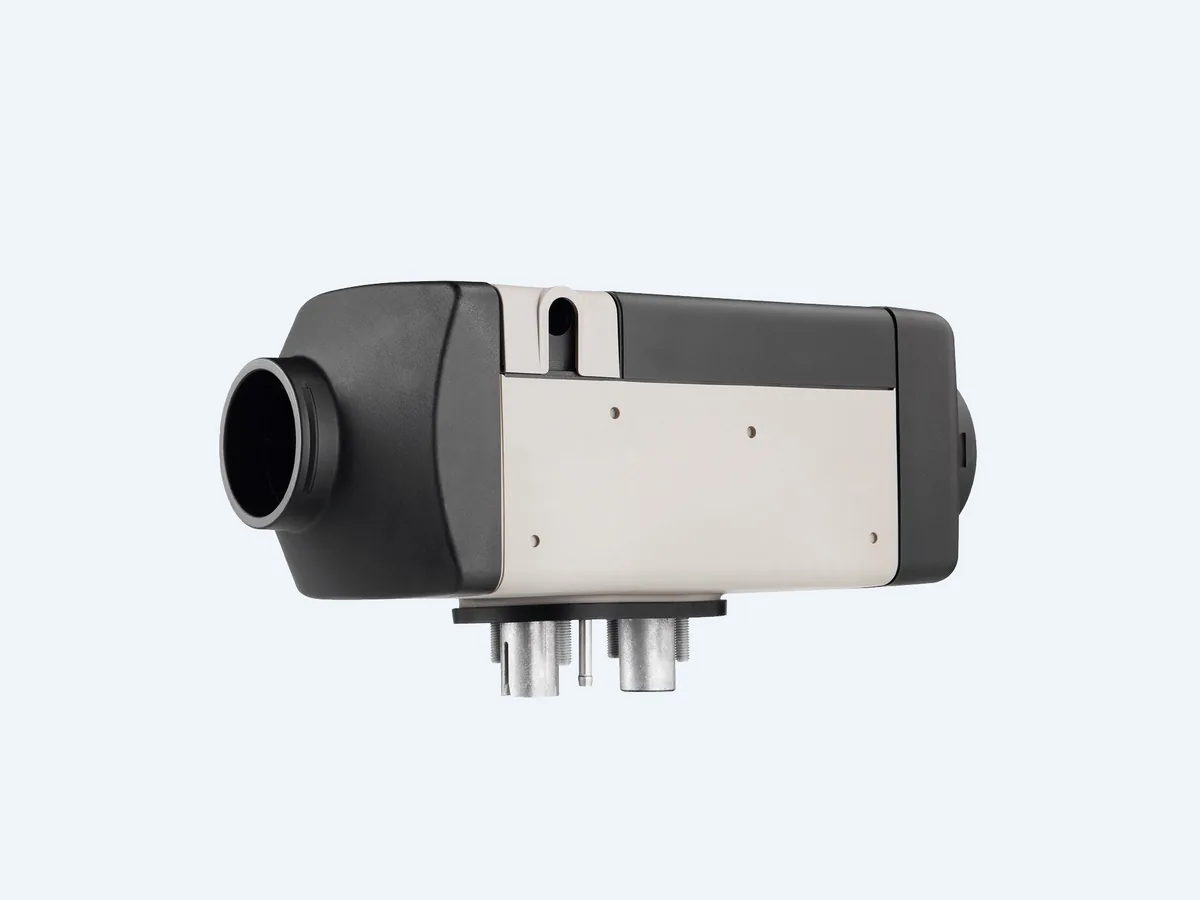
Webasto Air Top 2000 STC Diesel Air Heater Kit
The Webasto Air Top 2000 STC is Webasto's all-rounder at 2 kW. The Webasto product page and datasheet lists 310 x 120 x 118 mm and 2.6 kg for 12 V or 24 V, with fuel use of 0.12 to 0.24 l/h on diesel. Fuels are diesel (EN 590), biodiesel (EN 14214) and HVO. Webasto sells it as a Basic, RV Standard or RV Comfort kit, and the Comfort kit adds the MultiControl with a high-altitude mode.
On 9 October 2026 the kit we link (with an installation kit and a SmarTemp controller, per its listing) showed In Stock with an Add to cart button, sold by a third-party seller (PW Holdings), with only 2 left. It ranked #129 in RV Heaters & Furnaces and offered a 30-day refund or replacement. The page showed no bought-in-the-past-month line. Amazon also lists other Webasto kits, but this was the one with the better rank in that category.
Webasto's operating instructions (document 9032569C) say the heater serves comfort and must not be used for safety-related purposes. They list the signs of a defective heater: prolonged heavy smoke, unusual burner noise, the smell of fuel, or permanent fault switch-offs. If you see one, stop and remove the fuse. Webasto also says it takes no liability for damage from installation or maintenance by untrained people.
The part both makers insist on: exhaust fumes
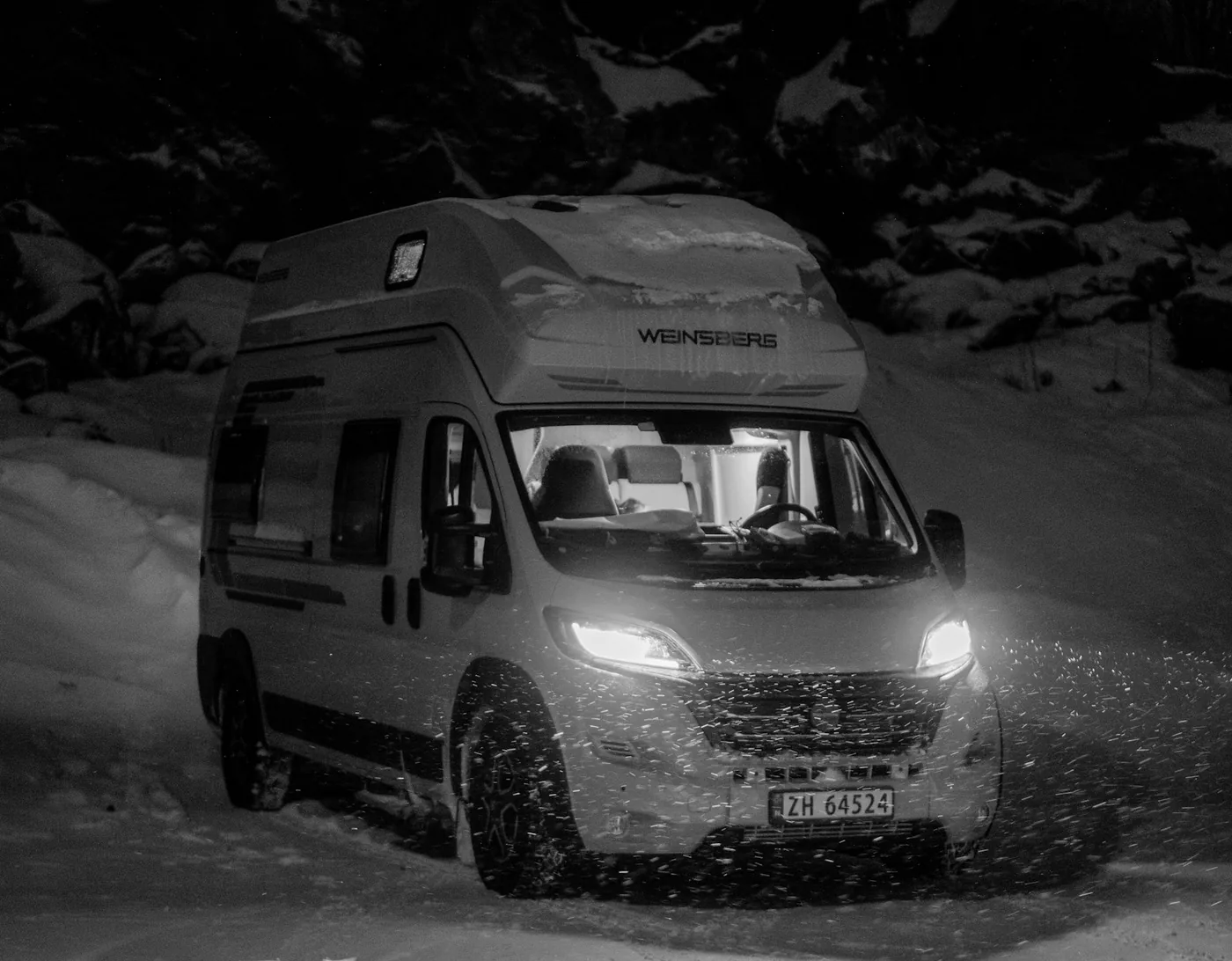
Webasto's operating instructions carry a DANGER notice for poisoning and suffocation from exhaust fumes: make sure the housing rests only on the base, the base seal is fitted correctly and exhaust gases are routed only to the outside. A separate WARNING says not to run the heater in closed rooms such as garages without an exhaust extraction unit, especially not with a timer or remote start.
Eberspächer's document says not to start the heater in enclosed spaces such as a garage or a multi-storey car park. It warns that if the exhaust system or the flange seal is not installed properly, exhaust can get into the vehicle interior, and that exhaust pipes must not run through the interior.
Fuel-burning heaters and carbon monoxide go together, which is why an alarm belongs in the van. Read our guide to a carbon monoxide detector for a camper van, or the head-to-head Kidde vs First Alert.
From the road: what went wrong with my heater

Chenzo, founder of NomadsToolsLab
I had a parking heater of 5 kW. It was big enough, but actually you want 3 kW, because on the lowest setting it is often far too warm. For my van, I would pick 3 kW now.
Make sure you point the exhaust in a good direction. Check where your window is, otherwise it can blow straight back in through your window into the caravan. I had this, so I needed to change that.
One time I had a cable in front of the heater and it burned. I had put it in a good spot, but the thing I fixed it with broke, the cable fell down and ended up in front of the exhaust of the heater. That was of course a huge problem.
Chenzo's heater was a different, bigger size than these two, which sit around 2 kW. His lessons are about placement: where the exhaust points, and what can fall in front of it. The rest of his van build is in our cargo van conversion guide for beginners, and the wiring side is covered in how to wire a camper van.
Which one to pick
You want the widest control range: the Espar, which lists 0.85 to 2.2 kW against 0.9 to 2.0 kW for the Webasto. You plan to leave it running for long spells in deep cold: Webasto lists its heater as suitable for continuous heating, while Eberspächer says its own is not meant for that, so ask the maker or an installer before you plan around it. You want a safety net on the purchase: the Webasto kit we link showed a 30-day refund or replacement, the Espar kit showed non-returnable.
You are sizing a heater for the first time: at about 2 kW both sit below the 3 kW Chenzo would pick for his own van, so measure your space and insulation first. A diesel heater also draws from the house battery (27 W at full power on the Espar, per Eberspächer), so see our lithium vs AGM battery guide for the power side. Whichever you buy, have it fitted by a trained workshop, as both makers ask, and fit a carbon monoxide alarm.
Watch: an Espar S3 D2L going into a van
Video by Rambling Ambition. His description carries Amazon affiliate links.
Dan at Rambling Ambition walks through the install of an Espar S3 D2L in a 2024 Sprinter, from the mounting plate to the fuel line. He says the wiring is the hardest part, with a 20 amp fuse for the heater and a 5 amp fuse for the controller, and that the kit comes without instructions. Here is the Espar from this guide.
Espar (Eberspächer) Airtronic AS3 D2L Diesel Heater Kit
- Espar Airtronic S3 D2L (Eberspächer): 0.85 to 2.2 kW, 0.1 to 0.27 l/h, about 2.5 kg, 27 W at full power.
- Webasto Air Top 2000 STC: 0.9 to 2.0 kW, 0.12 to 0.24 l/h on diesel, 2.6 kg.
- The makers disagree on continuous use: Webasto lists it as suitable, Eberspächer says its heater is not meant for continuous heating of an interior in the cold.
- Both manuals warn about poisoning from exhaust fumes and say never to run the heater in a closed space such as a garage.
- On 9 October 2026 both kits were in stock on Amazon from a third-party seller; the Espar listing was non-returnable, the Webasto one offered 30 days.

FAQ
Is Espar or Webasto better for a camper van?
On paper they are close: both are about 2 kW, 12 V and about 2.5 kg. Espar lists a wider heat range (0.85 to 2.2 kW), Webasto lists 0.9 to 2.0 kW and calls its heater suitable for continuous heating. Both makers want a trained installer.
Is Espar the same as Eberspächer?
Espar began in 1973 as Eberspächer's independent sales company for heaters in Canada, and the company history on eberspaecher.com says so. Amazon listings for these heaters still use both names.
Can I run a diesel heater in a closed garage?
No. Webasto's operating instructions warn against running the heater in closed rooms such as garages without exhaust extraction, and Eberspächer's document says not to start its heater in enclosed spaces such as a garage.
Do I need a carbon monoxide alarm with a diesel heater?
Both makers treat exhaust fumes as a poisoning risk, so an alarm is a sensible second line of defense. See our guide to a carbon monoxide detector for a camper van.
How much fuel does a 2 kW diesel heater use?
Eberspächer lists 0.1 to 0.27 litres an hour for the S3 D2L and Webasto lists 0.12 to 0.24 litres an hour for the Air Top 2000 STC on diesel, depending on the heat setting.
Can I install an Espar or Webasto heater myself?
Both makers' documents say installation should be done by an authorised or trained workshop. Webasto says it takes no liability for damage from installation or maintenance by untrained people.
Affiliate disclosure. This post contains affiliate links. If you click and buy something, this site earns a small commission at no extra cost to you. Picks are based on published specs, independent tests and manufacturer information. As an Amazon Associate I earn from qualifying purchases. Read the full affiliate disclosure. Amazon and the Amazon logo are trademarks of Amazon.com, Inc. or its affiliates.
Where to go next
Read the carbon monoxide detector guide, then the Kidde vs First Alert comparison. If you are building out the electrics, see Bluetti vs EcoFlow, the Victron vs Renogy charge controller comparison and the BougeRV vs Renogy solar panel comparison.
Your next step