
Digital Nomad Guide to Chiang Mai (The Original Nomad Hub 2026)
As an Amazon Associate I earn from qualifying purchases. Some links on this page earn us a small commission, at no extra cost to you. Full disclosure.
Chiang Mai is one of the places where the digital nomad movement took off. Here is the honest 2026 take in this Chiang Mai digital nomad guide.
Quick answer
Chiang Mai is still one of the best value nomad bases: 800 to 1,500 USD a month, fast fiber and a tight community. Plan to leave during the burning season, roughly February to April.
Book these first



What makes Chiang Mai special
- Cost of living: 800-1500 USD/month comfortable
- Fast fiber internet in many cafes and apartments
- Walkable Old City, friendly people, low scam factor
- Neighbouring Laos is close, but visa runs are more restricted than they used to be, so check the current rules
- Strong nomad community (smaller than Bali but tight-knit)
Best neighborhoods
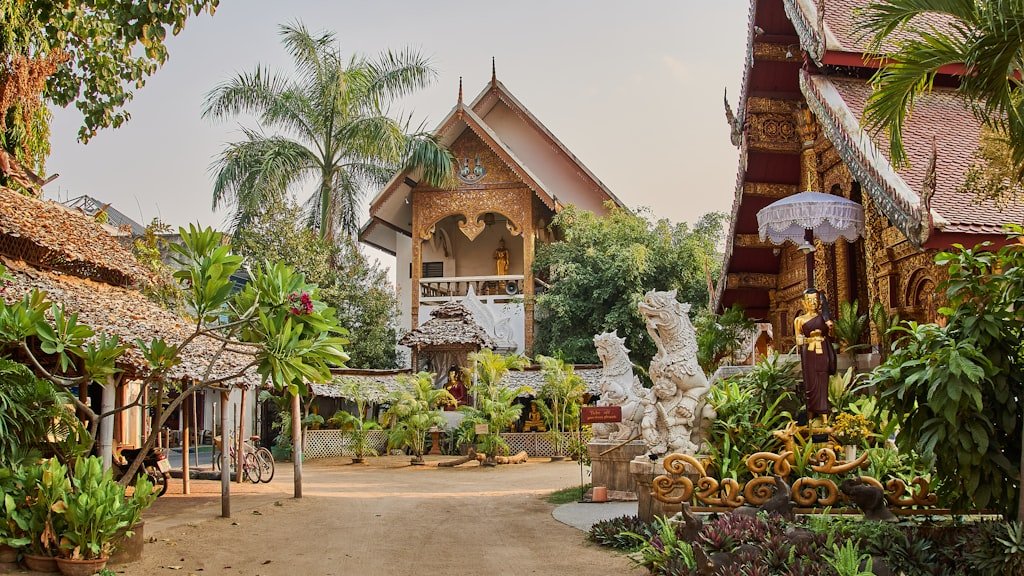
1. Nimman (the modern hub)
Trendy cafes, coworking spaces, Western food. Higher prices. Most nomads end up here.
2. Old City (the cultural hub)
Inside the moat. Temples, traditional Thai life, cheaper guesthouses. Slower pace.
3. Santitham (the local hub)
Where locals live. Cheapest neighborhood. Less English spoken. Best street food prices.
Another place to look for a bed is ZenHotels, where you can search and compare hotels, hostels and apartments.
Compare hotel prices on ZenHotels
5 places worth building a day around
Beyond the three neighborhoods above, most nomads end up doing a handful of the same trips. These are the ones worth prioritizing.

Wat Phra That Doi Suthep. The golden mountaintop temple that's on every Chiang Mai list, about 30 minutes from Nimman. Climb the 300-plus naga staircase or take the funicular if you're not up for it.

Tha Phae Gate. The main gate into the old walled city, and the natural starting point for exploring the Old City temples on foot. Pigeons, street food carts and a steady stream of photos all day.
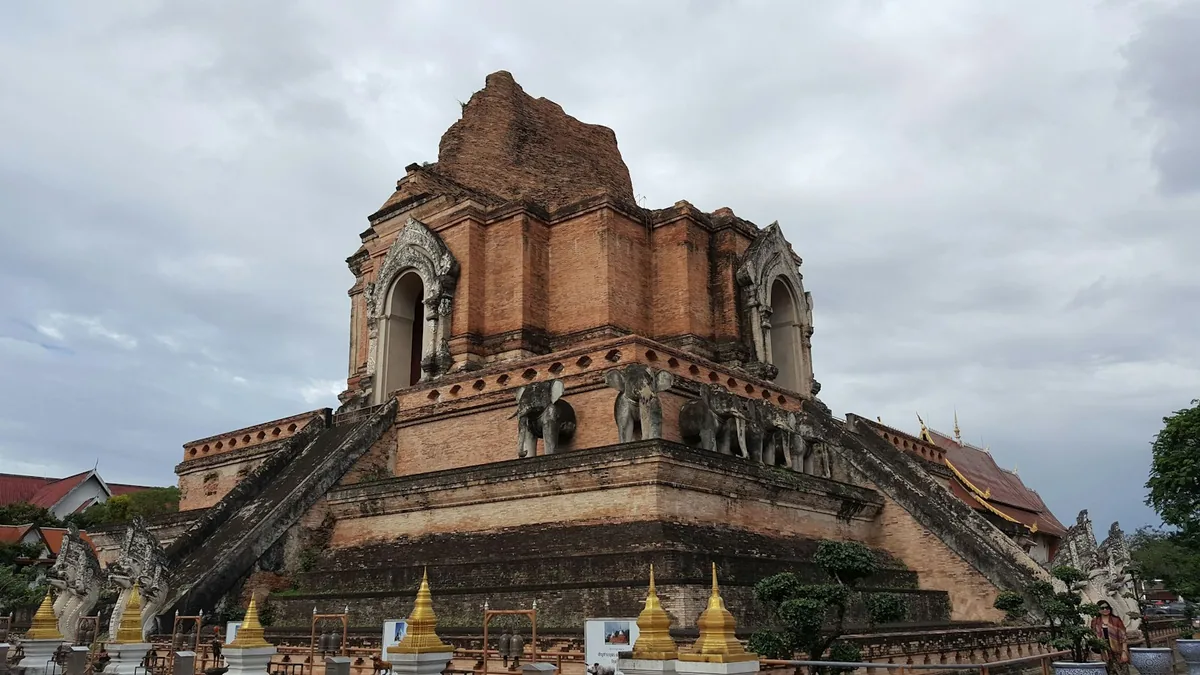
Wat Chedi Luang. A half-ruined 14th-century chedi with life-size elephant statues around its base, a short walk from Tha Phae Gate inside the Old City walls.
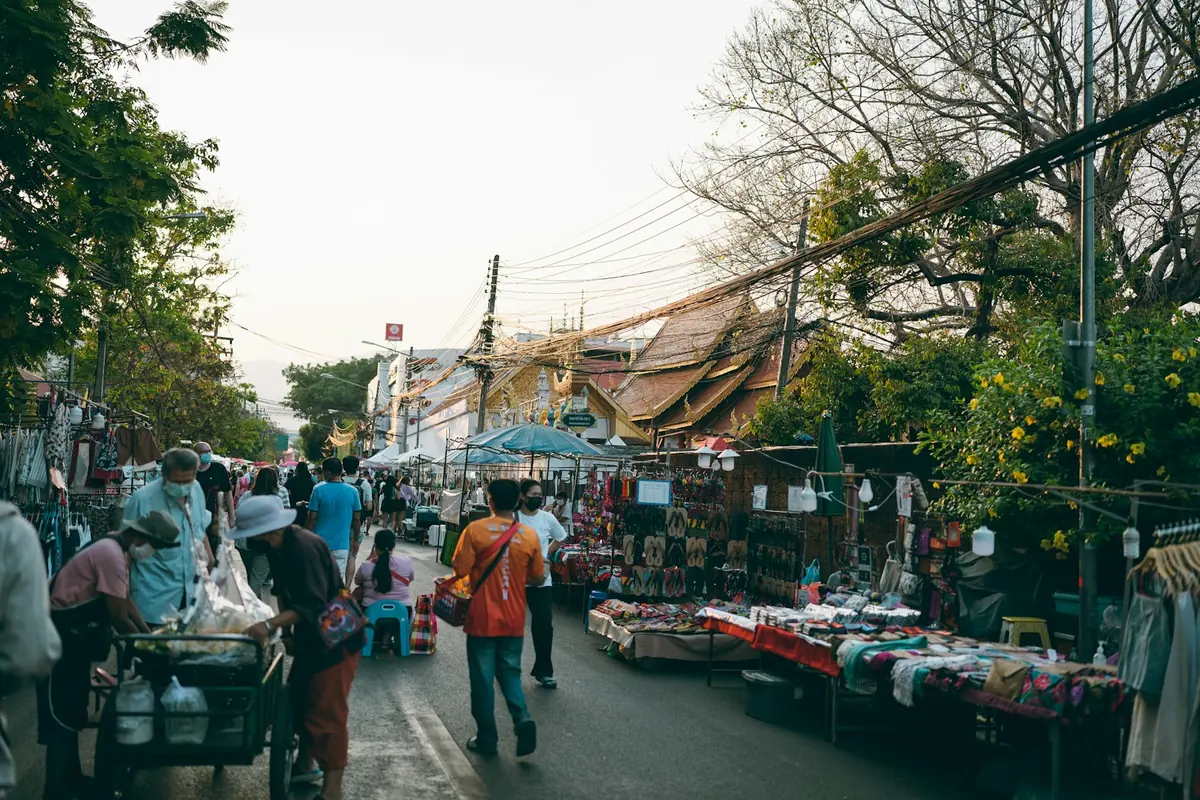
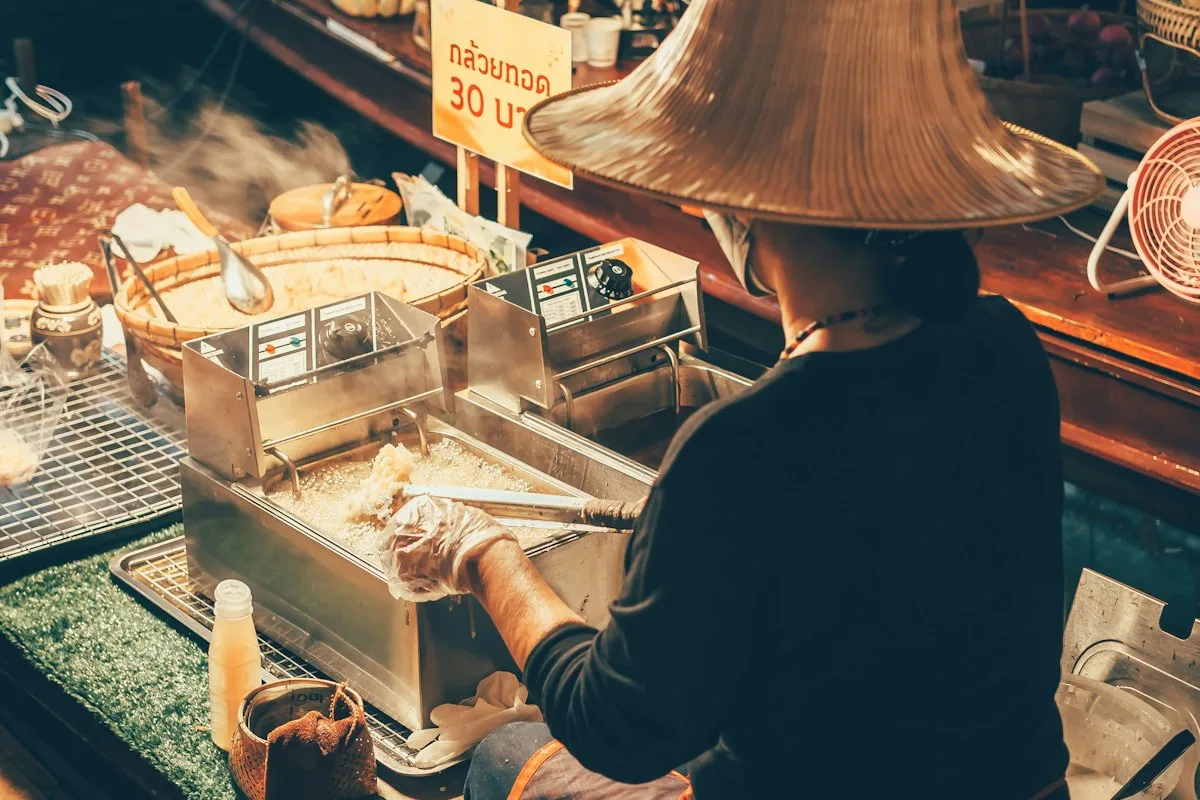
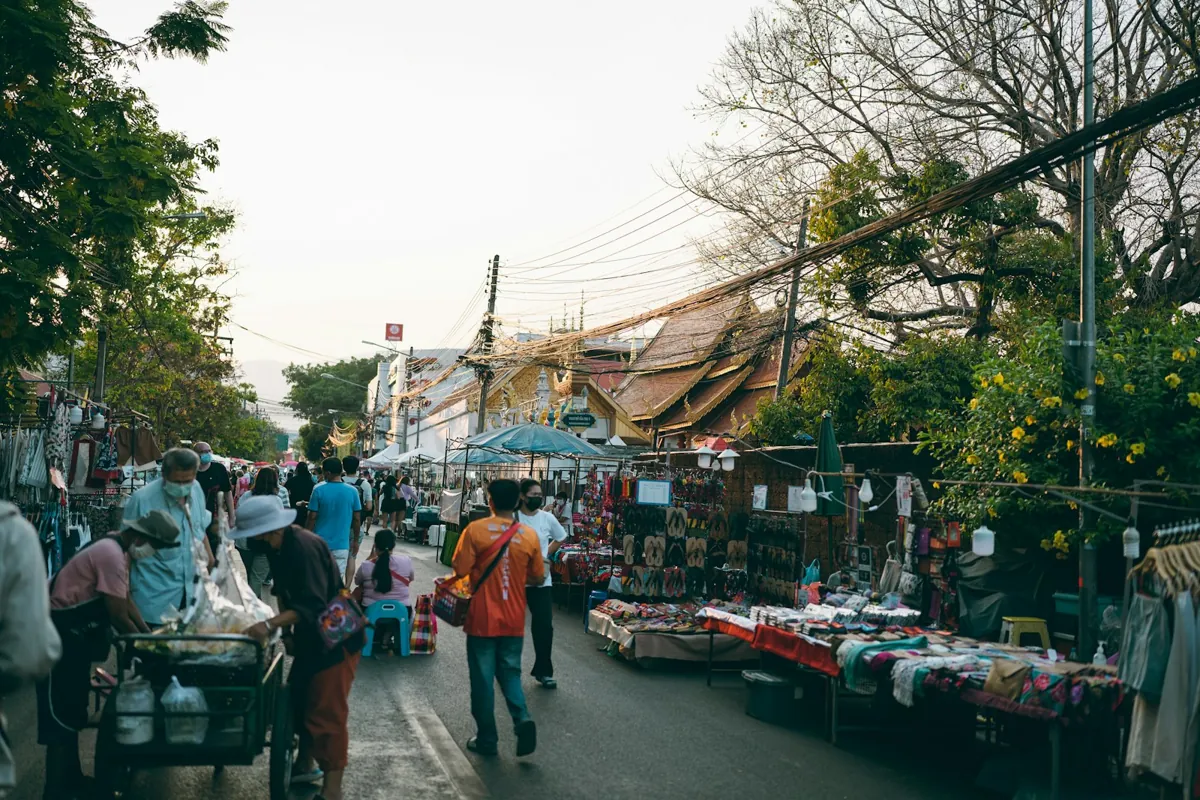
Sunday Walking Street. Ratchadamnoen Road closes to traffic every Sunday evening for a market stretching the length of the Old City: textiles, street food, local crafts. Go hungry.
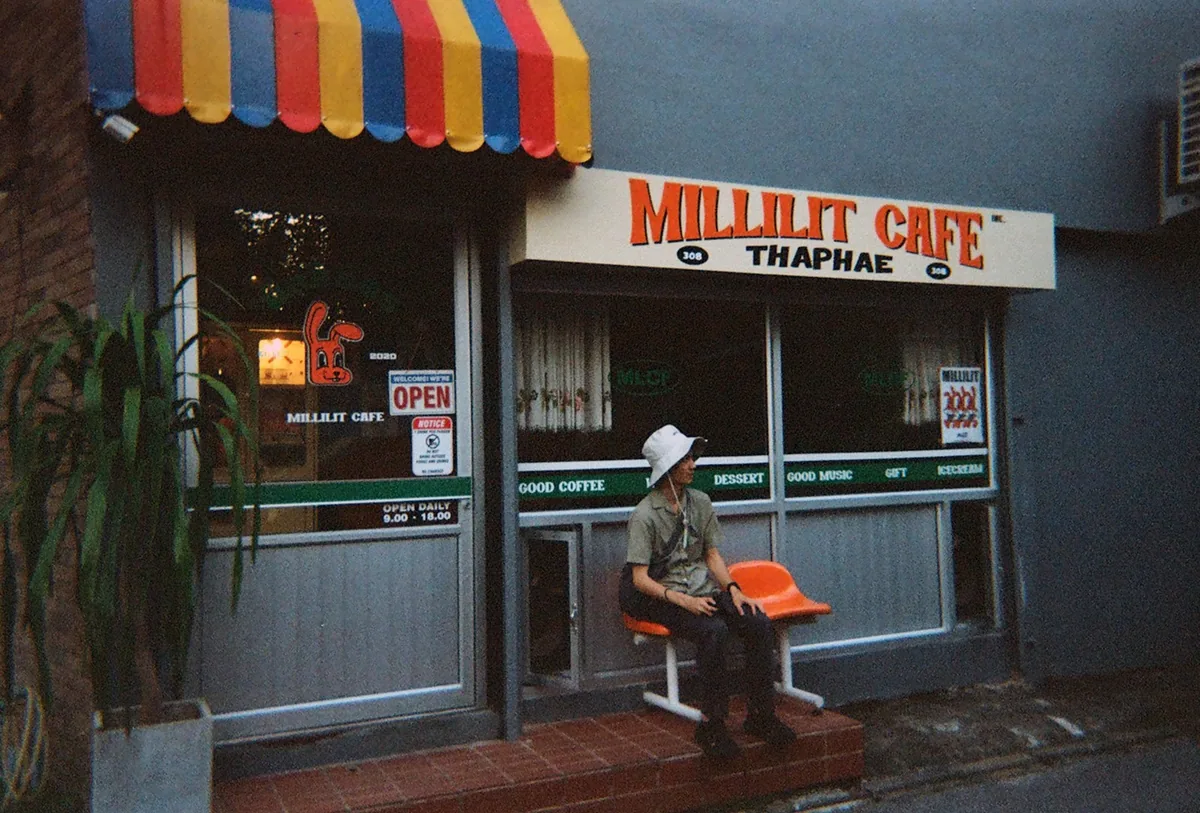
Cafe culture near Tha Phae. Chiang Mai's laptop-friendly cafe scene isn't only in Nimman, the Tha Phae side of the Old City has its own cluster of retro coffee shops worth a working afternoon.

Klook
Good for bundling a Doi Suthep half-day tour or an ethical elephant sanctuary visit
Skip-the-line tickets and city passes for Chiang Mai's temples and attractions are also bookable through Tiqets.
Getting from Chiang Mai International Airport (CNX) into the city
Chiang Mai International Airport (CNX) is only a few kilometers from the Old City and Nimman, close enough that even a taxi ride is short.
Official airport taxi and bus counters
The airport (run by Airports of Thailand, AOT) has an official flat-rate taxi service and a metered taxi counter inside the arrivals hall, both in the public area of the main terminal. (Source: chiangmai.airportthai.co.th, the official airport site, checked 30 September 2026.)
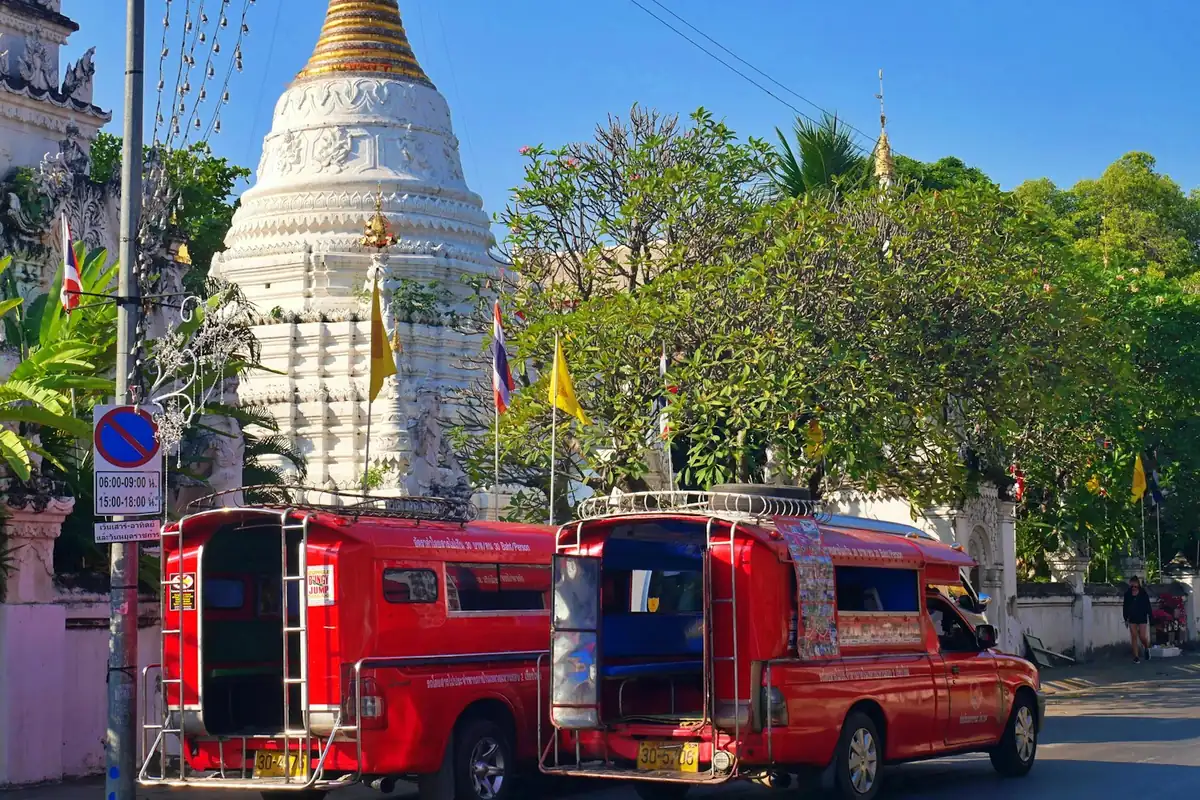
RTC City Bus and Airport Shuttle
Two public options run straight from the terminal: the RTC City Bus (routes R3 Red and R3 Yellow) charges a flat 30 baht per trip and loops through Nimmanhaemin, Chang Phuak Gate and the Night Bazaar. The Airport Shuttle Bus runs three routes, A1 and A2 for 40 baht covering Nimmanhaemin and the Night Bazaar area, and A3 for 60 baht out to the Second Ring Road. (Source: chiangmai.airportthai.co.th, routes 139 and 145, checked 30 September 2026.)

No official baht figure found for the flat-rate taxi. The airport's own site confirms the flat-rate taxi counter and a metered-taxi option exist, and that a mandatory 50-baht surcharge applies to metered taxis under a Ministry of Transport directive, but it doesn't publish the flat-rate price table in text we could verify (checked 30 September 2026). Agree the fare at the counter before getting in, or take the RTC City Bus for a fixed 30 baht if you're not in a hurry.
Book this before you land

Welcome Pickups

Kiwitaxi

Saily

Holafly
Code NOMADSTOOLSLAB gives 5% off at checkout.

Radical Storage

KKday
If you'd rather book from your phone after landing, GetTransfer lets you pick your car and see the price before you confirm.
Power plugs: Thailand uses Type A, B, C and O sockets, so one universal adapter such as the TESSAN 28W universal adapter is the simplest way to cover them.
The setup you need
- eSIM: Airalo Thailand pack. AIS and TrueMove are both excellent.
- Airport transfer: GetTransfer from Chiang Mai International (CNX). Or Grab from the official rank.
- Insurance: Cheap medical care in CMU Hospital but SafetyWing covers emergencies and evacuation.
- Tour bookings: Klook dominates for elephant sanctuaries, cooking classes, Doi Inthanon day trips.
Saily, the eSIM service from the team behind NordVPN, is another eSIM option. Arriving early or leaving late? Radical Storage lets you book luggage storage at partner locations in Chiang Mai online. For things to do, KKday sells tours and tickets in Chiang Mai.
Holafly is another eSIM option, with unlimited data plans under a fair use policy.

The burning season warning
February through April is the "burning season" when farmers burn fields and the air quality in Chiang Mai regularly reaches unhealthy or hazardous levels. Wear masks indoors, run air purifiers, or just leave for those 2-3 months. Many nomads relocate to Bangkok or the islands.
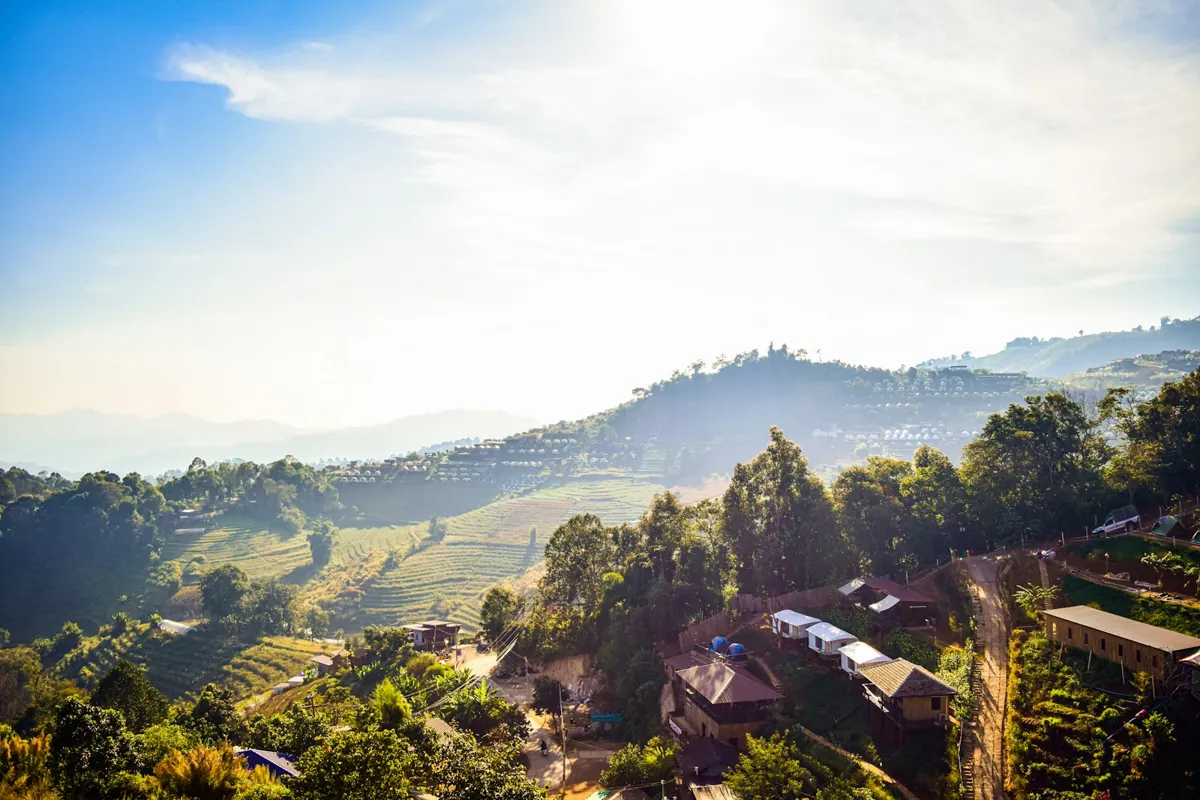
Burning season in short
- February to April, air quality often becomes hazardous.
- Check a live AQI map before you book.
- Masks and air purifiers help, many nomads simply leave for those months.
Do's and don'ts in Chiang Mai
Thailand runs on rules that most travelers have never met anywhere else: a monarchy protected by one of the strictest defamation laws in the world, a cannabis market that flipped from open to medical only in a single year, and temple customs that carry real social weight. None of this is here to scare you, it is here to stop you from repeating mistakes other tourists already made.

Do
- Cover your shoulders and knees before entering any temple, and take your shoes off before stepping into the main hall.
- Carry your original passport (or a certified copy) at all times. Thai law requires it, and tourists have been fined for not being able to show one.
- If you want cannabis, get a prescription from a licensed clinic first.
- Buy alcohol only during the legal sale hours (shops follow set hours, and some Buddhist holidays are no-sale days), and expect none for sale near temples, schools or government buildings.
- If you want a Buddha statue as a souvenir, stick to small trinkets and check Thailand's export rules for Buddha images before buying anything larger.
Don't
- Never say or post anything that could be read as critical of the Thai monarchy. Article 112 carries three to fifteen years in prison per offense, it applies to online posts made from abroad, and tourists are not exempt.
- Don't get a Buddha tattoo. Thai authorities have openly discouraged tattoo studios from inking Buddha images on foreigners, and it can cause real offense or get you turned away from temples.
- Never let a woman hand something directly to a monk or touch one, even by accident. Pass items through a man, or place them down for the monk to pick up himself.
- Don't point your feet at a Buddha statue or a monk, and don't step over someone sitting on the floor. It reads as deliberate disrespect, not a small slip.
- Don't assume cannabis works the way it did a couple of years ago. Recreational use without a prescription is illegal again since June 2025, with fines and possible jail time.
- Don't smoke or vape assuming nobody minds. Vaping and e-cigarettes are illegal to even possess in Thailand, not just banned for sale, see the warning box in this guide.
- If you're in a motorbike accident, be ready for the local assumption that the foreigner is at fault or should pay, sometimes simply because you're seen as wealthier, regardless of who actually caused it. Carry a valid license and solid insurance, stay calm, and let the police document the scene instead of settling in cash on the spot.

Visa runs in 2026
Thailand has tightened visa rules. The old "tourist visa run to Vientiane every 30 days" is harder to do. Most long-term nomads now use:
- 60-day Tourist Visa (extendable to 90)
- Education Visa (through a Thai language school)
- DTV - Digital Nomad Visa (launched 2024, 5 years validity)
The DTV is the new go-to for serious nomads. Apply online through the Thai e-Visa system before arriving.
Staying long also has a tax side. Thailand's Revenue Department treats anyone who stays in the country more than 180 days in a calendar year as a resident, and a resident is taxed on foreign income that is brought into Thailand (rd.go.th, read 5 October 2026). Our tax residence guide explains what that means, and the digital nomad visa guide compares Thailand with other countries. Looking for a desk? See the best coworking spaces in Chiang Mai.
Our remote work setup
The gear guides we compare for working from cafes, coliving rooms and rentals:
FAQ
How much does it cost to live in Chiang Mai as a digital nomad?
Around 800 to 1,500 USD a month for a comfortable life, with fast fiber internet in many cafes and apartments.
Which area of Chiang Mai is best for digital nomads?
Nimman, the modern hub with cafes, coworking and Western food, is where most nomads end up. The Old City is more cultural and cheaper, and Santitham is the most local and cheapest.
When should I avoid Chiang Mai?
February to April, the burning season. Air quality often becomes unhealthy or hazardous, and many nomads move to Bangkok or the islands.
Which visa do nomads use for Chiang Mai?
Most long-term nomads now use the 60 day tourist visa (extendable to 90), an education visa, or the DTV, the digital nomad visa launched in 2024 with 5 years validity.
Do I pay Thai tax if I live in Chiang Mai as a nomad?
It depends on how long you stay. Thailand's Revenue Department treats anyone who stays more than 180 days in a calendar year as a resident, and a resident is taxed on foreign income that is brought into Thailand. Get advice on your own situation before you stay that long.
Your next step
Sort connectivity and cover, then decide whether to stay in Chiang Mai or island-hop south.



Updated:
Affiliate disclosure. This post contains affiliate links. If you click and buy something, this site earns a small commission at no extra cost to you. Picks are based on published specs, independent reviews and manufacturer information, and we only recommend what we would use ourselves. As an Amazon Associate I earn from qualifying purchases. Read the full affiliate disclosure. Amazon and the Amazon logo are trademarks of Amazon.com, Inc. or its affiliates.