Jetboil vs MSR: Flash or PocketRocket 2 for Camp Cooking?
As an Amazon Associate I earn from qualifying purchases. Some links on this page earn us a small commission, at no extra cost to you. Full disclosure.
Jetboil vs MSR is a trade between speed and weight. The Jetboil Flash is a one-piece system that boils half a liter in about 120 seconds, the maker says, and weighs 371 g. The MSR PocketRocket 2 is just the burner at 73 g, so you bring your own pot. Both were read on 5 October 2026 straight from the maker pages, and the cheat sheet below shows who should pick which.
Quick answer
Checked on 5 October 2026. Pick the Jetboil Flash if you want hot water fast and the pot built in: it lists about 120 seconds for 0.5 liter and a 1.0 L pot with a cozy. Pick the MSR PocketRocket 2 if every gram and every cubic centimeter counts: it lists 73 g and a tiny pack size, and it lets you cook in any pot.
Both, with a buy button each
Jetboil Flash 1.0L Fast Boil Stove
One piece: burner, 1.0 L pot, cozy and lid. Lists 120 seconds per 0.5 L. Read more
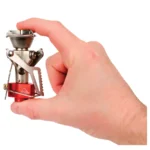
MSR PocketRocket 2 Ultralight Stove
Burner only, folds small. Lists 3.5 minutes per liter with IsoPro. Read more
Where to go deeper

Carbon Monoxide Detector for Camper Van: 5 Things to Buy
Read this before you cook anywhere near a vehicle. Read more
How we compared them
The NomadsToolsLab team read both makers' product pages end to end on 5 October 2026, went through the Jetboil Flash manual, and checked both Amazon pages with a US address. What surprised us: Jetboil quotes its boil time for half a liter and MSR quotes it for a full liter, so the two headline numbers are not the same measurement. The Jetboil manual also says outright never to use the stove in a camper, caravan, tent or car, which matters if you cook near a van.
Testers at Treeline Review ran the Flash for a year and report about two minutes for two cups (0.5 L), with no simmer and no pressure regulator; the four minutes per liter in their table is the maker's figure, and they note the pot only fills to 500 mL. The testers at Switchback Travel found the PocketRocket 2 slower than MSR's own figure, 4 to 4.5 minutes per liter in calm sea-level tests, and say gusts up to 30 mph on Mount Rainier made the flame less consistent, with longer boil times and wasted fuel. A YouTube hiker, Taylor's Backpacking Adventures, in a 2020 video, put both on the same scale and the same 16 oz of water: the Jetboil boiled in about 2 minutes, the PocketRocket 2 in about 4, and the Jetboil kit was roughly double the weight of his stove-and-pot setup. Territory Supply reaches the same split.
Our conclusion: these two do different jobs. Every number in the table comes from the makers' own pages.
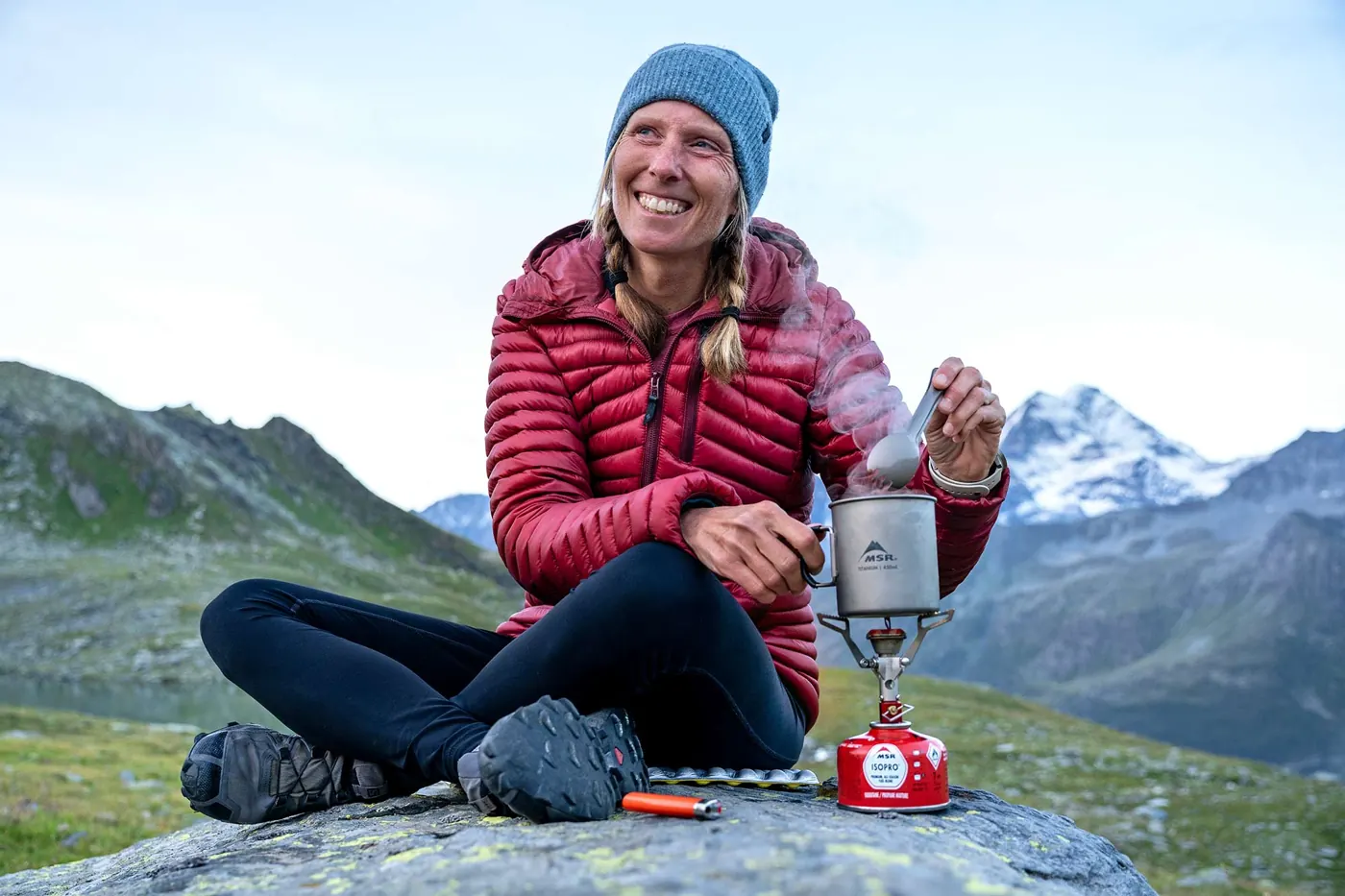
Jetboil vs MSR at a glance
| Jetboil Flash 1.0L | MSR PocketRocket 2 | |
|---|---|---|
| What you get | Jetboil Flash 1.0L: Burner, 1.0 L pot with cozy, lid, bottom cover that doubles as cup | MSR PocketRocket 2: Burner with folding pot supports and a hard case. No pot |
| Weight | Jetboil Flash 1.0L: 371 g (13.1 oz), stabilizer extra 27 g | MSR PocketRocket 2: 73 g (2.6 oz), 105 g packaged |
| Boil time (maker) | Jetboil Flash 1.0L: 120 sec for 0.5 L | MSR PocketRocket 2: 3.5 min for 1 L (IsoPro) |
| Fuel use (maker) | Jetboil Flash 1.0L: 10 L of water per 100 g can | MSR PocketRocket 2: About 60 min burn per 227 g can |
| Fuel | Jetboil Flash 1.0L: Jetboil JetPower canisters | MSR PocketRocket 2: MSR says to burn IsoPro |
| Ignition | Jetboil Flash 1.0L: Built-in rotary igniter | MSR PocketRocket 2: No igniter listed |
| Regulator | Jetboil Flash 1.0L: No | MSR PocketRocket 2: Not listed |
| Coldest use (manual) | Jetboil Flash 1.0L: -4 F / -20 C | MSR PocketRocket 2: Not listed |
The two boil times are not the same test: Jetboil quotes half a liter, MSR a full liter. Both makers also give their numbers for their own fuel, and the Jetboil figure is an average over the life of a can. Read them as direction, not as a score.
1. Jetboil Flash: the all-in-one
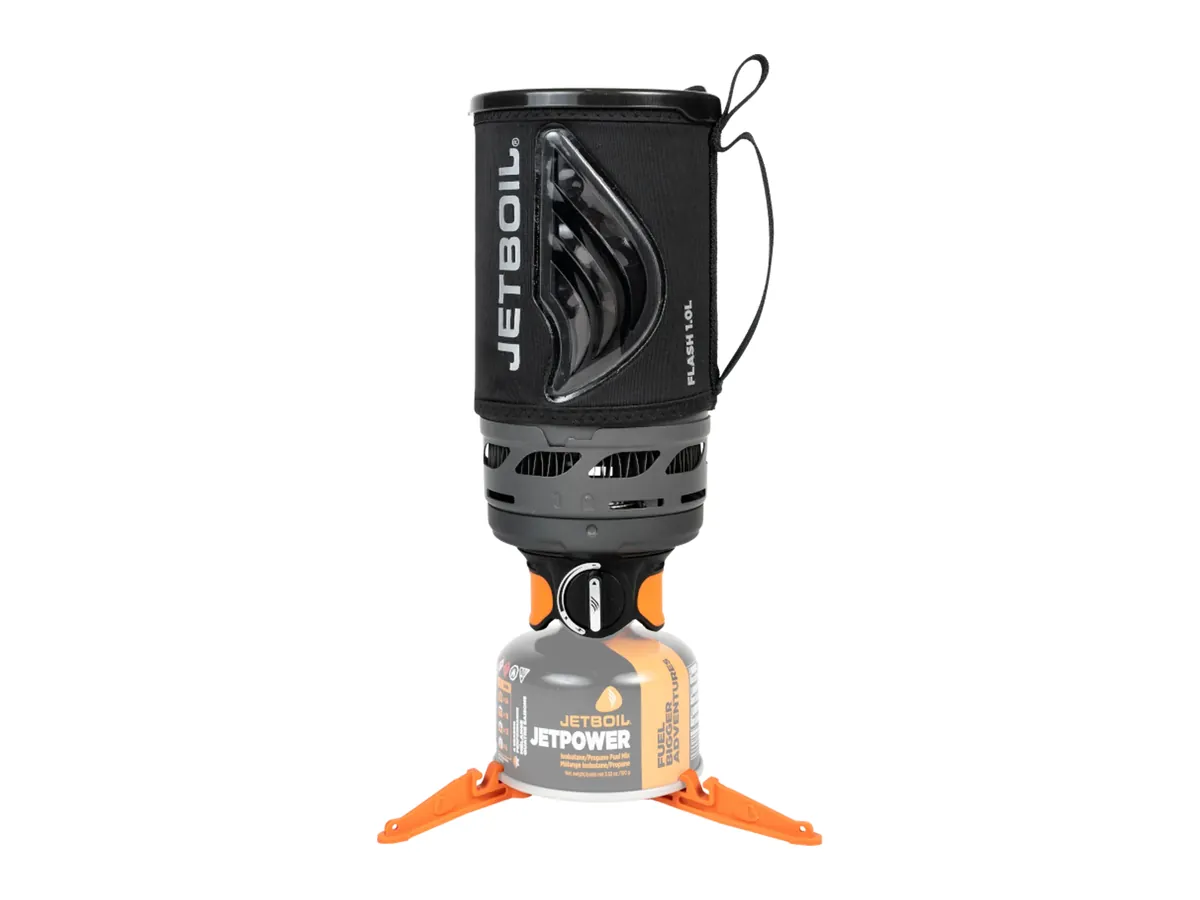
Jetboil Flash 1.0L Fast Boil Stove
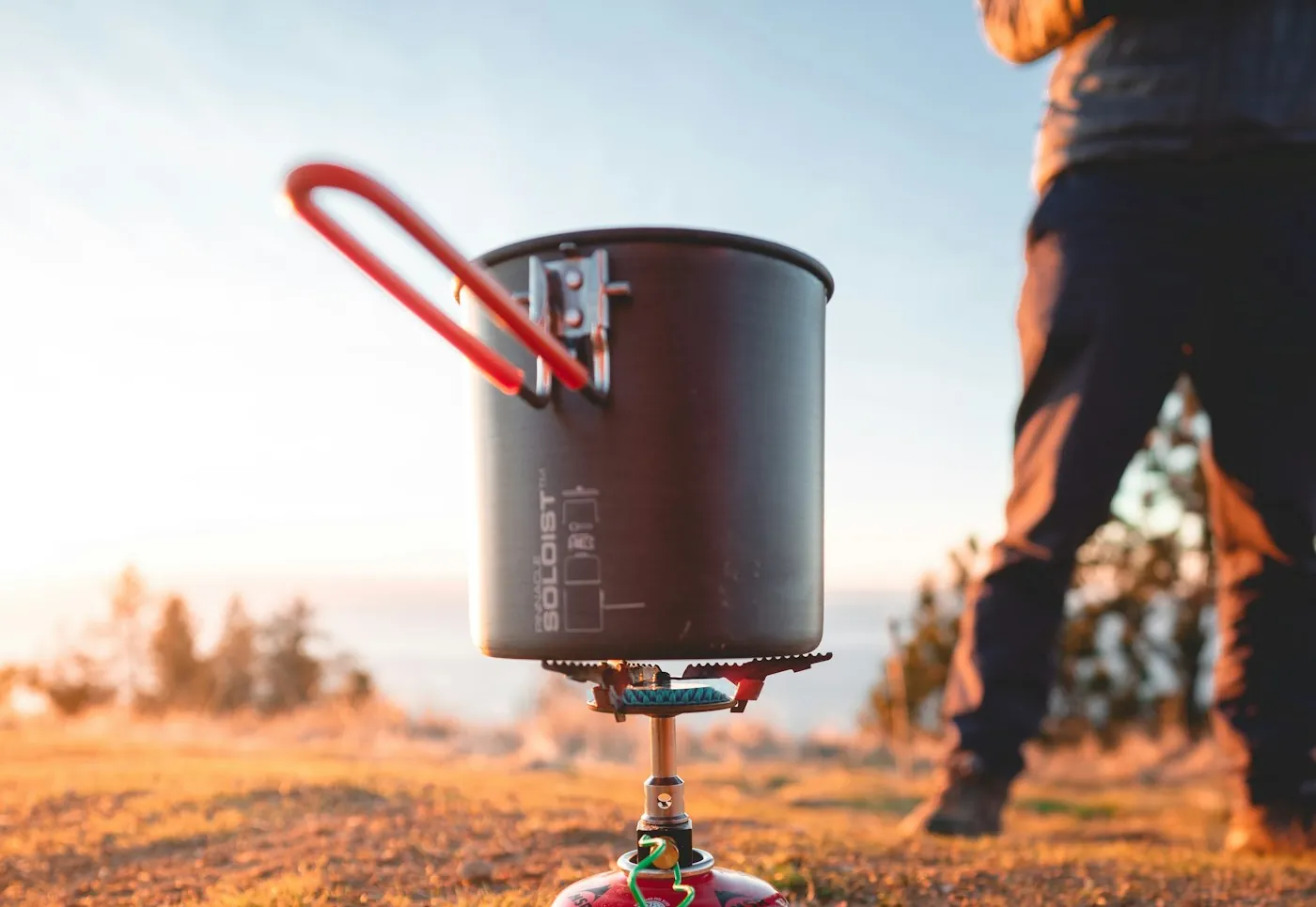
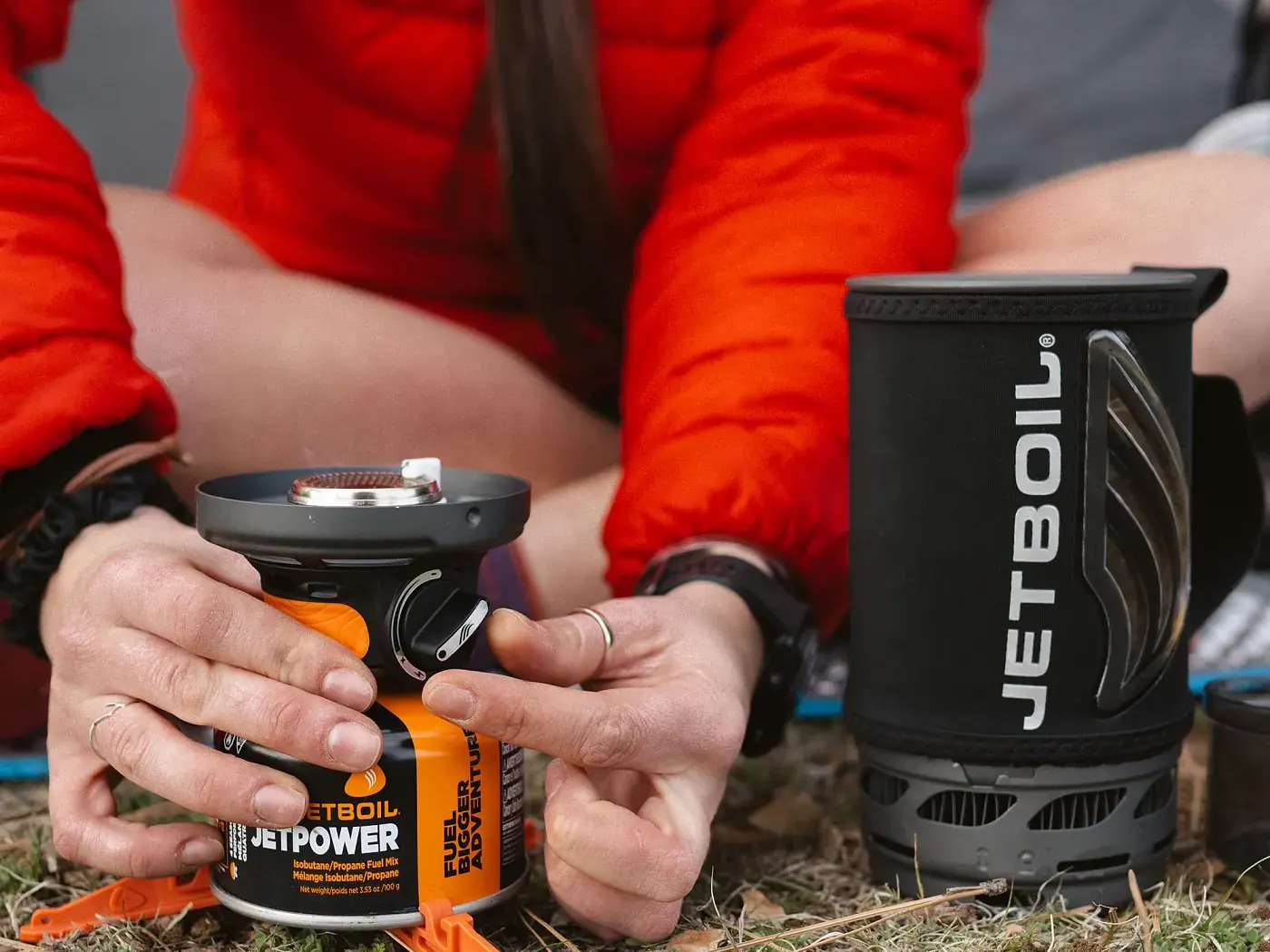
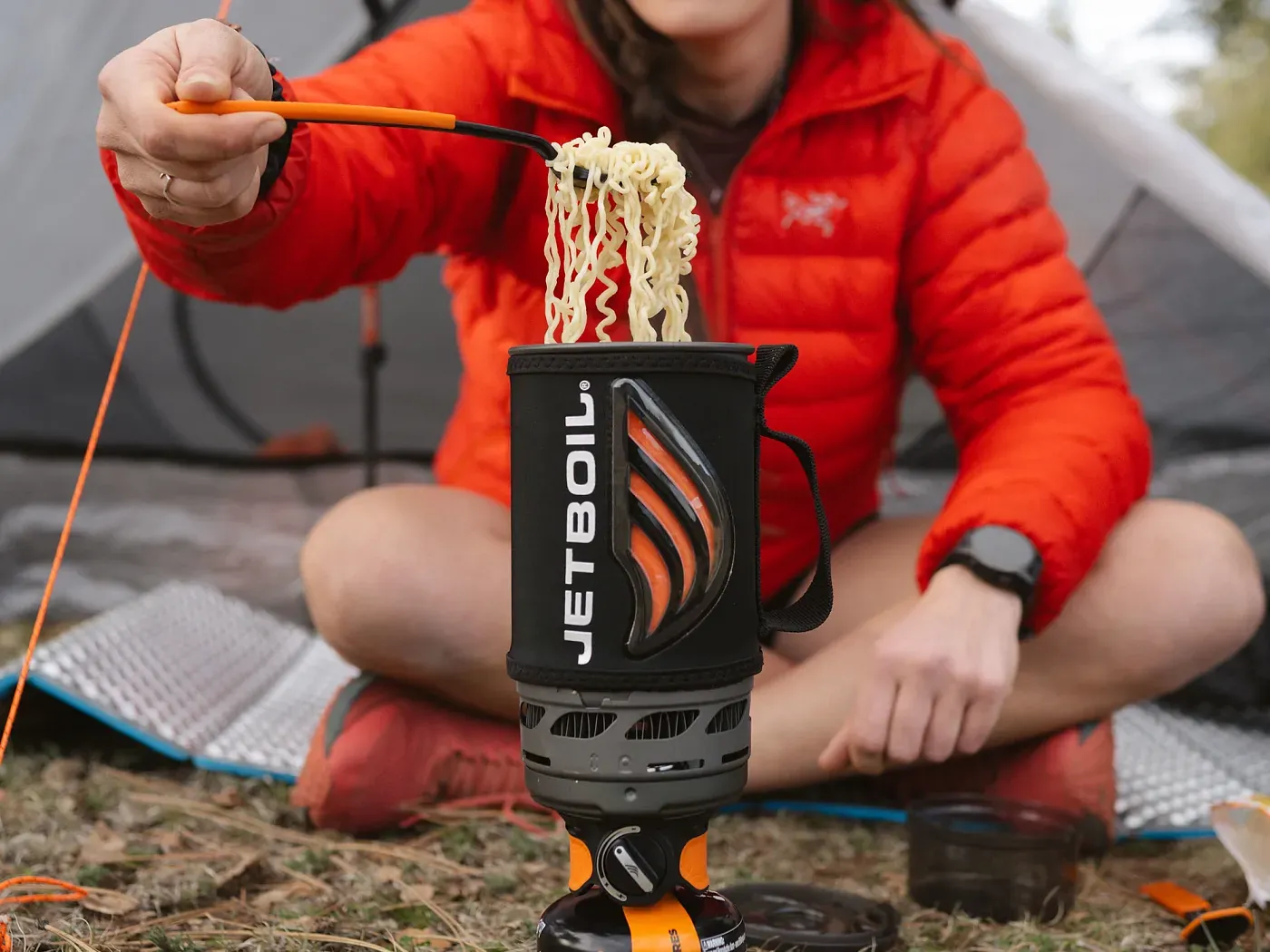
The Flash page lists a 1.0 L FluxRing pot with an insulating cozy, a turn-and-click igniter, a color-change heat indicator and a bottom cover that doubles as a measuring cup and bowl. The maker puts the boil at 120 seconds per 0.5 liter, 10 liters of water per 100 g can and 13.1 oz (371 g). Everything packs into the pot, which is why the packed size is a tidy 4.25 by 7.5 inches.
The limits are on the same page and in the testers' notes. Jetboil lists no fuel regulator. Testers at Treeline Review say the Flash only boils, it does not simmer, and that a regulator-less stove gives up some cold and altitude performance. They also point out that the fill line is 500 mL even though the pot holds a liter.
2. MSR PocketRocket 2: the light one
MSR PocketRocket 2 Ultralight Stove
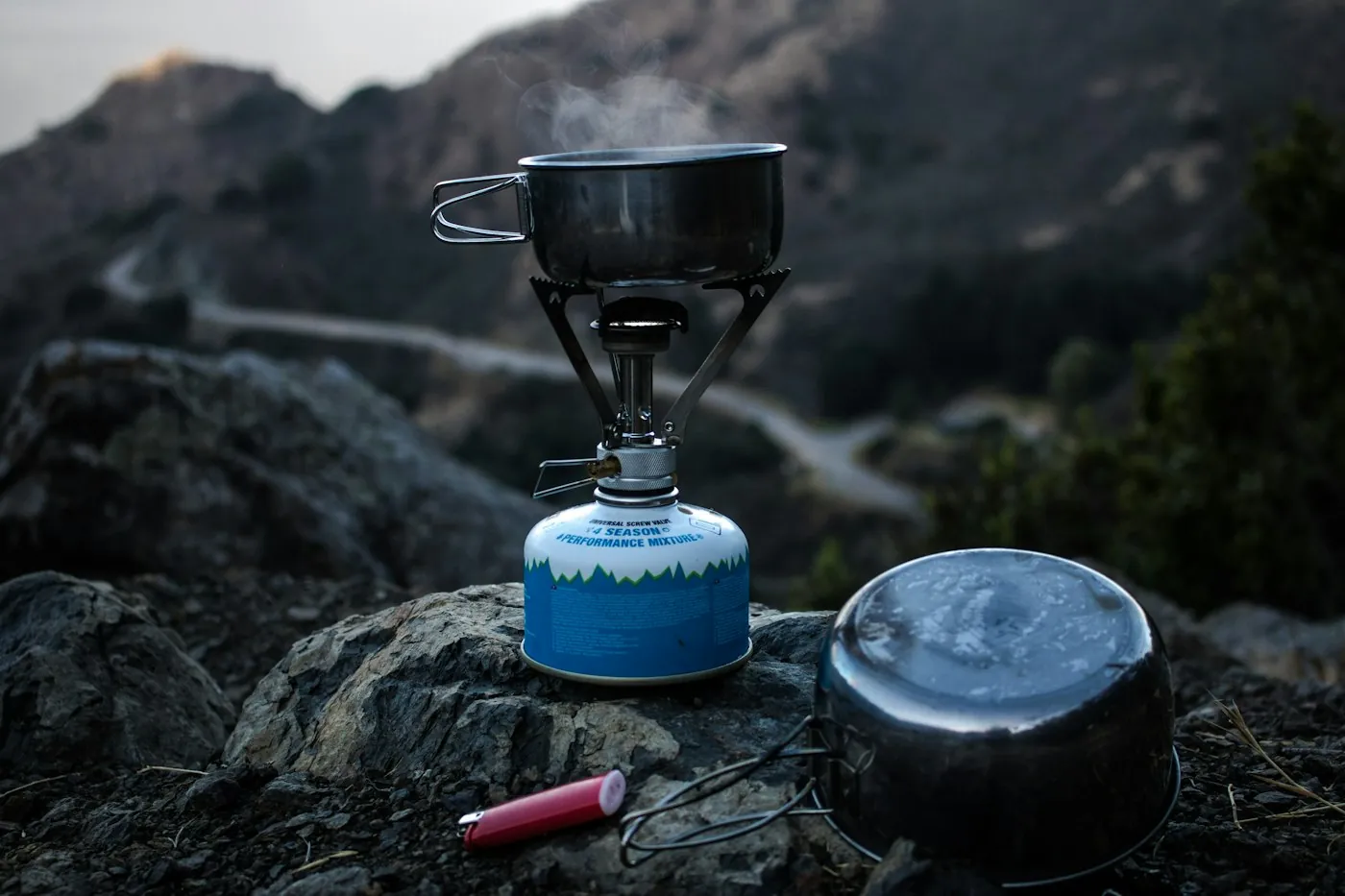
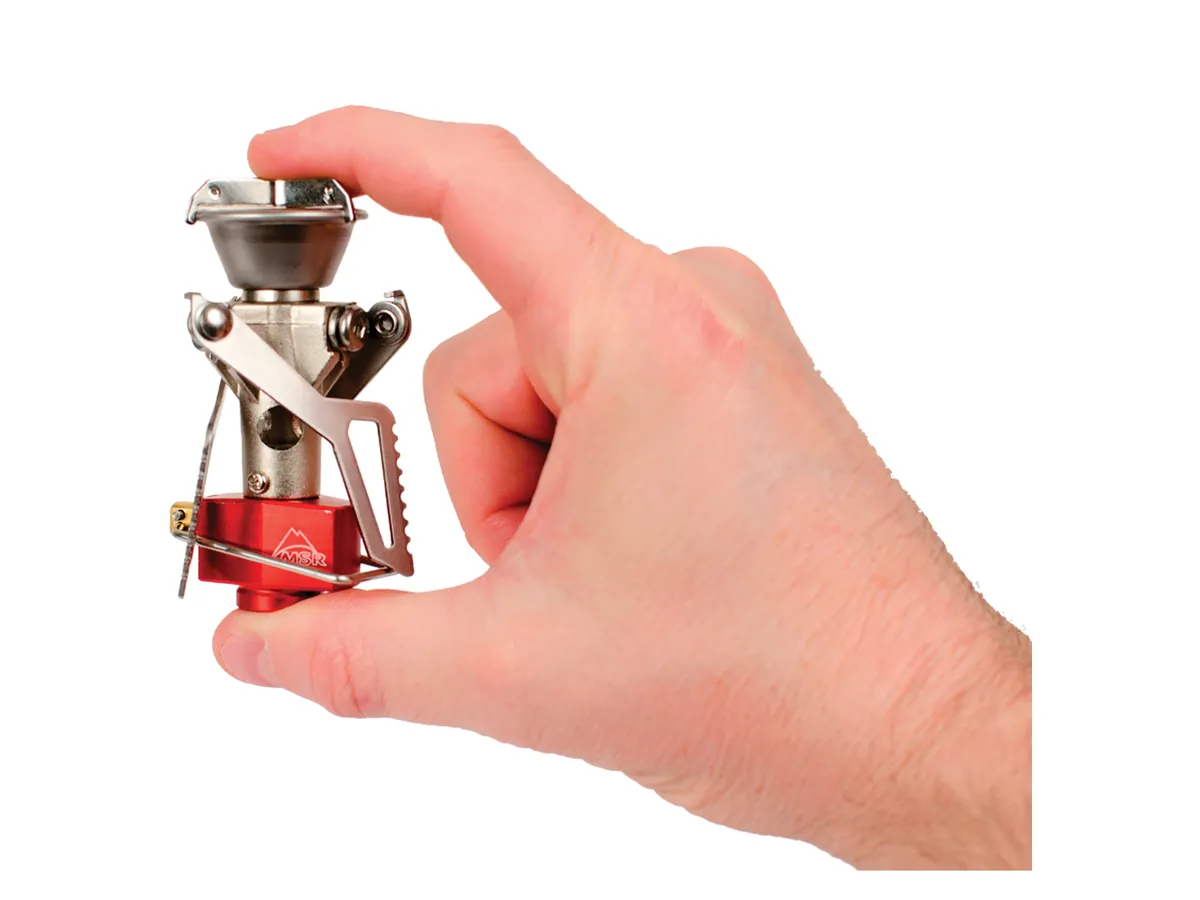
On the MSR page the PocketRocket 2 weighs 2.6 oz (73 g), or 3.7 oz (105 g) with its case, packs to about 1.3 by 1.6 by 3.1 inches and lists 3.5 minutes for a liter with IsoPro. MSR says it burns about 60 minutes on a 227 g canister and that its WindClip helps in wind. The kit is the stove with folding pot supports and a hard case, and nothing else.
The testers at Switchback Travel found the flame responsive from boil to a low simmer, which is where this stove beats the Flash. They also report that full pots felt tippy on the three support arms and that there is no igniter, so you carry a lighter.
Wind, cold and fuel
Wind is where the two designs part ways. The Flash locks its pot straight onto the burner, and the testers at Treeline Review list wind resistance among its strengths. The testers at Switchback Travel report that gusts up to 30 mph on Mount Rainier made the PocketRocket 2 flame less consistent, with longer boil times and wasted fuel, and the hiker who filmed both stoves in 2020 (Taylor's Backpacking Adventures) says plainly that the Jetboil handles wind better.
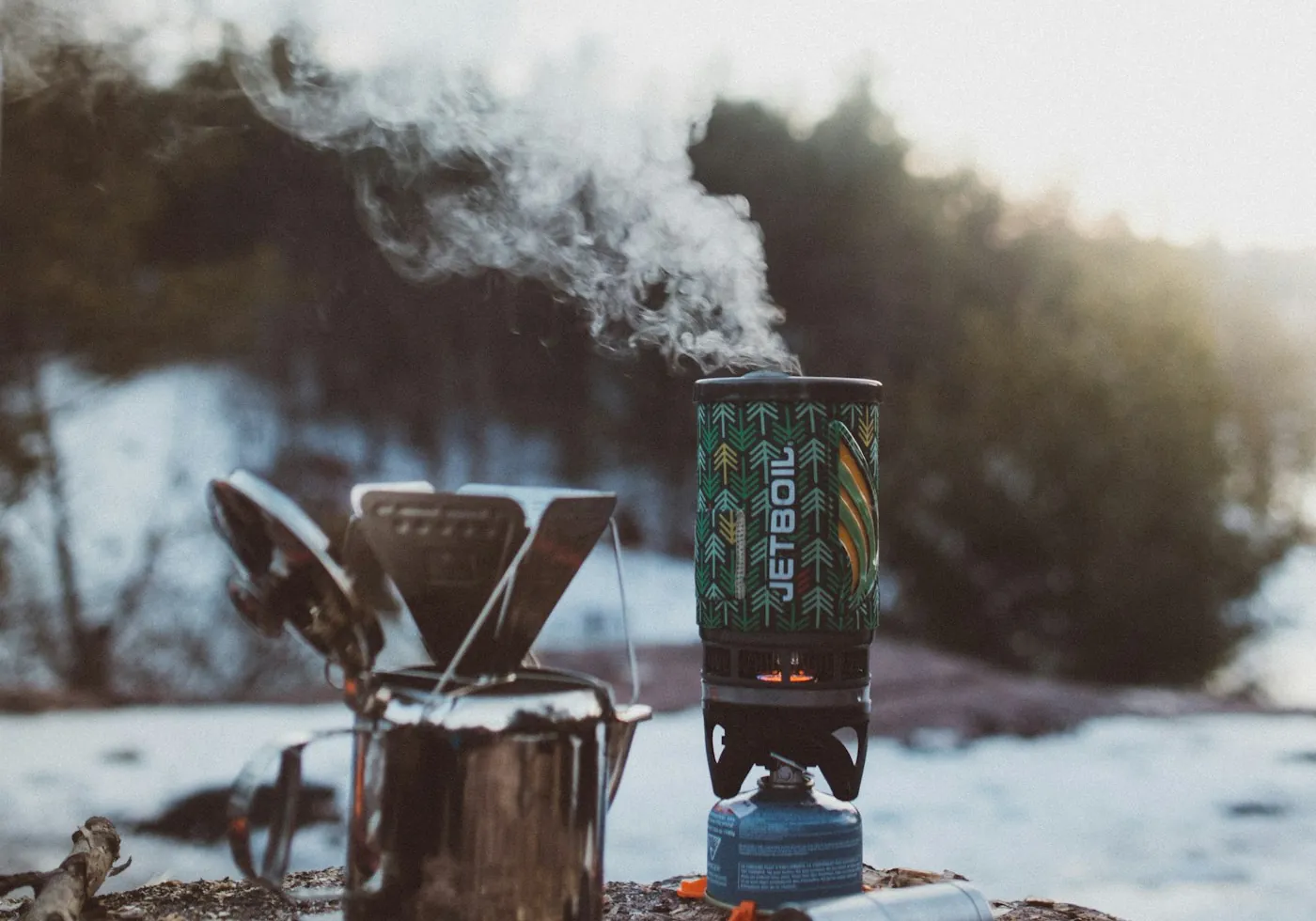
On fuel, the makers' own figures are the Jetboil's 10 liters of water per 100 g can and MSR's 60-minute burn on a 227 g can, which are different units. Testers at Territory Supply give the Flash roughly 10 to 12 liters per 100 g and the PocketRocket 2 roughly 7 to 8, which fits the claim that the FluxRing heat exchanger saves fuel. The same testers add that neither stove handles real cold well without a regulator. One more practical point: the Flash is built for Jetboil's own JetPower canisters, while MSR says to burn IsoPro in the PocketRocket 2.
Where you can safely use them
The Jetboil manual says "for outdoor use only" and carries a carbon monoxide danger notice: never use it in an enclosed space such as a camper, caravan, tent, car, mobile home or boat. The MSR page we read has only a California lead notice and no carbon monoxide text, so read the manual that comes in the box before you use any canister stove near a vehicle or a tent.
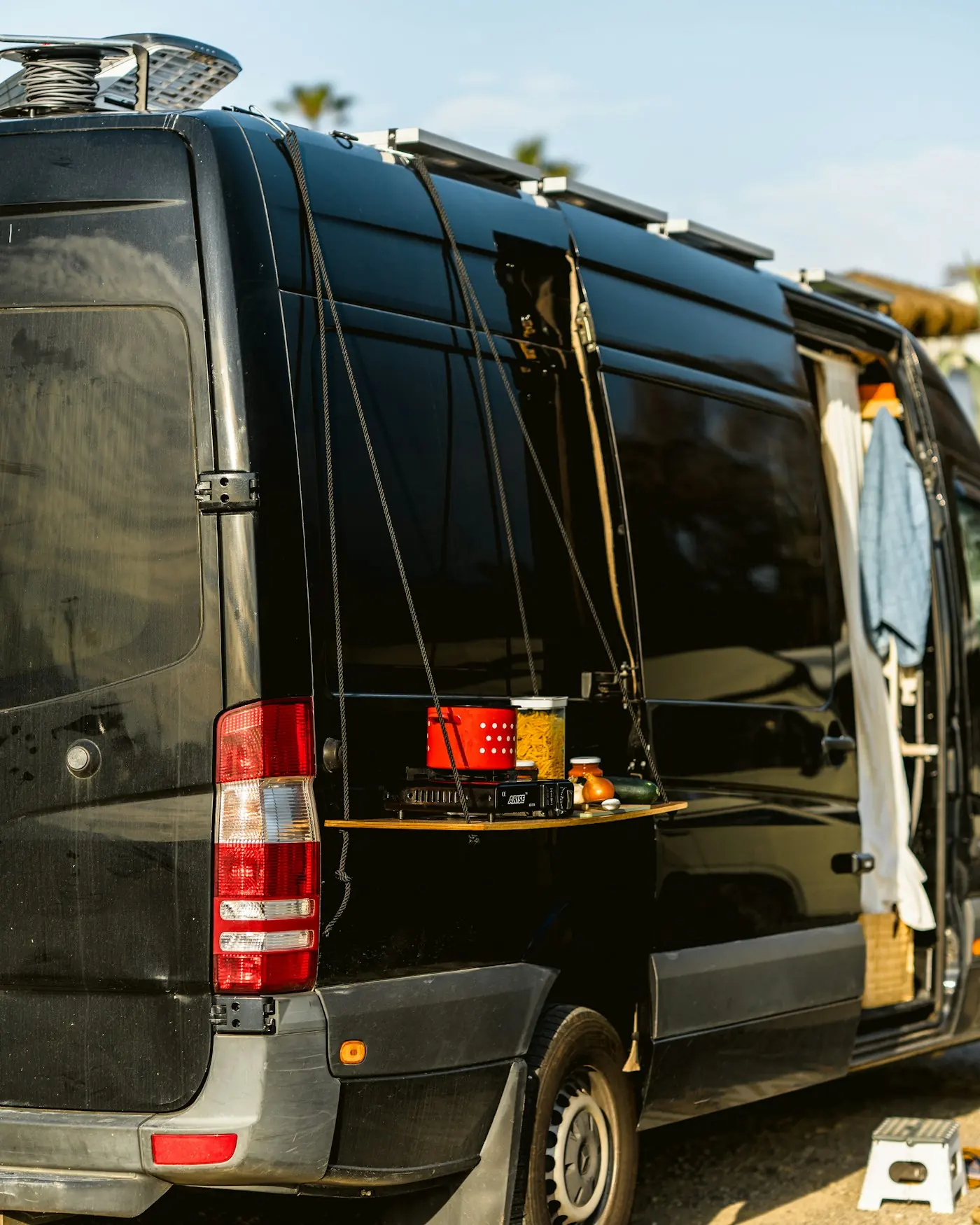
From the road: In the van I cooked on gas, and we had an extra stove where you can cook outside. I do not remember the brand.
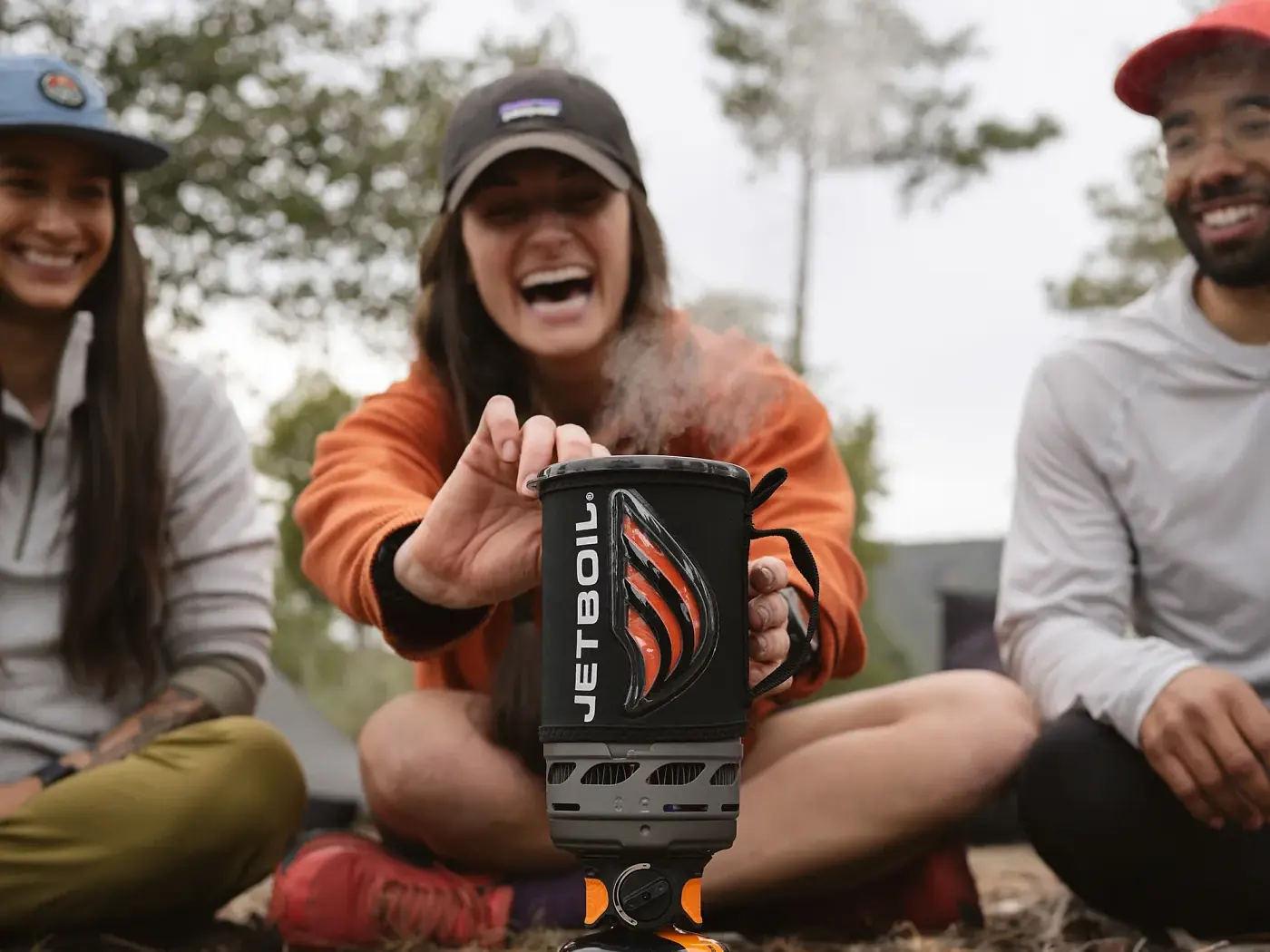
A camp stove belongs outside the vehicle. Our camper van carbon monoxide guide and the Kidde vs First Alert comparison cover the alarms, and the cargo van conversion guide covers the bigger build.
Camping with a stove usually means camping with a pad: see our Sea to Summit vs NEMO sleeping pad comparison.
Which one to pick
Pick the Jetboil Flash if your day is coffee, tea and add-water meals, you cook for one or two, and you want the pot, the cozy and the cup in one piece. It is the one for car camping, van roadsides and short trips where 371 g does not hurt. Get yours on Amazon
Pick the MSR PocketRocket 2 if you already own a pot, you want a simmer, or you pack by the gram. It also suits anyone who packs light, where a 73 g burner is the whole stove kit. Get yours on Amazon
Want a wider look at what to take on the road? See our road trip gear list, or the water side with the GRAYL vs LifeStraw comparison.
Get both stoves
Here are both stoves from this article.
Jetboil Flash 1.0L Fast Boil Stove
MSR PocketRocket 2 Ultralight Stove
- The Jetboil Flash lists 120 seconds per 0.5 L, 371 g and a 1.0 L pot built in; the MSR PocketRocket 2 lists 3.5 minutes per liter and 73 g, burner only.
- The boil times are quoted for different volumes, so compare them as direction, not as a score.
- Testers at Treeline Review, Switchback Travel and Territory Supply agree the Flash boils faster; Treeline and Switchback rate it better in wind, and Switchback and Territory credit the PocketRocket 2 with being lighter and able to simmer.
- Jetboil lists no fuel regulator and a lowest use temperature of -4 F (-20 C).
- Neither is for use inside a vehicle or tent. Jetboil's manual says so in plain words.

Chenzo, founder of NomadsToolsLab
I lived in a van and a caravan for seven years in Spain and Portugal, off grid. The van was a Renault Master and I built everything inside myself.
FAQ
Is Jetboil better than MSR?
They do different jobs. The Jetboil Flash is an all-in-one system that lists 120 seconds for 0.5 liter and weighs 371 g. The MSR PocketRocket 2 is a 73 g burner that needs your own pot and lists 3.5 minutes for a liter.
Which is faster, Jetboil Flash or MSR PocketRocket 2?
The maker figures and every tester we read put the Jetboil Flash ahead on boil time. One YouTube test with 16 oz of water saw about 2 minutes on the Jetboil and about 4 minutes on the PocketRocket 2.
Can I use a Jetboil in a tent or van?
No. The Jetboil Flash manual says it is for outdoor use only and that it must never be used in an enclosed space such as a camper, caravan, tent, car, mobile home or boat.
Does the Jetboil Flash simmer?
Jetboil describes it as a fast-boil system. Testers at Treeline Review say it cannot simmer and is limited to boiling water. The PocketRocket 2 has a flame adjuster that Switchback Travel's testers found responsive.
What fuel do Jetboil and MSR stoves use?
Jetboil says the Flash is designed for JetPower canisters of 100, 230 or 450 g. MSR says to burn MSR IsoPro in the PocketRocket 2.
Affiliate disclosure. This post contains affiliate links. If you click and buy something, this site earns a small commission at no extra cost to you. Picks are based on published specs, independent tests and manufacturer information. As an Amazon Associate I earn from qualifying purchases. Read the full affiliate disclosure. Amazon and the Amazon logo are trademarks of Amazon.com, Inc. or its affiliates.
Your next step