

Victron vs Renogy Charge Controller: Which for a Camper?
As an Amazon Associate I earn from qualifying purchases. Some links on this page earn us a small commission, at no extra cost to you. Full disclosure.
Victron vs Renogy charge controller: both take panel voltage up to 100 V, but the Victron SmartSolar MPPT 100/50 is rated for 50 A and 700 W of panels on 12 V, and the Renogy Rover 40A for 40 A and 520 W. We read the maker pages and the Victron datasheet on 5 October 2026. These are the makers' numbers.

Quick answer
Checked on 9 October 2026. Choose the Victron SmartSolar MPPT 100/50 if you want more panel power (700 W at 12 V per Victron) and Bluetooth built in. Choose the Renogy Rover 40A if 520 W of panels is enough and you want a screen on the unit. Both list automatic 12/24 V detection and panels up to 100 V.
Both, with a buy button each
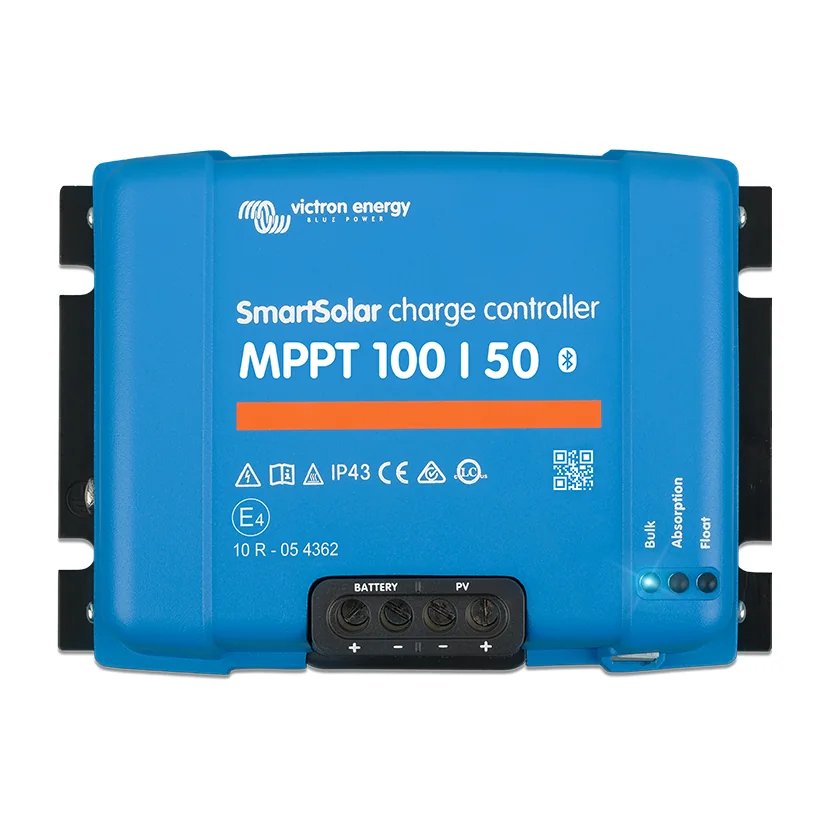
Victron SmartSolar MPPT 100/50
Lists 50 A, 700 W of panels at 12 V and no cooling fan. Read more
How we compared them
The NomadsToolsLab team read Victron's datasheet and product page and Renogy's product page end to end on 5 October 2026, checked both Amazon pages with a US address, and went back to the maker pages and the Amazon buy buttons on 9 October 2026 to see what had changed. What surprised us: Renogy's page says the Rover has no built-in fuse and that you add one, while Victron's one-page datasheet gives no fuse size at all.
Testers at Footprint Hero ran a Victron SmartSolar 100/30 and a Renogy Rover for three weeks on a test rig. The Victron's voltage reading was off by 0.075 V on average against 0.175 V for the Renogy, and the best output was 146 W against 142 W. Their verdict: Victron for ease, Renogy for value. TechTest, a German site, measured the Victron 100/50 with a lab supply and found 92 to 97 percent efficiency, but only up to 6 A, so Victron's 98 percent at 20 A and above was not confirmed. Both tests are older; Footprint Hero used the smaller 100/30. Every number in the table comes from the makers' own pages.
From the road: Somebody helped me to put the plugs on the cables from the sun panels and he did plus on minus and minus on plus. I did everything the right way, so when I plugged it in, it was not good. We had to change that afterwards.
Victron vs Renogy charge controller at a glance

| Pick | Current | Panels at 12 V | Monitoring | Shop |
|---|---|---|---|---|
| Current: 50 A | Panels at 12 V: 700 W | Monitoring: Bluetooth built in, VictronConnect app | Get yours on Amazon |
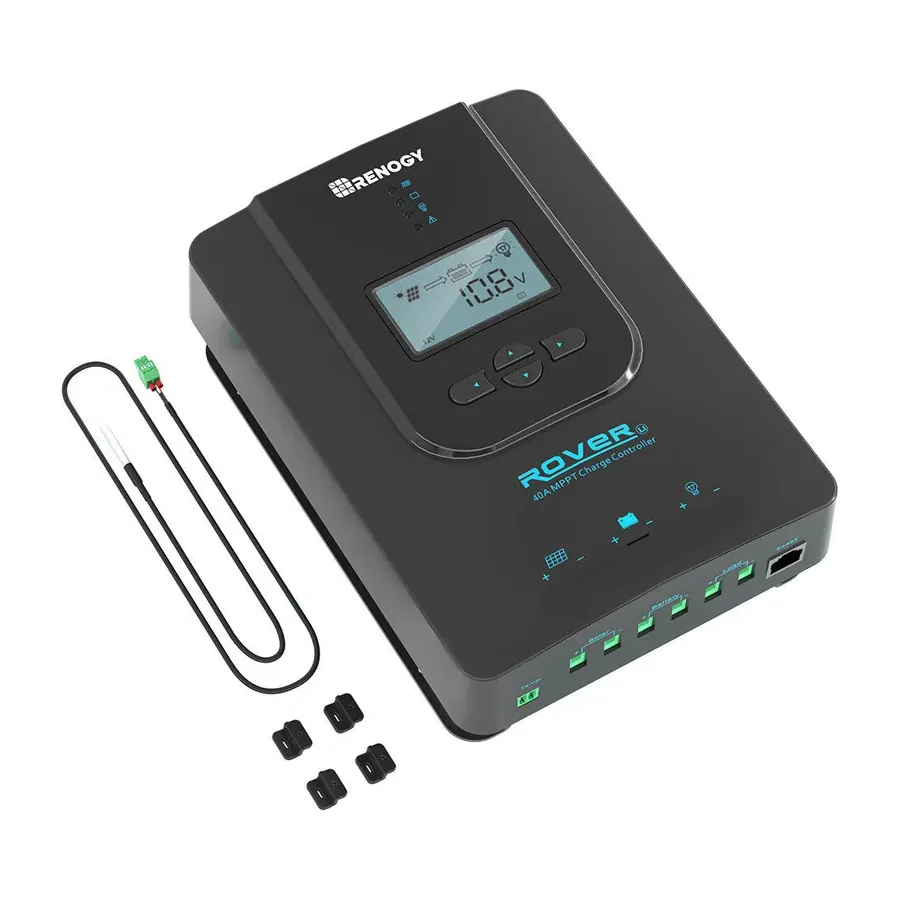 | Current: 40 A | Panels at 12 V: 520 W | Monitoring: LCD on the unit, Bluetooth with the BT-2 module | Get yours on Amazon |
Both list panel voltage up to 100 V and automatic 12/24 V detection. On efficiency, Victron lists a maximum above 98%. Renogy lists up to 99% tracking efficiency and 98% peak conversion. Those are different measures, so do not set them side by side as a score.
Warranty: Victron's page says 5 years standard. For Renogy, the maker page lists a 3-year warranty.
1. Victron SmartSolar MPPT 100/50: more panel power
Victron SmartSolar MPPT 100/50

The Victron SmartSolar MPPT 100/50 datasheet lists battery voltage 12/24 V auto select, 50 A rated charge current, 100 V maximum PV open circuit voltage and a 60 A maximum PV short circuit current. It says maximum efficiency exceeds 98%, there is no cooling fan, and full output current holds up to 40 C (104 F). Not sure you need an MPPT at all? Our MPPT vs PWM comparison sets a Renogy PWM controller against this Rover and a Victron.
Bluetooth is built in for the VictronConnect app, which Victron says shows real-time data and a 30-day history. The power terminals take 16 mm² (AWG 6) wire. Victron's page lists a 5-year standard warranty and says to contact the original dealer for warranty requests. The listing we checked is sold by a third-party seller, so ask that seller how the warranty works.
Read the datasheet and the product page for the full detail.
2. Renogy Rover 40A: a screen on the unit
Renogy Rover 40A
Renogy says the Rover 40A takes up to 520 W for a 12 V system and 1,040 W for 24 V, accepts panels with voltage up to 100 V, tracks up to 99% and peaks at 98% conversion. It detects 12/24 V automatically for non-lithium batteries, and says to set the battery voltage before you connect it.

The Renogy Rover 40A listing shows an LCD and says the Renogy DC Home app needs the BT-2 module, sold separately. The terminals accept up to 8 AWG wire. Renogy sells the module on its own or in a bundle.
Also worth a look
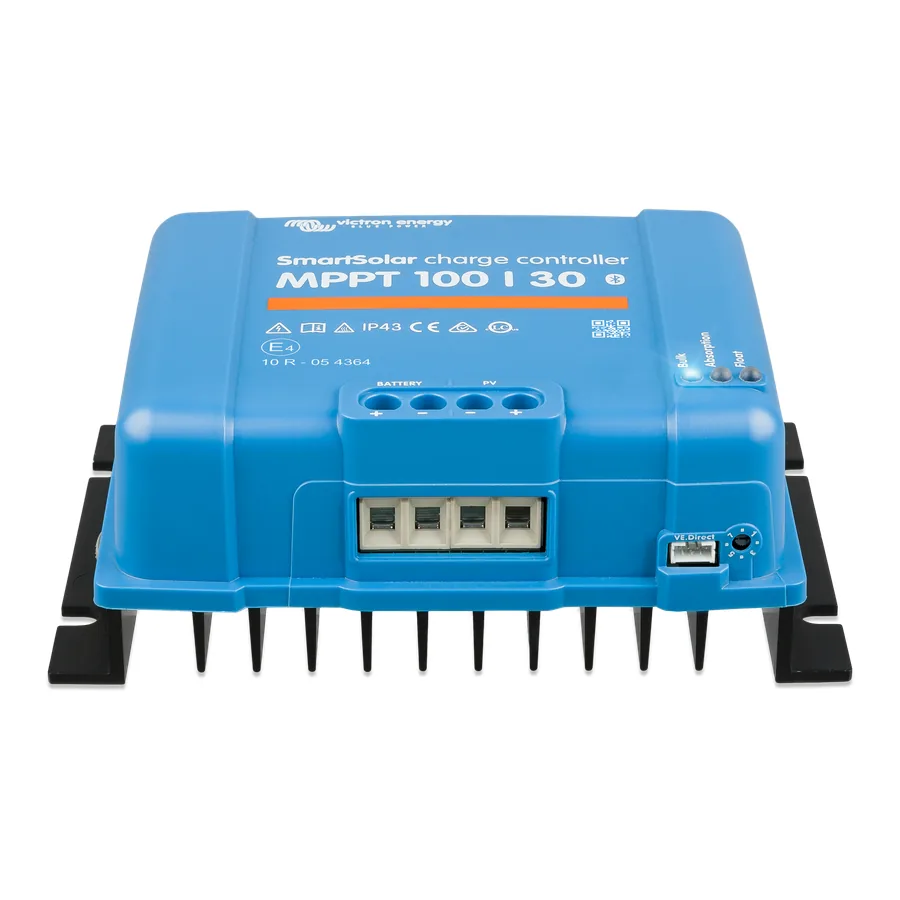
Victron SmartSolar MPPT 100/30
What Victron says
- Rated for 30 A, with 12 or 24 V battery voltage selected automatically
- Up to 440 W of panels on 12 V and 880 W on 24 V
- Panel voltage up to 100 V and maximum efficiency of 98%
- Bluetooth built in, with a 5-year standard warranty
The 100/30 is the 30 A version on the same Victron page and datasheet as the 100/50 above. It fits a smaller setup, up to 440 W of panels on a 12 V battery. The listing linked here is sold by a third-party seller, so ask that seller how the warranty works.
Wiring: polarity, cable size and fuse
Chenzo built his own van and learned this the hard way. On cable size: "Use the right size of the cables. So important. And the length of the cables is also important, to choose the thickness. But also the amount of power that is going through."
On fuses: "Use fuses. I put the wrong fuse in, the wrong fuse size, and luckily it was too low, so it blew all the time. I put a new one in three, four times, and then I found out that my calculations were bad." The right size depends on your cable and load, so calculate it.
Both makers list reverse polarity protection, but read each manual for what it covers. Renogy says its Rover has no built-in fuse and that you should add one between the controller and the batteries, matched to the controller's amp rating, and recommends a 40A ANL fuse for its 40A controllers. Victron's datasheet does not give a fuse size, so check the manual.
How many panels can each take?

Victron adds two notes: if you connect more PV power, the controller limits input power, and the panel voltage must exceed the battery voltage by 5 V for it to start. It also warns that an array with a higher short circuit current than 60 A may damage the 100/50. Add up your own panels, and use the open circuit voltage printed on them.

Chenzo, founder of NomadsToolsLab
I lived in a van and a caravan for seven years in Spain and Portugal, off grid. The van was a Renault Master and I built everything inside myself.
- Victron SmartSolar MPPT 100/50: 50 A, 700 W at 12 V, Bluetooth built in, no cooling fan.
- Renogy Rover 40A: 40 A, 520 W at 12 V, LCD on the unit, Bluetooth needs the BT-2 module.
- Both list panels up to 100 V and automatic 12/24 V detection.
- Check polarity, cable size and fuse before connecting. Renogy says to add a fuse matched to the amp rating.
Where to go next
Planning the whole build? Read how to wire a camper van and cargo van conversion for beginners. For panels see solar panels for a camper van, for batteries and stations power stations for van life, and keep an eye on rats chewing wires in a van.
FAQ
Is Victron or Renogy better for a camper van?
Victron lists 50 A and 700 W of panels at 12 V with Bluetooth built in. Renogy lists 40 A and 520 W with an LCD on the unit. Pick by how many panel watts you have and whether you want a screen or an app.
Does the Renogy Rover 40A have Bluetooth?
Renogy sells a BT-2 Bluetooth module for the Rover, on its own or in a bundle. The Amazon listing we checked says the module is sold separately.
How many watts of solar panels can each controller take?
At 12 V, Victron lists 700 W for the 100/50 and Renogy lists 520 W for the Rover 40A. At 24 V the figures are 1,400 W and 1,040 W. Both list panel voltage up to 100 V.
What fuse do I need for a solar charge controller?
It depends on your cable and load, so calculate it. Renogy says to fit a fuse between the controller and the batteries matched to the controller amp rating, and recommends a 40A ANL fuse for its 40A controllers.
Watch: Renogy or Victron in a camper van
Video by Andy's Garage.
Seen enough? Here is the Renogy Rover from this article.
Renogy Rover 40A
A review of the Victron SmartSolar MPPT 100/50 with test results.
Video by Nev's Tech Bits.
Seen enough? Here is the Victron SmartSolar MPPT 100/50 from this article.
Victron SmartSolar MPPT 100/50
A Renogy 40A controller going into a camper with 440 W of panels.
Video by Just Go Camper.
Seen enough? Here is the Renogy Rover from this article.
Renogy Rover 40A
Planning the panels too? See our guide to the best portable solar panels for digital nomads.
Affiliate disclosure. This post contains affiliate links. If you click and buy something, this site earns a small commission at no extra cost to you. Picks are based on published specs, independent tests and manufacturer information. As an Amazon Associate I earn from qualifying purchases. Read the full affiliate disclosure. Amazon and the Amazon logo are trademarks of Amazon.com, Inc. or its affiliates.
Your next step