

MPPT vs PWM Solar Charge Controller: Which for a Camper Van?
As an Amazon Associate I earn from qualifying purchases. Some links on this page earn us a small commission, at no extra cost to you. Full disclosure.
MPPT vs PWM comes down to one number: voltage. Renogy lists a maximum PV input of 25 V for its Wanderer Li 30A PWM controller. The Rover 40A MPPT next to it takes 15 to 100 V. That gap decides which panels you can use, how many you can wire in series and how much of their power reaches the battery. We read both makers' pages and both Amazon listings on 9 October 2026 and went through what independent testers measured.

Quick answer
Checked on 9 October 2026. Pick the Renogy Rover 40A MPPT for most vans: it takes panels up to 100 V, so panels in series and 60-cell roof panels work, and testers measured 5 to 32 percent more power into the battery than a PWM from the same panel (the gap shrinks on a hot panel). Pick the Renogy Wanderer Li 30A PWM only for one small panel built for a 12 V system, with an open-circuit voltage under 25 V.
Both, with a buy button each
Renogy Wanderer Li 30A PWM Solar Charge Controller
Maker lists 25 V maximum PV input, IP20 and a 1-year warranty. Sold by Amazon.com. Read more
Renogy Rover 40A MPPT Solar Charge Controller
Maker lists 15 to 100 V PV input, 520 W on 12 V and a 3-year warranty. Sold by Amazon.com. Read more
Where to go deeper

Victron vs Renogy Charge Controller: Which for a Camper?
Both are MPPT: this is the brand comparison. Read more

Best Solar Panels for Camper Van (2026)
The panels that go on the other side of the controller. Read more
How we compared them
The NomadsToolsLab team read the Renogy Wanderer and Rover pages and Victron's SmartSolar datasheet end to end on 9 October 2026, and checked the Amazon pages with a US address. What surprised us: how little separates the two types on a hot panel. In his video, Cleversolarpower by Nick ran a PWM and an MPPT from one 100 W panel each and the MPPT finished only 5.4 percent ahead (102.2 Wh against 97 Wh). Then he showed why: a hot panel's voltage drops toward the battery's, so a PWM wastes less.
Solar Circuit 360 measured the other end: in its test the same 100 W panel gave about 74 W to the battery through a PWM and about 98 W through an MPPT, roughly 32 percent more. RV Power Plug, which designs RV solar systems, calls MPPT a necessity once several panels go in series. Owner feedback points at the same limit: a buyer on Renogy's own Wanderer page asks for clearer guidance on how many panels it supports and says three 100 W panels burned the controller out.
Our conclusion: pick by panel voltage first and by brand second. Every number in the table comes from the makers' own pages.

MPPT vs PWM at a glance
| Wanderer PWM | Rover MPPT | Victron MPPT | |
|---|---|---|---|
| Battery voltage (maker) | Wanderer PWM: 12 V | Rover MPPT: 12/24 V auto-detect | Victron MPPT: 12/24 V auto select |
| Rated charge current (maker) | Wanderer PWM: 30 A | Rover MPPT: 40 A | Victron MPPT: 30 A |
| Max PV input voltage (maker) | Wanderer PWM: 25 V | Rover MPPT: 100 V (15 to 100 V range) | Victron MPPT: 100 V open circuit |
| Max PV power (maker) | Wanderer PWM: Not listed | Rover MPPT: 520 W on 12 V | Victron MPPT: 440 W on 12 V |
| Weight (maker) | Wanderer PWM: 0.65 lb | Rover MPPT: 2.0 kg (4.41 lb) | Victron MPPT: 1.3 kg |
| Bluetooth (maker) | Wanderer PWM: Optional BT-1 module | Rover MPPT: Optional BT-2 module | Victron MPPT: Built in |
| Enclosure (maker) | Wanderer PWM: IP20 | Rover MPPT: IP32 | Victron MPPT: IP43 (electronics) |
| Warranty (maker) | Wanderer PWM: 1 year | Rover MPPT: 3 years | Victron MPPT: 5 years |
| Amazon, 9 Oct 2026 | Wanderer PWM: In stock, Amazon.com, 300+ bought | Rover MPPT: In stock (only 17 left), Amazon.com, 200+ bought | Victron MPPT: In stock, third-party seller, 700+ bought |

Renogy is the maker of both of the first two, which keeps the brand out of the comparison: the difference you see is the controller type. Max PV power for the Wanderer is not printed on Renogy's page, so we left it blank rather than work it out. Renogy's own guide puts it fairly: MPPT is often more flexible, PWM can be the better fit for a small system with closely matched panel and battery voltages, and on the question of whether an MPPT always produces more power, its answer is "Not necessarily".
1. Renogy Wanderer Li 30A (PWM)
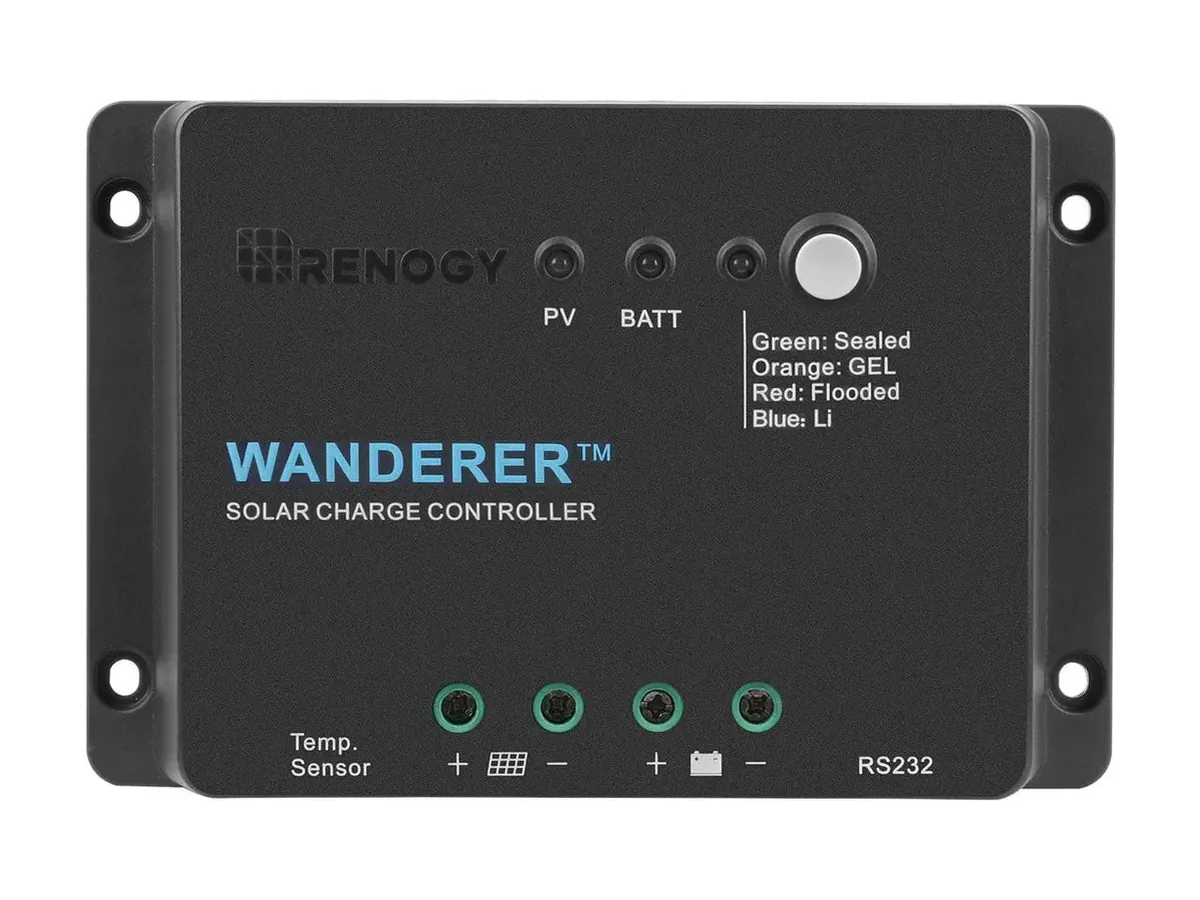
Renogy Wanderer Li 30A PWM Solar Charge Controller
The Renogy Wanderer Li 30A is a negative-ground PWM controller for 12 V systems. The Renogy page lists a rated charge current of 30 A, a maximum PV input of 25 VDC, a 16 V high-voltage disconnect, temperature compensation, an IP20 enclosure, room for up to 8 AWG wire and a weight of 0.65 lb. Warranty is one year on materials and workmanship. Bluetooth needs Renogy's separate BT-1 module. The Amazon listing says AGM, gel and flooded batteries are set automatically and lithium manually.
On 9 October 2026 the listing showed In Stock with an Add to cart button, sold by Amazon.com with a 30-day refund or replacement and 300+ bought in the past month. The 25 V limit is the number to respect. RV Power Plug says panels sold as 12 V usually run 18 to 22 V open circuit, and warns that going beyond a PWM controller's limit will most likely ruin it.
2. Renogy Rover 40A (MPPT)
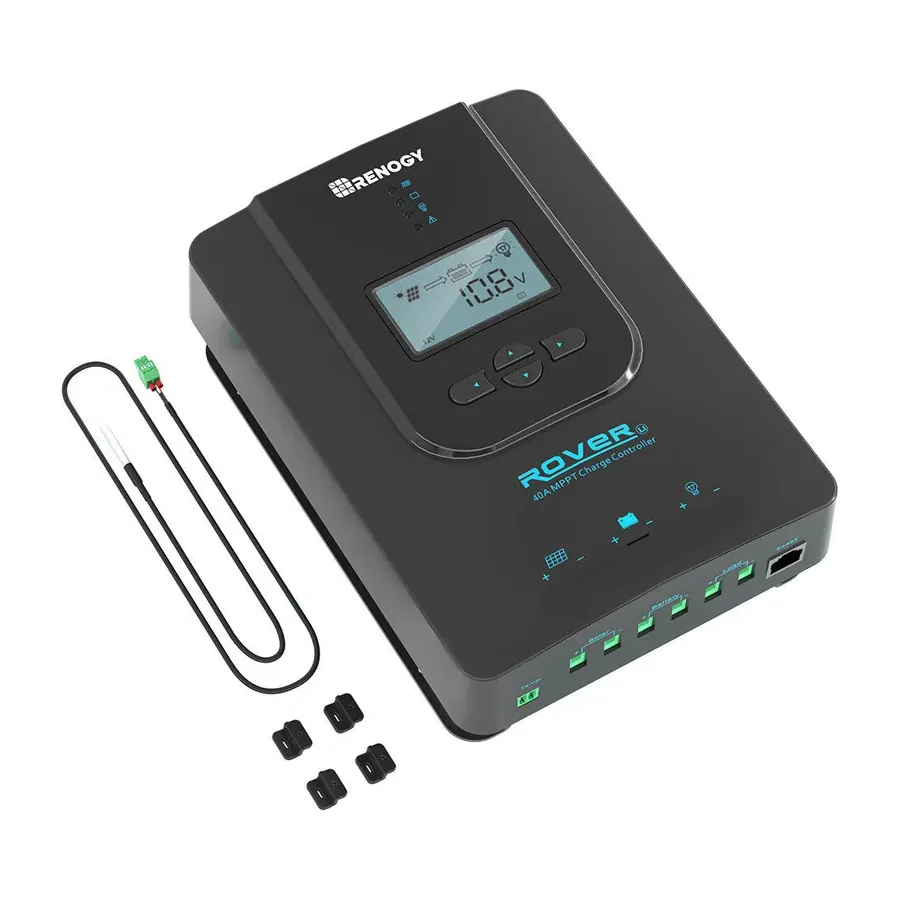
Renogy Rover 40A MPPT Solar Charge Controller
The Renogy Rover 40A detects 12 or 24 V by itself. The Renogy page lists a rated charge current of 40 A, a PV input range of 15 to 100 VDC, a maximum PV power of 520 W on 12 V and 1,040 W on 24 V, an IP32 rating, an operating range of -35 to 45 degrees C and a weight of 2.0 kg. A remote temperature sensor and mounting brackets come in the box, terminals take up to 8 AWG and the warranty is 3 years. Renogy says it can charge over-discharged lithium batteries.
On 9 October 2026 the listing showed In Stock (only 17 left), an Add to cart button, Amazon.com as seller, a 30-day refund or replacement and 200+ bought in the past month. Renogy lists its DC Home app as compatible, and an optional BT-2 Bluetooth module.

Also worth a look
A third choice for readers who already know they want MPPT. Victron controllers show up in the roundups we read (TheGreenWatt and PopUpBackpacker) and in the RV Power Plug video, so this one earns a short card. For the full Victron against Renogy comparison see our Victron vs Renogy charge controller guide.
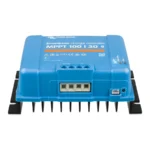
Victron SmartSolar MPPT 100/30
Datasheet: 30 A, 100 V, maximum efficiency above 98%, Bluetooth built in, 5-year warranty. Third-party seller (BrandCentric).
Victron's datasheet lists 30 A and a maximum PV open-circuit voltage of 100 V for the SmartSolar MPPT 100/30, with 440 W on 12 V and 880 W on 24 V, a maximum efficiency that exceeds 98%, no cooling fan, full output up to 40 degrees C, Bluetooth built in, IP43 electronics and a weight of 1.3 kg. Victron says its tracking improves harvest by up to 30% against PWM in changing light, and its site calls the 5-year standard warranty industry leading. These are the maker's own claims. On 9 October 2026 the Amazon listing showed In Stock, shipped by Amazon and sold by BrandCentric, a third-party seller rather than Victron, with 700+ bought in the past month.
What testers measured
Cleversolarpower by Nick connected one 100 W panel to each controller. In the first test the MPPT finished slightly ahead (102.2 Wh against 97 Wh, a 5.4 percent edge), with a power into the battery of 83.4 W against 81 W, in conditions he calls ideal for a PWM. When he measured the panel under load, a 55 degree C panel delivered 15.33 V, which gave the PWM an efficiency of 85 percent, while a 35 degree C panel at 16.5 V gave 74 percent. His summary: the MPPT wins in all cases, but the gap gets smaller on hot days, and above about 200 W of solar the MPPT is worth the money.

Solar Circuit 360 repeated the comparison with the same 100 W panel, the same battery and the same sun. The PWM delivered about 5.4 A and 74 W to the battery; the MPPT 7.1 A and 98 W, a gain of almost 32 percent. The channel adds that the MPPT advantage is tied to the voltage gap between panel and battery, so when that gap is smaller the advantage shrinks too. A written comparison by an owner points the same way: Nick Gatel at PopUpBackpacker, updated in December 2025, argues that MPPT is not automatically superior and that for specific systems one type can be better than the other.
RV Power Plug, an RV solar design channel, quotes 94 to 99 percent for MPPT and 70 to 80 percent for PWM, which are its own figures rather than a measurement. It says MPPT also reacts better to passing shade and clouds, and that putting panels in series lets you run thinner wire from the roof to the controller.
Voltage is the deciding number
A PWM controller clamps the panel voltage down to the battery's, so any voltage above that is lost. Solar Circuit 360 puts numbers on it: a panel that wants to run at about 18 V, forced down to 13.8 V, gives up more than 23 W of a 100 W panel. An MPPT lets the panel work at its best voltage and converts the extra into current. That is why the maker limits differ so much: 25 V for the Wanderer, 100 V for the Rover and for Victron's 100/30.

Cold matters at the other end. Solar Circuit 360 warns that panel voltage rises on a cold, sunny morning and that a spike above a controller's maximum input can destroy it, so size the series string for the coldest day, not for the label. It also reminds that a 30 A rating is an output rating, not the panel's current. Renogy's own guide lists connecting the panels before the battery, when the manual says battery first, among the common mistakes.
From the road: fuses and cable size

Chenzo, founder of NomadsToolsLab
Use the right size of the cables. So important. And the length of the cables is also important, to choose the thickness. But also the amount of power that is going through.
Use fuses. I put the wrong fuse in, the wrong fuse size, and luckily it was too low, so it blew all the time. I put a new one in three, four times, and then I found out that my calculations were bad, that I had to put a 15 amp fuse in instead of a 5.
That was Chenzo's own case in his van, and he did not say which controller he used. The right fuse depends on the cable and the load, so take it from your controller's manual, not from his number. Victron's datasheet, for example, lists PV reverse polarity protection among its protections, which is worth looking for on any controller. Our camper van wiring guide goes through fuses and cables step by step.

Which one to pick
One small panel for a weekend kit: the Renogy Wanderer, as long as the panel's open-circuit voltage stays under 25 V. A roof with panels in series or a larger array: the Renogy Rover 40A, which takes up to 100 V and 520 W on 12 V. You want built-in Bluetooth and a longer warranty: the Victron 100/30, with a 5-year warranty and 440 W on 12 V. You may add panels later: choose the MPPT with headroom, because a PWM has none.
Before you buy, match the panels to the controller and the battery. Our best solar panels for a camper van guide covers the panels, lithium vs AGM the battery, and BougeRV vs Renogy two 200 W panels you could pair with the Rover. For lithium, Renogy's guide says to check that the controller offers a compatible lithium charging profile in its manual.

Watch: MPPT against PWM, tested
Video by Solar Circuit 360.
Solar Circuit 360 puts the same 100 W panel, battery and sun behind a PWM and an MPPT, then explains cold-weather voltage and what a controller's amp rating means. The MPPT controller from this guide is below.
Renogy Rover 40A MPPT Solar Charge Controller
Video by RV Power Plug. Its description carries an Amazon link for an MPPT controller.
RV Power Plug designs RV solar systems and compares controller brands on warranty, apps and size. It speaks well of Victron's compact size and 5-year warranty, which match the datasheet. The Victron controller is below.
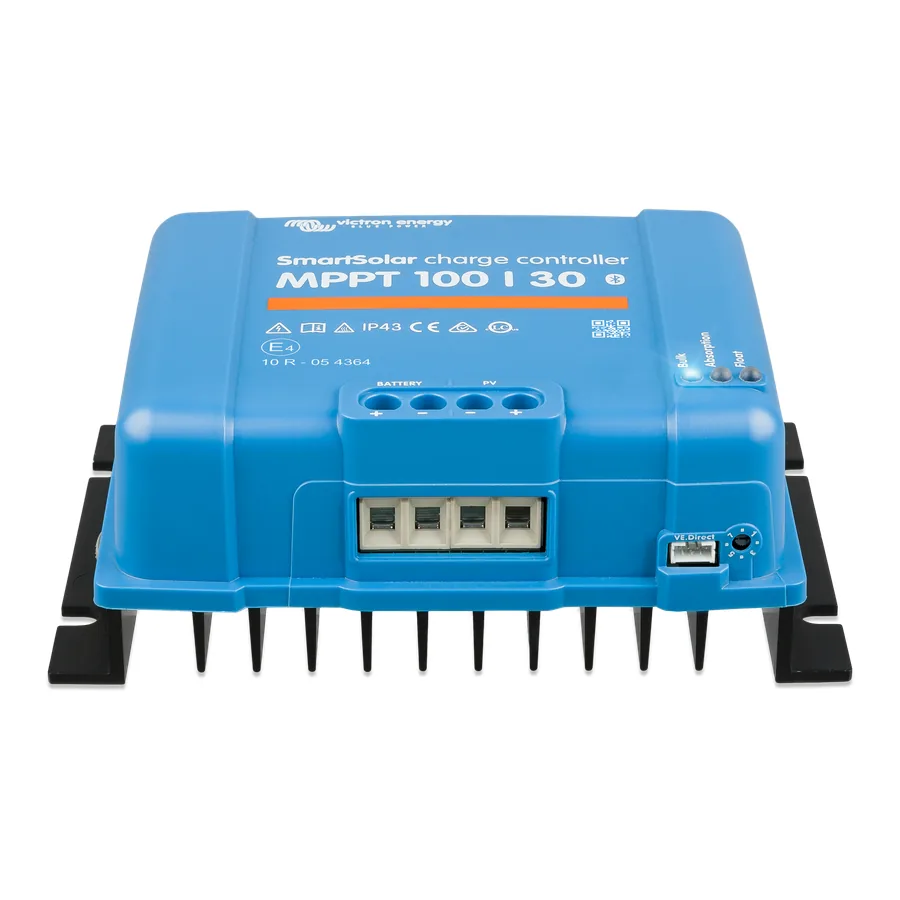
Victron SmartSolar MPPT 100/30
Video by Cleversolarpower by Nick. His description links an Amazon PWM and MPPT controller and his own book.
Cleversolarpower by Nick shows why a hot panel narrows the gap, with the efficiency figures quoted above. The PWM controller from this guide is below.
Renogy Wanderer Li 30A PWM Solar Charge Controller
- The PWM Wanderer Li 30A lists a 25 V maximum PV input; the MPPT Rover 40A takes 15 to 100 V and 520 W on 12 V; Victron's 100/30 takes 100 V and 440 W on 12 V.
- Testers measured the MPPT 5.4 percent ahead in conditions ideal for a PWM and about 32 percent ahead in another test: the gap depends on voltage and temperature.
- Above roughly 200 W of solar, or with panels in series, the MPPT is the safer choice; Renogy itself says an MPPT does not always produce more power.
- Warranties from the makers: Wanderer 1 year, Rover 3 years, Victron 5 years.
- Size the series string for the coldest morning: panel voltage rises in the cold and can exceed a controller's limit.
- On 9 October 2026 all three were in stock on Amazon with a buy button: 300+, 200+ and 700+ bought in the past month.

FAQ
Is MPPT better than PWM for a camper van?
For most vans, yes: it takes panels up to 100 V, so panels in series and ordinary 60-cell roof panels work. A PWM can still suit one small panel matched to a 12 V battery. Renogy itself says an MPPT does not always produce more power.
How much more power does an MPPT give?
Testers in our sources measured 5.4 percent more in conditions ideal for a PWM (Cleversolarpower by Nick) and about 32 percent more with one 100 W panel (Solar Circuit 360). Victron claims up to 30 percent against PWM in changing light.
Can I use a 12 V panel with the Renogy Wanderer PWM?
Only if its open-circuit voltage stays under the 25 V that Renogy lists as the maximum PV input. RV Power Plug says panels sold as 12 V usually run 18 to 22 V open circuit.
Do I need an MPPT controller for lithium batteries?
Not for the chemistry itself. Renogy says the controller must offer a compatible lithium charging profile, so check the manual. The Wanderer Li lists lithium as a manual setting on Amazon.
What size charge controller do I need?
Match the panels to the maker's power rating: 520 W on 12 V for the Rover 40A and 440 W on 12 V for the Victron 100/30. Check the coldest-day panel voltage against the 100 V input limit.
Victron or Renogy for an MPPT?
Both are MPPT. Victron lists Bluetooth built in and a 5-year warranty; Renogy lists a 3-year warranty and an optional Bluetooth module. Our Victron vs Renogy guide goes through the two brands.

Affiliate disclosure. This post contains affiliate links. If you click and buy something, this site earns a small commission at no extra cost to you. Picks are based on published specs, independent tests and manufacturer information. As an Amazon Associate I earn from qualifying purchases. Read the full affiliate disclosure. Amazon and the Amazon logo are trademarks of Amazon.com, Inc. or its affiliates.
Where to go next
Start with the Victron vs Renogy charge controller comparison and the best solar panels for a camper van. For the storage side read lithium vs AGM and Renogy vs LiTime, and for the cable work our wiring guide.
Your next step