
Camper Van Tires: All-Season or All-Terrain for Off Grid?
As an Amazon Associate I earn from qualifying purchases. Some links on this page earn us a small commission, at no extra cost to you. Full disclosure.
Camper van tires come down to four words: all-season, all-terrain, C and CP. For a van that mostly drives on roads and sometimes leaves them, the sources point to an all-season tire with the 3PMSF snowflake, in the size and load index your papers allow. This guide explains each type with sources, says what we could not confirm, and covers the two things that matter more than the tread: tire pressure and a real spare.

Quick answer
Most vans: an all-season tire with the 3PMSF symbol, in the size and load index from your vehicle papers. Heavy coach-built campers: CP-marked tires. Loose tracks: all-terrain only where a real van size exists, and on sand pressure counts more than tread.
Checked on 5 October 2026: the tire age and tread wear advice below is from Michelin's own page.
Pressure and a spare
Check monthly and before long trips. A repair kit does not fix everything.
Gear that goes with the tires, each with a buy button
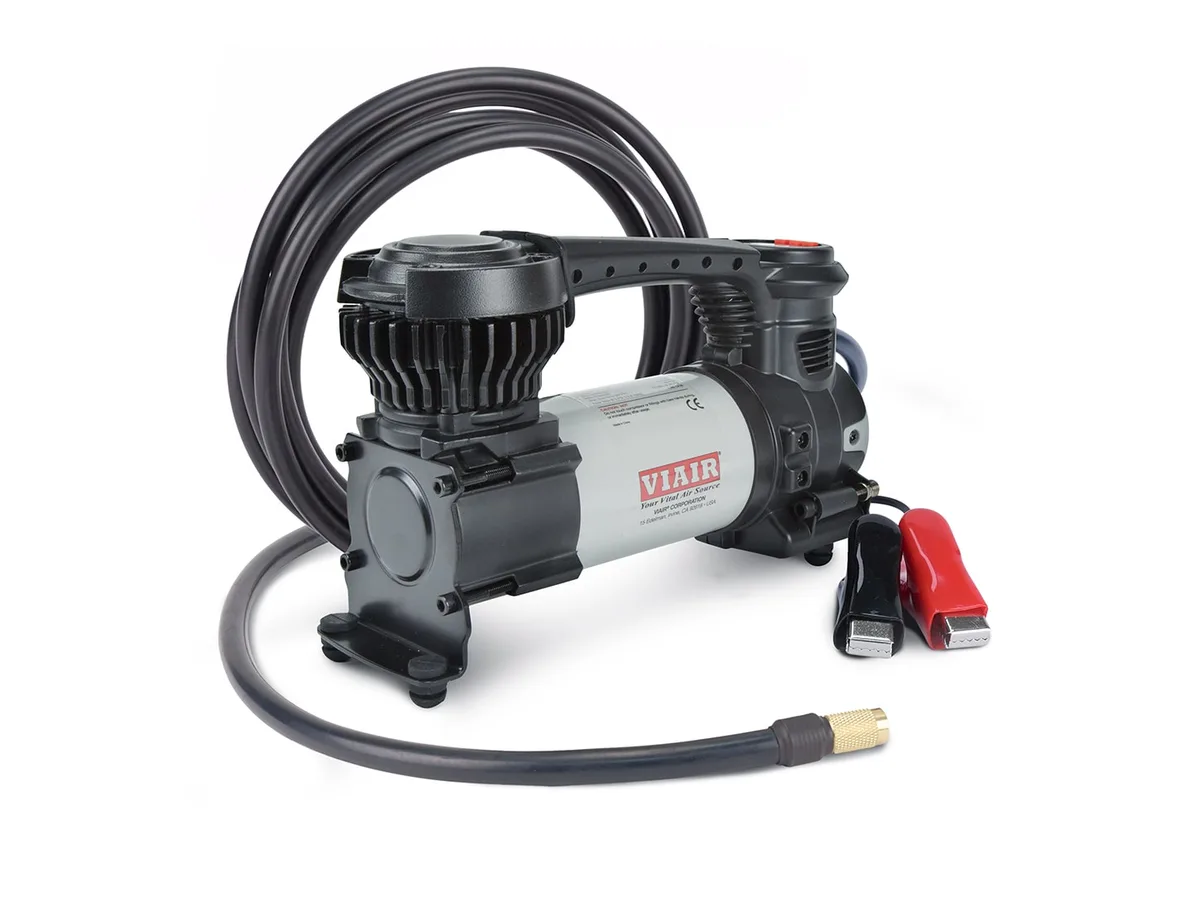
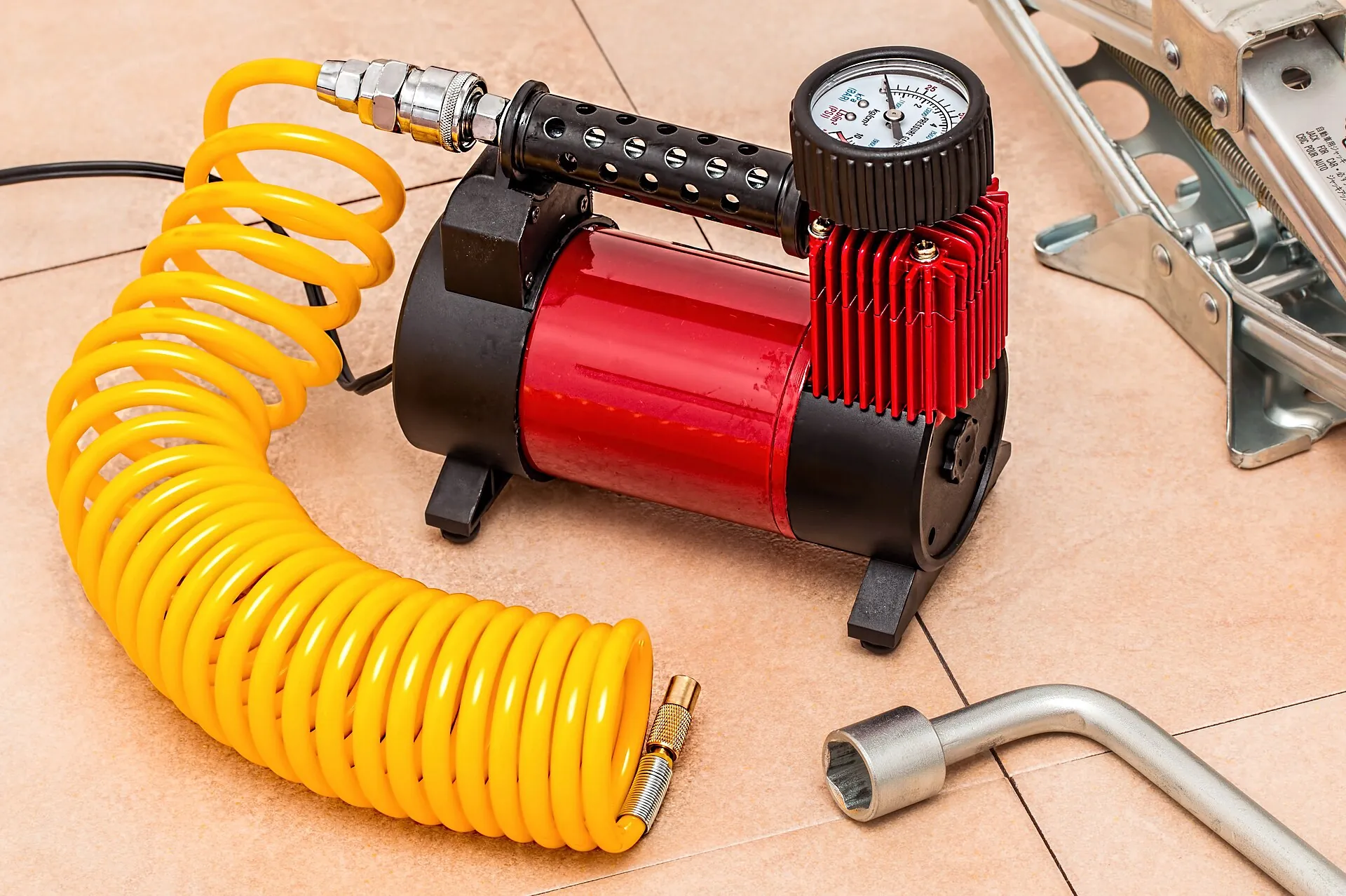
VIAIR EVC88P
A 12 V compressor with a digital gauge and a preset stop. Read more
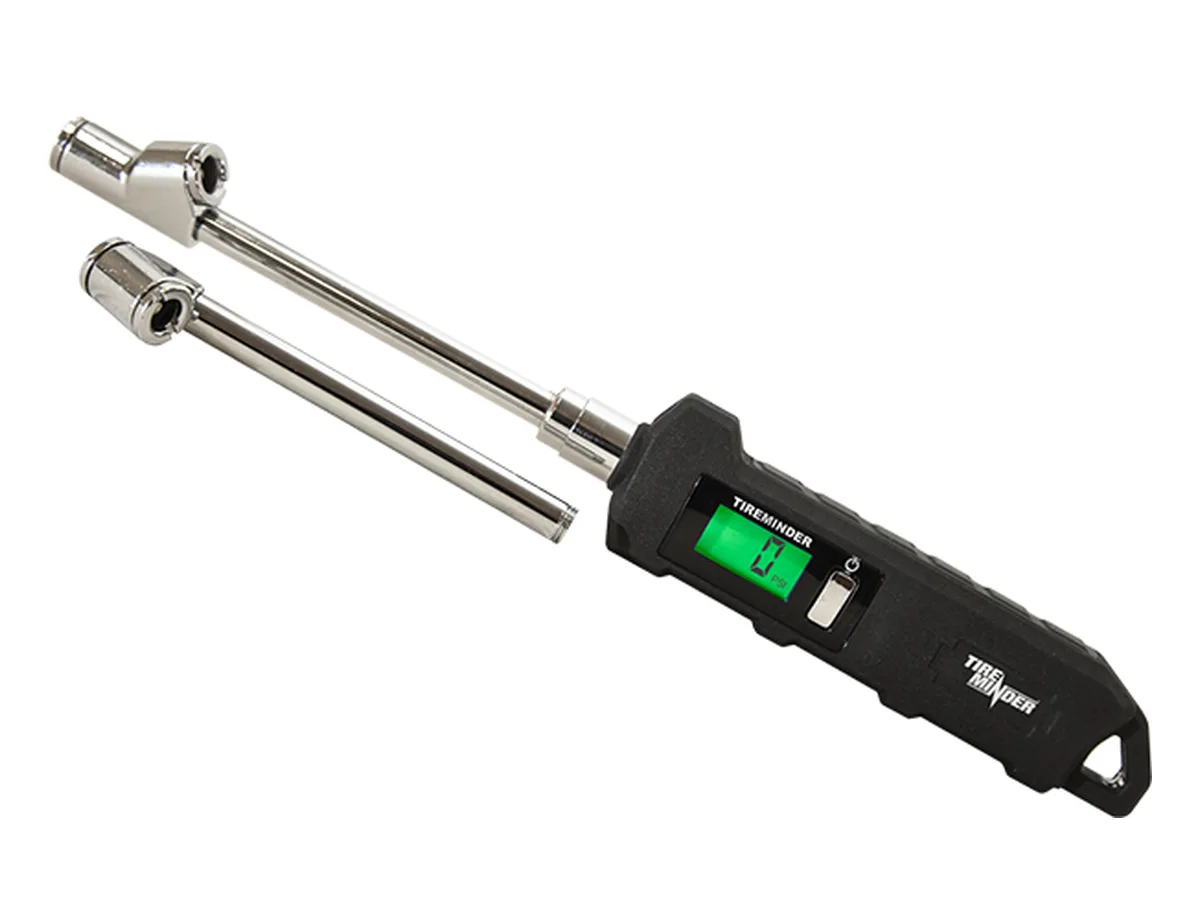
TireMinder High Precision Digital Gauge
Reads far above van pressures, 1 PSI precision. Read more
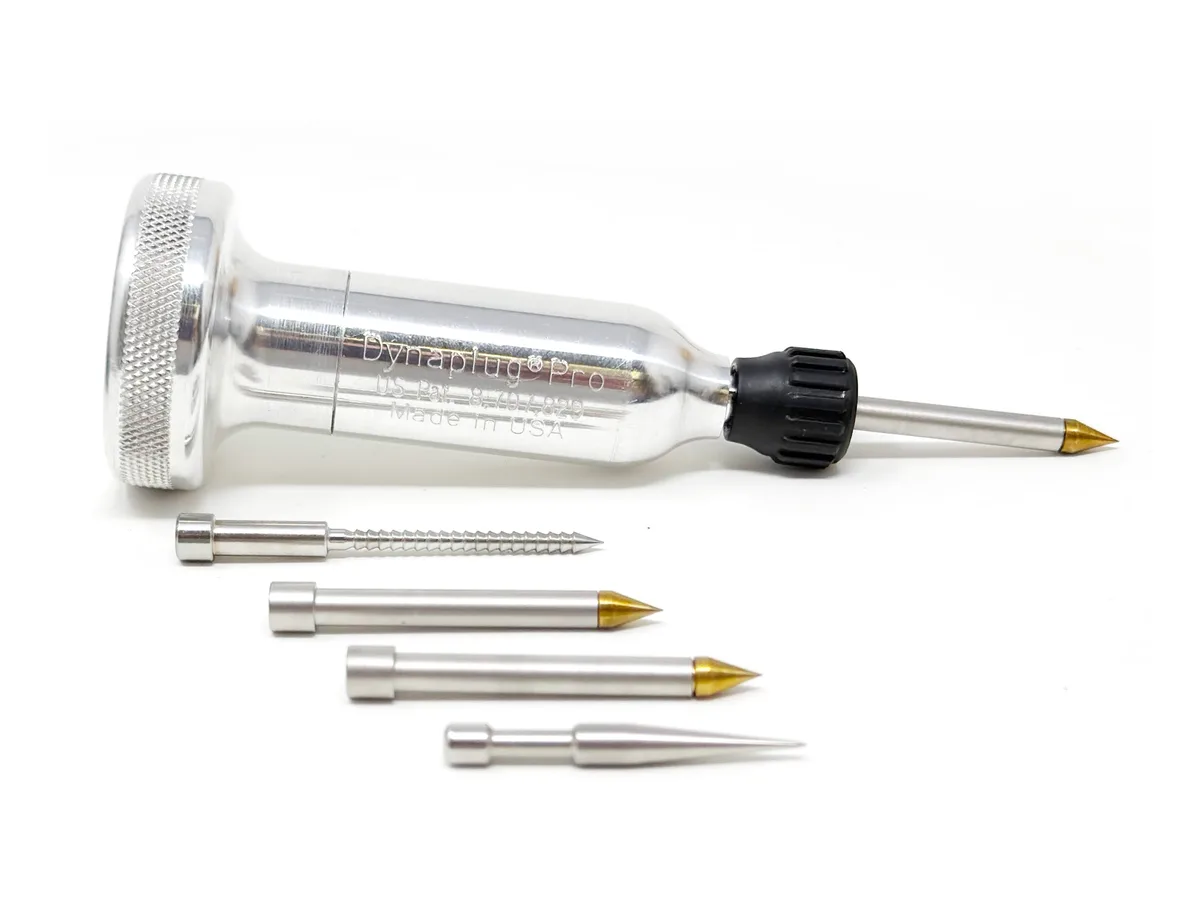
Dynaplug Pro Xtreme
For a hole in the tread, listed for campers and motor homes. Read more
Where to go deeper



From the road: I traveled for seven years in Spain and Portugal, living in a van and a caravan, off grid. The van was a Renault Master that I built myself. I had a few times a tire that broke. One time it was because of a leak at the brake: the brake disc got very hot, and then the tire blew.
A tire does not only fail because of the tire. Our takeaway: after a leak at the brake, have the brakes checked before you trust the tires again.
All-season tires: the pick for most camper vans
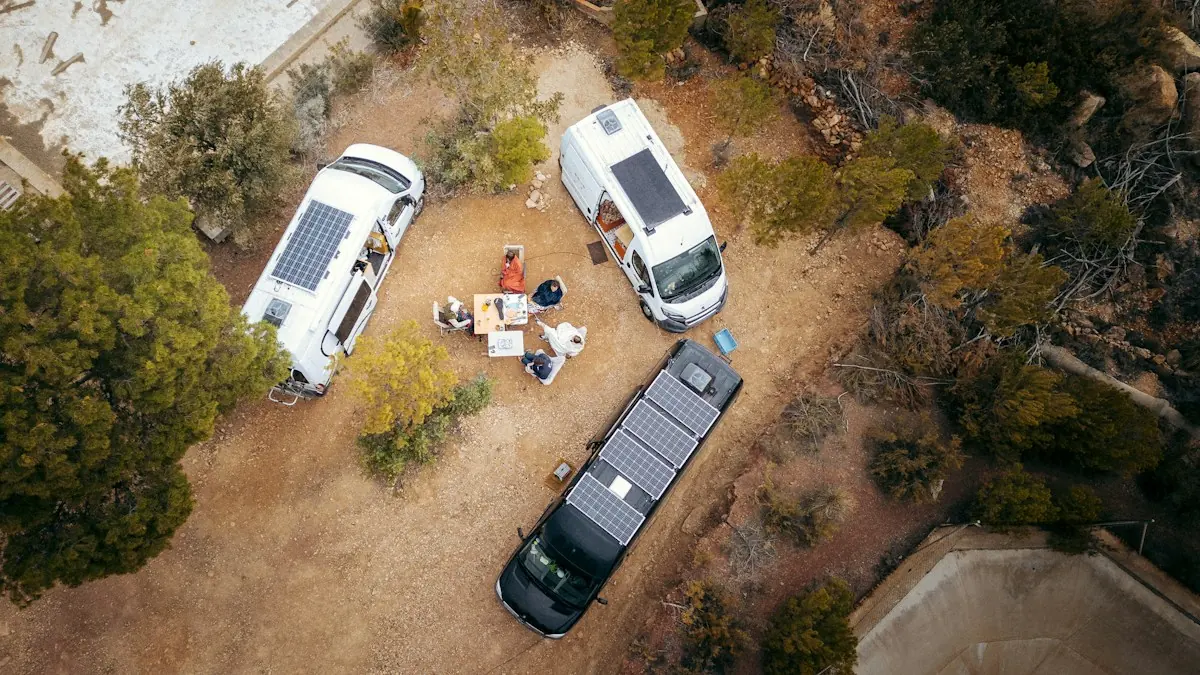
Michelin describes all-season van tires as the choice when your winters are moderate: temperatures not below -7 °C and only occasional snow. For severe winters it points to winter tires. The 3PMSF symbol, a three-peak mountain with a snowflake, shows the tire is certified for winter conditions.
The German magazine Auto Bild Reisemobil tested all-season tires on campers twice. In 2020 it fitted eight tires in 235/65 R16C to a VW Crafter: the Continental VanContact 4Season was the only one with the top rating, and the Goodyear Vector 4Seasons Cargo got "good". In 2023, 12 all-season tires in 235/55 R17 on a VW T6, the testers called all-season tires "ideal travel companions" for small and medium-sized camping vehicles.
Tests age and models change, so treat them as a short list. Michelin's Agilis CrossClimate, named on its off-road van page for stony and muddy tracks, was not in the 2020 test.
C or CP: check what your van is

A C on the sidewall means a reinforced carcass. Michelin says a van or commercial vehicle must run C-marked tires, and that XL or REINF are for heavily loaded passenger cars, not for vans.
For campers Michelin splits it: C tires for a van conversion with a raised roof, CP tires for coach-built motorhomes, with the Ford Transit, Iveco Daily and Fiat Ducato as examples. It says CP tires have a higher load index, a higher working pressure and a reinforced carcass.
| Van | Sizes listed | Where it comes from |
|---|---|---|
| Fiat Ducato | 215/70 R15 C (Light chassis), 215/75 R16 C (standard for many vans and campers), 225/75 R16 C (Maxi chassis, heavy motorhomes) | Continental, tire maker |
| Renault Master | 215/65 R16C (medium loads), 225/65 R16C (more load capacity), 235/65 R16C (high payloads) | reifen.com, tire shop |
These are examples, read on 4 October 2026. Both sources say the same thing: the approved sizes are in your vehicle documents. The same size can also come with different load indexes: Michelin's example is the 235/65 R16 Agilis CrossClimate in 115/113 or 121/119. Choose by the load of your van.
All-terrain tires on a van: what exists, what we could not confirm

Michelin points out that a van is not built for rough natural terrain: only four-wheel drive vehicles are. For stony, muddy or grassy tracks it recommends its reinforced Agilis van tires.
All-terrain tires in van sizes do exist. General Tire lists the Grabber AT3 Camper as an all-season tire with 3PMSF and M+S, reinforced, for paved and unpaved roads. Its sizes include 215/65 R16 (load index 109) and 235/65 R16 (121), both in the Renault Master list above. In its 2025 announcement General Tire says the new sizes fit vans such as the VW T6, Renault Master and Fiat Ducato.
Two honest limits. The EU label on that page shows wet grip C and rolling resistance E in 215/65 R16, and wet grip B and rolling resistance D in 235/65 R16. And we found no independent test of all-terrain van tires on sand.
From the road: Maybe a higher profile: it makes a bit more noise, but then you can also go a little bit on a sandy road.
That is an idea, not a tested result. A different profile height changes the tire diameter. Michelin says to keep to the sizes approved for your vehicle (see the sticker in the driver's door, the owner's manual or the fuel flap), that some countries allow a diameter change of -2% to +1.5%, and that other sizes risk a fine, a failed inspection and insurance trouble. This is not legal advice: check your registration papers or CoC and ask a garage before you fit anything else.
Sand and loose tracks: pressure counts more than tread

The Vansmith says lowering tire pressure improves traction on sand, snow, rocky ground and washboard roads, because the contact patch gets larger. That is a shop's advice, not a test.
Michelin explains the other side: a tire at too low a pressure heats up abnormally, the damage is irreversible and it can end in a sudden flat. Our reading: air down only for the soft stretch and pump up again afterwards, which is why a compressor belongs in the van.
Tire pressure: your van's number, checked often
Michelin says to check pressure about once a month and before every long trip, on cold tires and including the spare. It says to follow the vehicle maker's figure, usually on the driver's door or in the fuel flap, and that a van often has one figure for a light load and one for a heavy load.
ADAC adds a warning for campers: the 4.5 bar that many makers list for the rear axle is for maximum payload, and for a 3.5-tonne motorhome a lower pressure is usually enough. It advises weighing the loaded vehicle and using the tire maker's load and pressure table. Too high a pressure gives a harsh ride, and ADAC's engineer once saw a tire at high pressure burst in extreme heat. So we give no single number here.
From the road: Always check the air of your tires, because if the tire pressure is not good, you are going to ruin your tires.
The spare wheel: the fifth tire
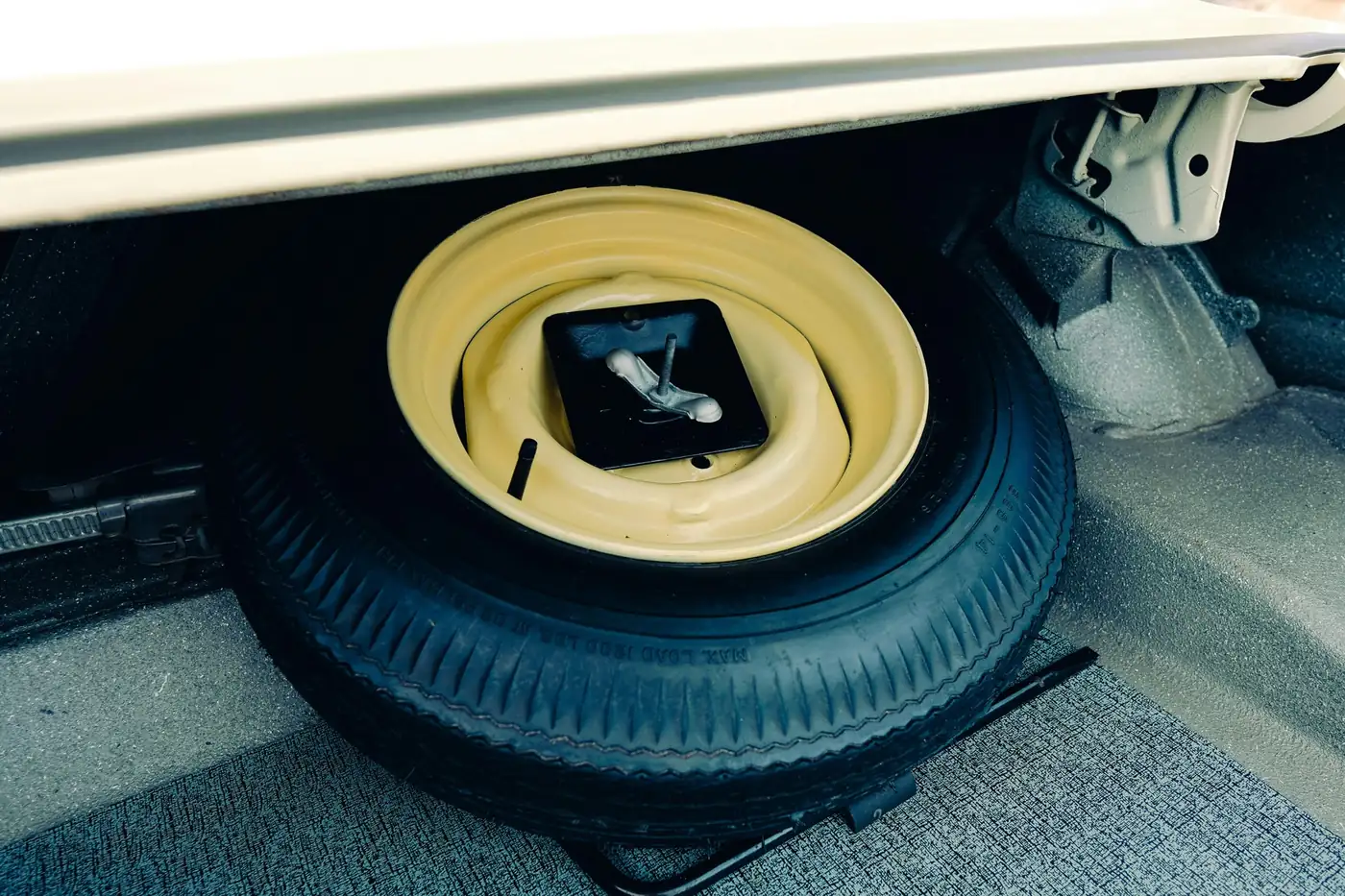
From the road: I had a few times a tire that broke. So to have a fifth tire is definitely a thing to do. There is always a problem with storage, so I put it underneath the car in the back.
ADAC says a tire sealant only works on a hole in the tread of up to 4 to 5 millimeters. A detached tread, cracks or a leaking valve cannot be fixed that way; then you need the spare or help. The tire must be replaced as soon as possible, and you drive only to the nearest workshop at the speed the maker gives, usually 80 km/h.
The Vansmith says the same from the van-builder side: for remote travel carry a full-size spare. A flat tire is not the only way to get stuck, though. I had a compact jump starter in the van too (I do not remember the brand), and we compare diesel-ready ones in a separate guide.
Check the age, spare included. Michelin says that after five years of service a tire should be inspected at least once a year by a tire professional, and that it recommends replacing tires ten years after their date of manufacture, regardless of remaining tread or apparent condition. That includes spare tires, so a spare that has sat under the van for years has an age too. The last four digits of the DOT code on the sidewall give the week and year of manufacture: 3520 means the 35th week of 2020. Michelin also says that when the tread wears down to the wear indicators, 2/32 inch (1.6 mm), the tire has reached its minimum tread depth and should be replaced (Michelin, when do I need new tires, read 5 October 2026).

Gear for the tire side: a pump, a gauge and a plug kit
The sections above keep coming back to the same three needs: air, a number and a way to fix a hole. The tires themselves are hard to buy well online, because size, load index and fitting matter, so we only picked gear. Each pick has a maker page we read on 4 October 2026 and an Amazon listing we opened. We found no independent test of these exact models, and we say so.
1. VIAIR EVC88P: the pump
VIAIR EVC88P
VIAIR lists the EVC88P (Every Vehicle Carry 88P Digital) as a 12 V compressor with a digital gauge, a preset pressure with automatic shutoff, a maximum working pressure of 120 PSI, a maximum draw of 20 amps and battery clamps with an inline 25 A fuse. That matters for a van: ADAC mentions 4.5 bar on the rear axle of many base vehicles, which is about 65 PSI by our conversion, so 120 PSI leaves room.
Two limits. VIAIR quotes the duty cycle as 25 minutes at 30 PSI and gives no figure for higher pressure on that page, so fill in rounds and let it rest. And VIAIR says to check your power circuit rating against the compressor's maximum draw before you plug it in. It was also one of the better-selling tire inflators on amazon.com when we looked on 4 October 2026.
If I bought one today, this is the one I would pick.
Overlap: the GOOLOO A5 in our guide to jump starters for a diesel van also has a built-in 160 PSI inflator, according to GOOLOO, so if you buy that one you may not need a separate pump.
2. TireMinder High Precision Digital Gauge: the number
TireMinder High Precision Digital Gauge
Michelin says to check pressure about once a month, on cold tires, and ADAC says to weigh the loaded van, so you need a gauge you can read. TireMinder lists the TMG-AAA-RV at 10 to 150 PSI with 1 PSI precision, two interchangeable heads (straight and 45 degrees), a backlit display, a front flashlight, a metal build and a 5-year warranty. It runs on two AAA batteries, which are included. Our reading: the range covers van pressures with room to spare.
3. Dynaplug Pro Xtreme: the plug kit
Dynaplug Pro Xtreme
Dynaplug describes the Pro Xtreme as a tool for puncture repair in heavy-duty tubeless tires, listing cars, trucks, campers, motor homes and RVs, for a tire thickness of 3/16 to 1-1/8 inch at the puncture. The kit has 8 plugs, 3 insertion tubes, an air stopper and a clearing attachment, and Dynaplug says you need no reamers, glue or solvents. It comes with a limited lifetime warranty.
Know what it is not. It is for a puncture, a hole at one point of the tread. A blown tire, like the one in the story at the top, is not a puncture: that is what the spare in the section above is for. We found no statement on the Dynaplug page about how far you may drive on a plugged tire, so have it checked at a workshop, in line with what ADAC says about sealant: replace the tire as soon as possible.
- For most camper vans, choose an all-season tire with the 3PMSF symbol in the size and load index from your papers.
- C is the van marking, CP is Michelin's recommendation for coach-built campers. Papers first.
- All-terrain exists in some van sizes, but we found no independent test on sand.
- On sand, pressure counts more than tread, and too little pressure overheats a tire.
- Check pressure monthly and before long trips, carry a real spare, and have the brakes checked after a leak.
- Three small things to carry: a pump that reaches your van's pressure, a gauge that reads that high and a plug kit for a hole in the tread. None replaces a spare.

Chenzo, founder of NomadsToolsLab
I lived in a van and a caravan for seven years in Spain and Portugal, off grid. The van was a Renault Master and I built everything inside myself.
Where to go next
Building or fitting out a van? Read cargo van conversion for beginners and the camper van wiring guide. For the electrics see solar panels for a camper van and power stations for van life, and for what else can strand you, rats chewing wires. More on the vanlife internet setup and long-term van rental.

FAQ
Can I put all-terrain tires on a camper van?
Yes in some sizes. General Tire lists the Grabber AT3 Camper in 215/65 R16 and 235/65 R16, among others. The size and load index must match what your vehicle papers approve, so check the CoC or registration and ask a garage.
What tire pressure does a camper van need?
Use the figure for your van and your load, usually on the driver door or in the fuel flap. ADAC says the figure for maximum payload can be too high for a camper and advises weighing the loaded van. Check about once a month and before long trips.
Do I need C or CP tires on a camper van?
Michelin recommends C tires for a van conversion and CP tires for coach-built motorhomes. The approved size and load index in your vehicle documents decide.
Are all-season tires OK all year on a camper van?
Michelin says all-season van tires suit moderate winters, with temperatures not below -7 degrees Celsius and occasional snow. For severe winters it recommends winter tires.
Do I need a spare wheel for a camper van?
For remote travel a real spare is the safer plan. ADAC says a repair kit only seals small holes in the tread, not a detached tread, cracks or a leaking valve.

How old can a camper van tire or spare wheel be?
Michelin recommends replacing tires ten years after their date of manufacture, regardless of remaining tread or apparent condition, and that includes spare tires. After five years, have them inspected at least once a year by a tire professional. The last four digits of the DOT code show the week and year of manufacture. Source: Michelin, read 5 October 2026.
How low can tire tread go before I replace the tire?
Michelin says a tire has reached its minimum tread depth when the tread wears down to the wear indicators, which sit at 2/32 inch (1.6 mm), and that it should then be replaced. Source: Michelin, read 5 October 2026.
More on keeping a van safe on the road and parked: how to stop van break-ins, a carbon monoxide detector for a camper van and a camper van water filter.
Affiliate disclosure. This post contains affiliate links. If you click and buy something, this site earns a small commission at no extra cost to you. Picks are based on published specs, independent tests and manufacturer information. As an Amazon Associate I earn from qualifying purchases. Read the full affiliate disclosure. Amazon and the Amazon logo are trademarks of Amazon.com, Inc. or its affiliates.
Your next step