Kidde vs First Alert Carbon Monoxide Detector for a Van
As an Amazon Associate I earn from qualifying purchases. Some links on this page earn us a small commission, at no extra cost to you. Full disclosure.
The Kidde vs First Alert carbon monoxide detector question has a surprise: both are well-known home safety brands, and neither says its alarm is made for a camper van. Kidde writes "Not approved for RV or boat use" next to its travel alarm, and First Alert's manual says its alarm is designed for residential use. Checked on 9 October 2026 on the makers' own pages, here is how the two compare and which one fits which trip.
Quick answer
Checked on 9 October 2026. Travelling between hotels and rentals: the Kidde COB, which Kidde sells for that. A plain home alarm on one 9V battery: the First Alert CO400. Inside a van: neither maker approves it for vehicle use, so read the limits below, and see our RV alarm guide.
Both, with a buy button each
Kidde COB Carbon Monoxide Alarm
Made to slip into a suitcase. Not approved for RV use. Read more
First Alert CO400 Carbon Monoxide Alarm
A simple home alarm with one test button. Read more
Where to go deeper

Carbon Monoxide Detector for Camper Van
The alarm made for RVs, plus smoke alarm and extinguisher. Read more
How we compared them
The NomadsToolsLab team read both makers' product pages and the First Alert manual end to end on 5 October 2026, checked both Amazon pages with a US address, and went back to the maker pages and the Amazon buy buttons on 9 October 2026 to see what had changed. What surprised us: neither maker presents its alarm as a camper van alarm. Kidde's page says "Not approved for RV or boat use", and First Alert's manual says residential use.
Testers at Bob Vila, who put eight alarms through four tests (December 2024 update), named a Kidde AA-battery alarm their best budget pick. The First Alert CO400 was not in their test, so there is no independent head-to-head of these two. Every number in the table comes from the makers' own pages.

Kidde vs First Alert side by side
| Kidde COB | First Alert CO400 | |
|---|---|---|
| Battery | Kidde COB: AA batteries, changed about once a year per Kidde | First Alert CO400: One 9V battery |
| Alarm sound | Kidde COB: 85 dB (Amazon listing) | First Alert CO400: 85 dB at 10 feet |
| Size | Kidde COB: Not given on the page | First Alert CO400: 5 x 3.4 x 1.5 in, 0.7 lb |
| Travel | Kidde COB: Slips into a suitcase | First Alert CO400: Home alarm, residential use |
| Vehicle | Kidde COB: "Not approved for RV or boat use" | First Alert CO400: No vehicle statement |
Sources: the makers' pages for the Kidde COB and the First Alert CO400, and its manual, all read on 5 October 2026. The 85 dB figure for the Kidde comes from the Amazon listing, not the maker page.
Kidde COB: the one made for suitcases
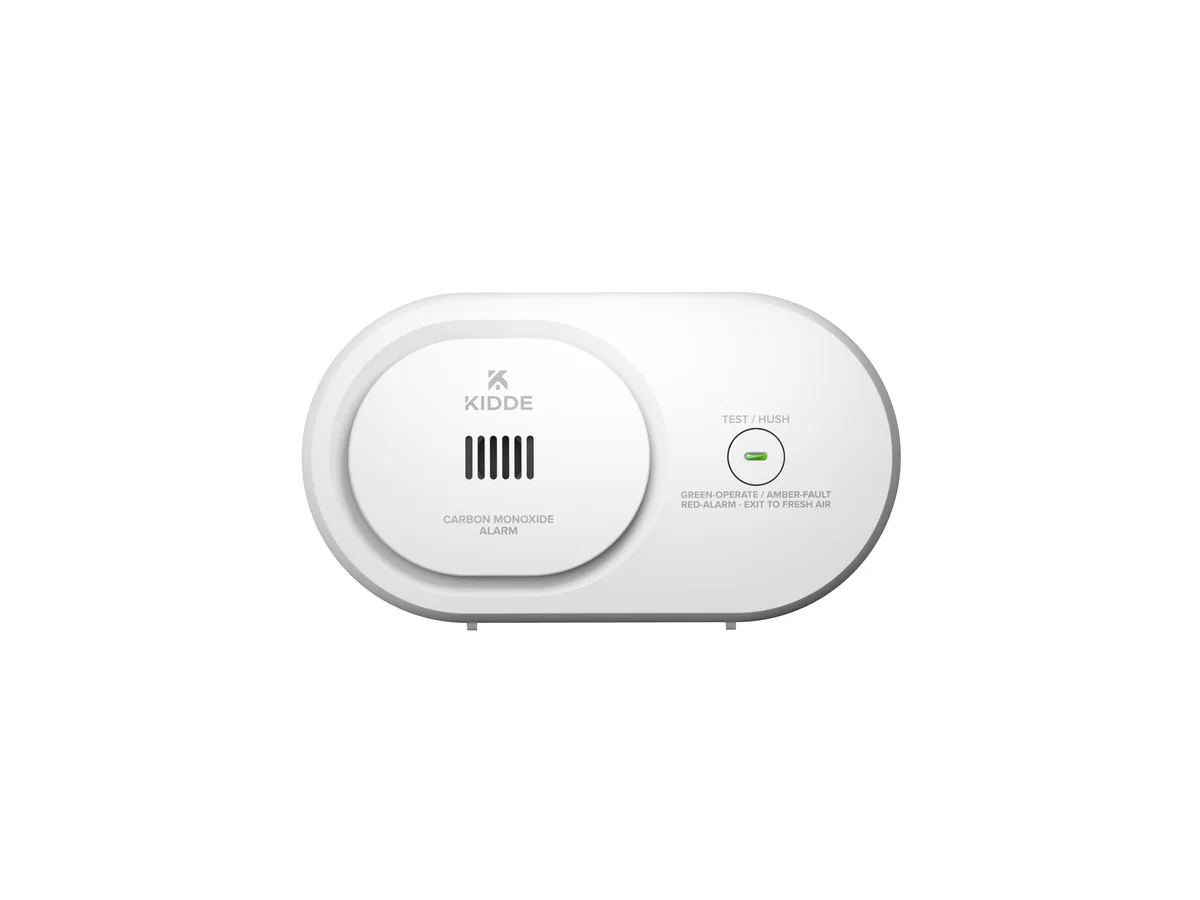
Kidde COB Carbon Monoxide Alarm
Kidde says its COB alarm runs on AA batteries that "only need to be changed once a year" under normal conditions, and that it "easily slips into your suitcase". Its advice: take a CO alarm on your trip, because not all hotels and rentals are required to have CO detection.
The same page has a note that matters for vans: "Not approved for RV or boat use ... For use in conditioned spaces only." Kidde also says to remove the batteries while travelling and to test the alarm before use.
First Alert CO400: the plain home alarm
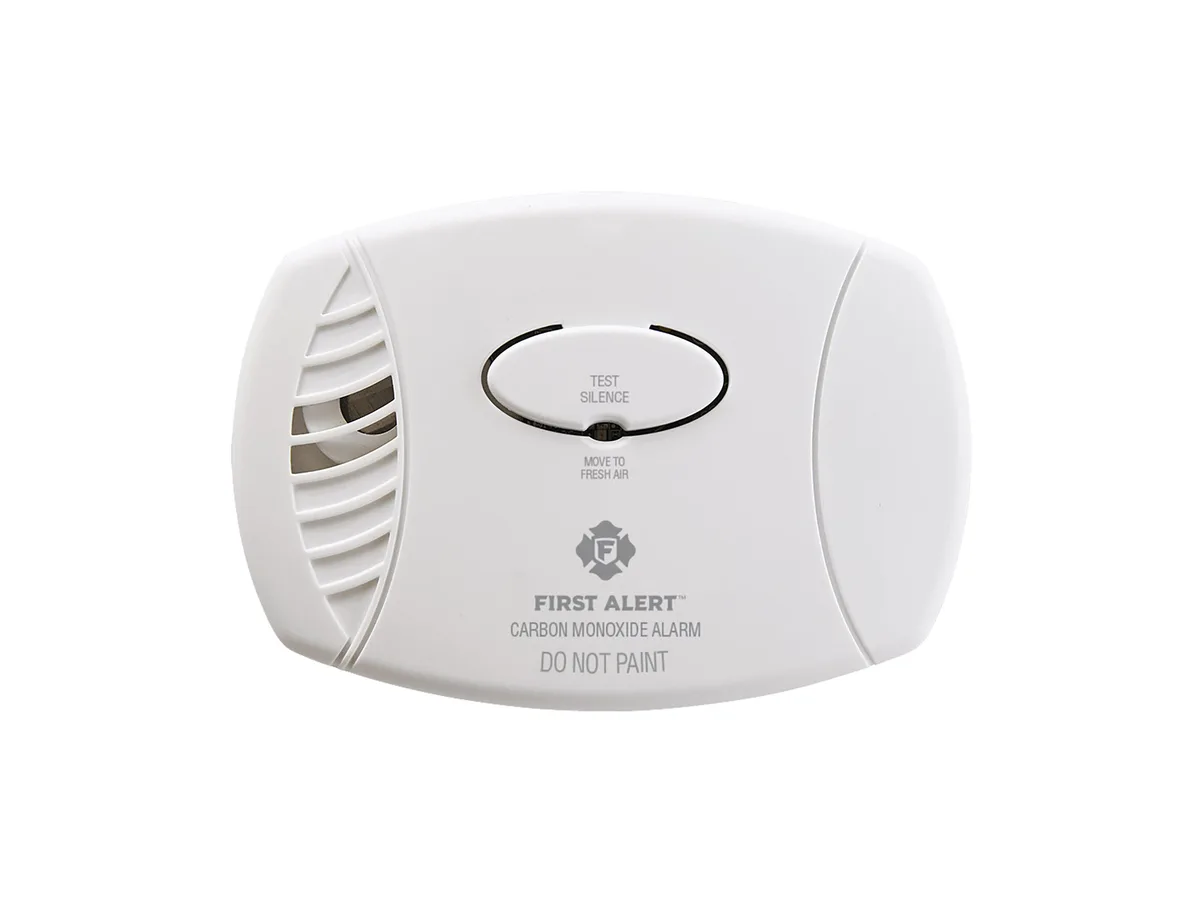
First Alert CO400 Carbon Monoxide Alarm
First Alert lists the CO400 with an electrochemical sensor, one 9V battery, an 85 dB alarm at 10 feet, a low-battery warning and an end-of-life warning. The product page has no sentence about campers, boats or vehicles.
The manual is clearer. It says the alarm is "specifically designed for residential use". Among the places not to install it: areas colder than 40 F (4.4 C) or hotter than 100 F (37.8 C), and in turbulent air such as near open windows. The warranty is 7 years on the maker page, while the Amazon listing says 5, so check the box.
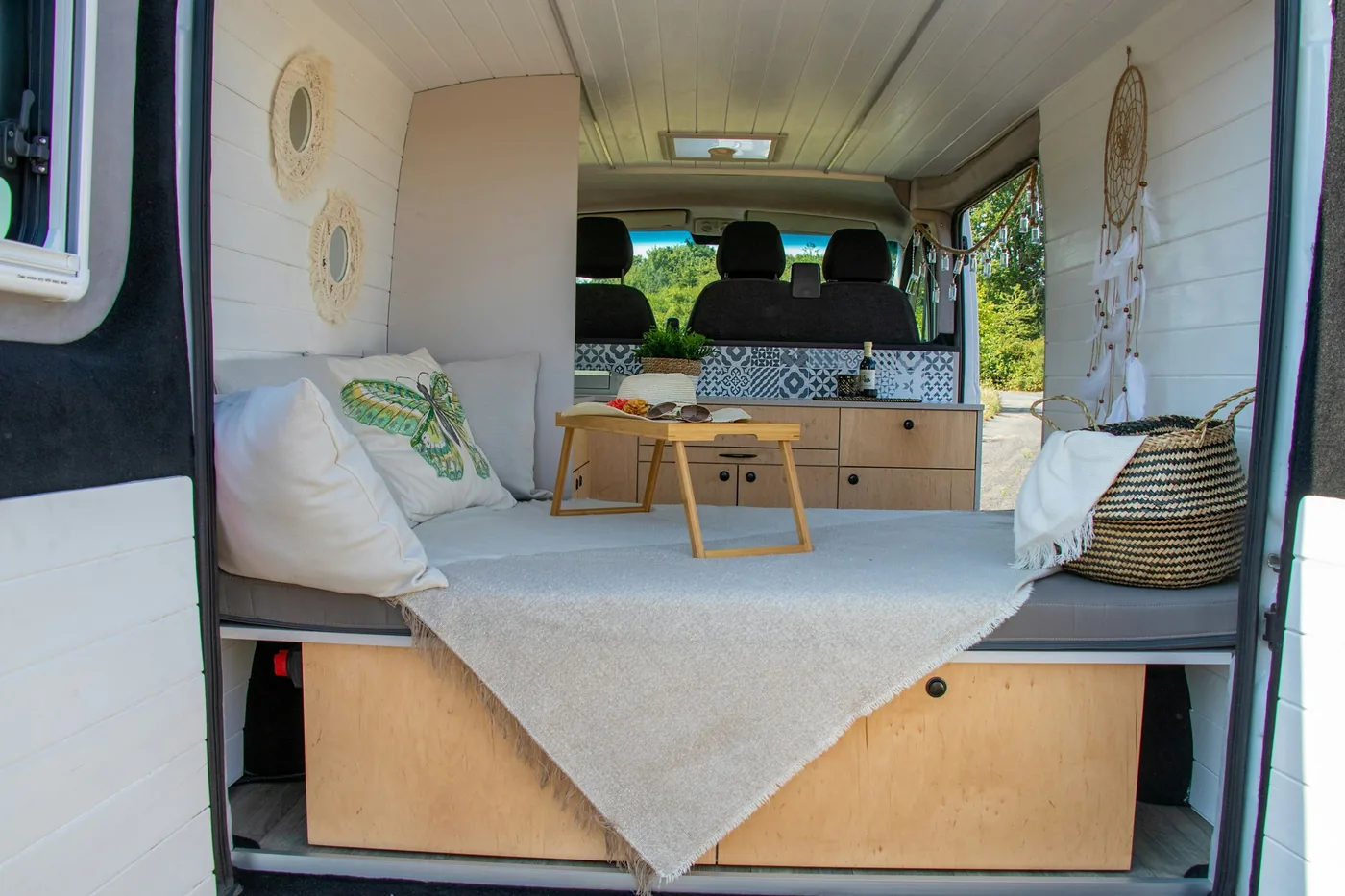
What this means inside a camper van
From the road: In Portugal it can be 40, 45 degrees. So the bus can get so hot. I had a CO alarm and a smoke alarm in the van, and a fire extinguisher, and I think all three are very important. I do not remember which brands I had.
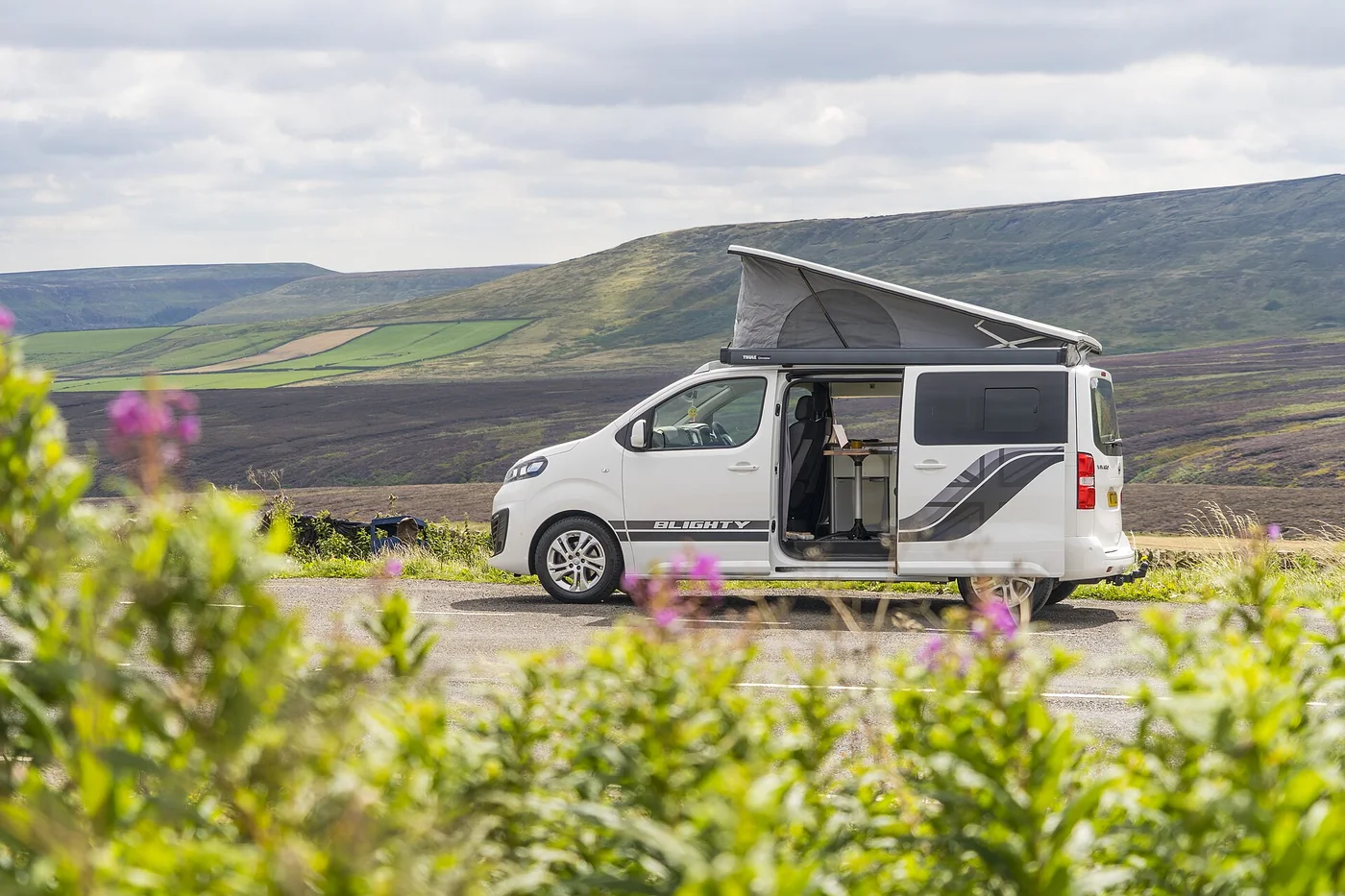
That is the point where a home alarm and a van meet. First Alert's limit of 100 F is 37.8 C, and Kidde says its alarm is for conditioned spaces only. Neither is a verdict that the alarm fails in a van. It means the maker does not promise it will work there. Safe-T-Alert, a maker of RV alarms, says to install only alarms marked for RV use. We looked at that in our camper van CO alarm guide.
Which one to pick
Hotels and rentals
The Kidde COB. It is the one its maker sells for travel, on AA batteries you can find anywhere.
A simple alarm at home
The First Alert CO400. One battery, one button, and a manual that tells you where it goes.
In the van itself
An alarm marked for RV use, wired to 12 V. See our guide, then read the maker's limits.
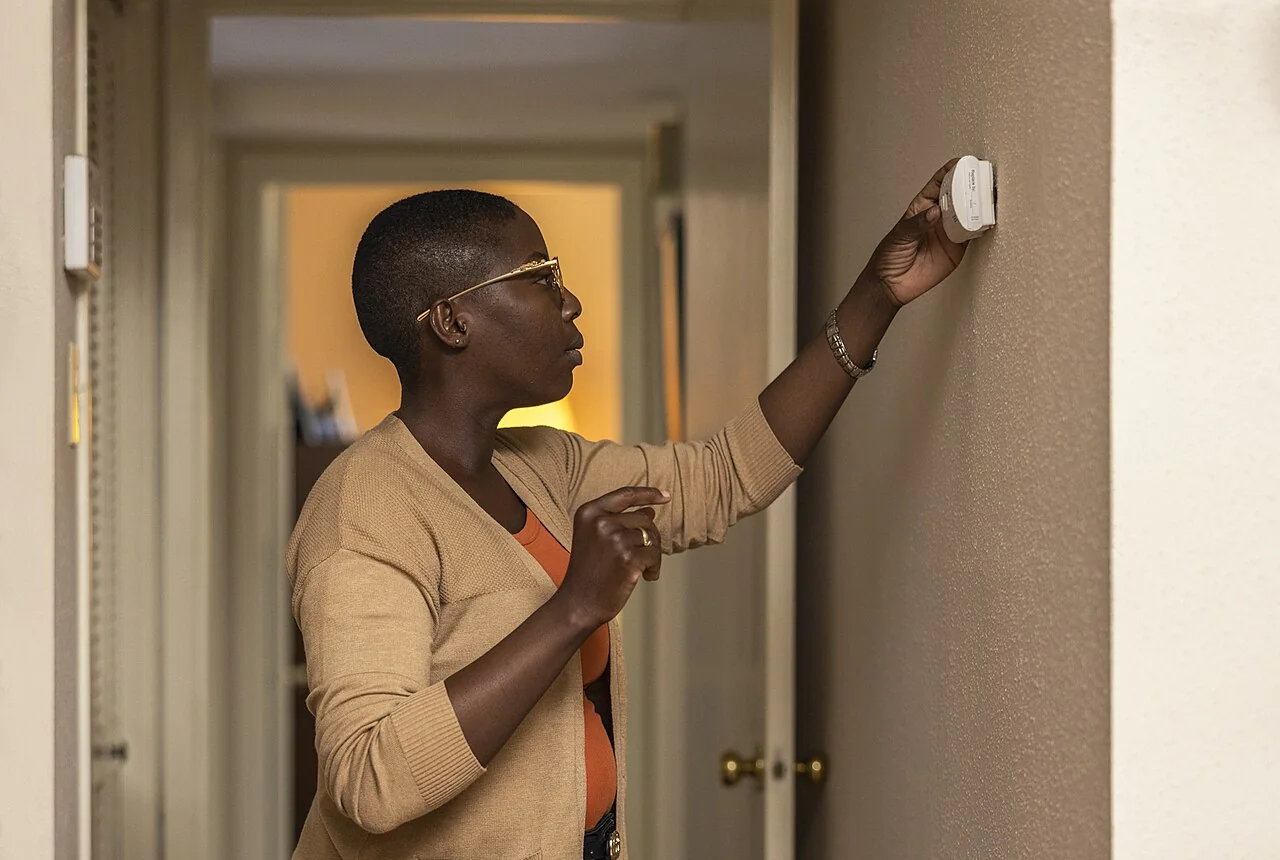
Whichever you take, test it when you arrive. Kidde says to test the device before use, and First Alert gives its alarm a single test and silence button. For the rest of your van safety, see how to stop van break-ins and cargo van conversion for beginners.
- Neither Kidde nor First Alert says its alarm is made for a camper van.
- Kidde COB: AA batteries, made for suitcases, "Not approved for RV or boat use".
- First Alert CO400: one 9V battery, residential use, not for places colder than 40 F or hotter than 100 F.
- In the van itself, look for an alarm marked for RV use.
FAQ
Is Kidde or First Alert better for a camper van?
Neither maker says its alarm is made for a camper. Kidde says its COB is not approved for RV or boat use. First Alert's manual says the CO400 is designed for residential use. For a van, look for an alarm marked for RV use.
Can I use a Kidde carbon monoxide alarm in a camper van?
Kidde says its COB alarm is not approved for RV or boat use and is for conditioned spaces only. It is made for hotels and rentals, not for the van.
What temperature range does the First Alert CO400 allow?
The manual lists areas colder than 40 F (4.4 C) or hotter than 100 F (37.8 C) among the places where the alarm should not be installed.
How loud are the Kidde COB and the First Alert CO400?
First Alert gives 85 dB at 10 feet for the CO400. The Amazon listing for the Kidde COB says 85 dB.
Which batteries do they use?
The Kidde COB uses AA batteries. The First Alert CO400 uses one 9V battery.
Watch: the First Alert CO400 alarm tested
Video by Steel City Alarms.
Seen enough? Here is the First Alert CO400 from this article.
First Alert CO400 Carbon Monoxide Alarm
A short look at Kidde's AA-battery travel alarm. The edition shown in this video is an earlier one than the edition we link.
Video by Cort's Corner of Calm Chaos.
Seen enough? Here is the Kidde COB from this article.
Kidde COB Carbon Monoxide Alarm

Chenzo, founder of NomadsToolsLab
I lived in a van and a caravan for seven years in Spain and Portugal, off grid. The van was a Renault Master and I built everything inside myself.
If you also cook outside the van, read our Jetboil vs MSR comparison: the Jetboil manual says never to use the stove in a camper, caravan, tent or car.
Affiliate disclosure. This post contains affiliate links. If you click and buy something, this site earns a small commission at no extra cost to you. Picks are based on published specs, independent tests and manufacturer information. As an Amazon Associate I earn from qualifying purchases. Read the full affiliate disclosure. Amazon and the Amazon logo are trademarks of Amazon.com, Inc. or its affiliates.
Your next step