
Best Inverter for Camper Van: 4 Models Compared
As an Amazon Associate I earn from qualifying purchases. Some links on this page earn us a small commission, at no extra cost to you. Full disclosure.
Choosing the best inverter for camper van use gets confusing when the number on the box is not the continuous output. Start with the appliances you want to run together, then compare their demand with continuous output at your van's operating temperature. This comparison covers US 120 V versions sold on Amazon US.
Quick answer
Checked on 19 October 2026. Renogy specifies 1000 W continuous output, while Xantrex rates the PROwatt SW 1000 at 900 W continuous. Victron's 120 V HW15 manual rates the 12/500 at 460 W and the 12/800 at 800 W continuous at 25 C, falling to 380 W and 650 W at 40 C. Compare those temperature-specific ratings with your loads.
All 4 picks at a glance
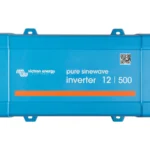
Victron Phoenix Inverter VE.Direct 12/500
Consider the Victron 12/500 for ECO standby, with a minimum-load wake-up caveat. Read more
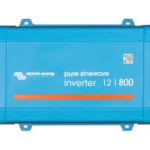
Victron Phoenix Inverter VE.Direct 12/800
Compare its 800 W continuous rating at 25 C and 650 W at 40 C with your expected loads. Read more
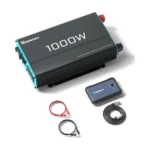
Renogy 12V 1000W Pure Sine Wave Inverter
Choose Renogy for a stated 1000 W continuous US model with cables and a wired remote included. Read more
Xantrex PROwatt SW 1000
Consider Xantrex for dual GFCI receptacles, sizing your loads against its 900 W continuous rating. Read more
How we compared them
The NomadsToolsLab team read the maker pages and manuals on 19 October 2026 and checked Amazon US listings with a US address. The Victron output and weight figures below come from the 120 V HW15 manual.
Continuous Output, Peak Power and Temperature
Renogy rates its inverter at 1000 W continuous and 2000 W peak, without stating the peak duration on its page. Victron's 120 V HW15 manual rates the 12/500 at 460 W continuous at 25 C and 380 W at 40 C, with 750 W peak for 3 seconds. The 12/800 provides 800 W continuous at 25 C and 650 W at 40 C, with 1200 W peak for 15 seconds. Size your loads against continuous output at the expected operating temperature.
Renogy specifies pure sine wave output, and Xantrex specifies True Sine Wave. Victron describes the Phoenix range as pure sine. Waveform is one selection point, alongside continuous output, temperature and standby behaviour.
Use the installation manual for the exact inverter, battery system and regional version when selecting cables and battery-side protection. For idle consumption, Renogy lists less than 1 A and Xantrex less than 0.6 A. Victron's ECO mode uses standby operation to reduce consumption, but loads below its wake-up threshold may not start it.

The four side by side
| Inverter | Continuous (maker) | Peak or surge (maker) | Waveform (maker) | No-load draw (maker) | Notes (maker) |
|---|---|---|---|---|---|
| Victron Phoenix 12/500 | Continuous (maker): 460 W at 25 C, 380 W at 40 C | Peak or surge (maker): 750 W for 3 s | Waveform (maker): Not stated on the 12/500 page | No-load draw (maker): ECO mode available | Notes (maker): Optional VE.Direct Bluetooth dongle; remote on/off; no transfer switch |
| Victron Phoenix 12/800 | Continuous (maker): 800 W at 25 C, 650 W at 40 C | Peak or surge (maker): 1200 W for 15 s | Waveform (maker): Not stated on the 12/800 page | No-load draw (maker): ECO mode available | Notes (maker): Optional VE.Direct Bluetooth dongle; remote on/off; no transfer switch |
| Renogy 12V 1000W (RNG-INVT-1000-12V-P2-US) | Continuous (maker): 1000 W | Peak or surge (maker): 2000 W; duration not stated (manual: up to 2x for start-up loads) | Waveform (maker): Pure sine wave | No-load draw (maker): Under 1 A | Notes (maker): 3 ft 4 AWG cables and wired remote included; 12 V only; does not charge batteries |
| Xantrex PROwatt SW 1000 (806-1210) | Continuous (maker): 900 W | Peak or surge (maker): 2000 W surge | Waveform (maker): True Sine Wave | No-load draw (maker): Under 0.6 A | Notes (maker): Dual GFCI receptacles; operating range 0 to 40 C; fuse size differs between datasheet and owner guide |
Figures from the makers' pages and manuals, read on 19 October 2026: Victron Phoenix, Renogy and Xantrex. Victron figures come from its 120 V manual (HW15): link.
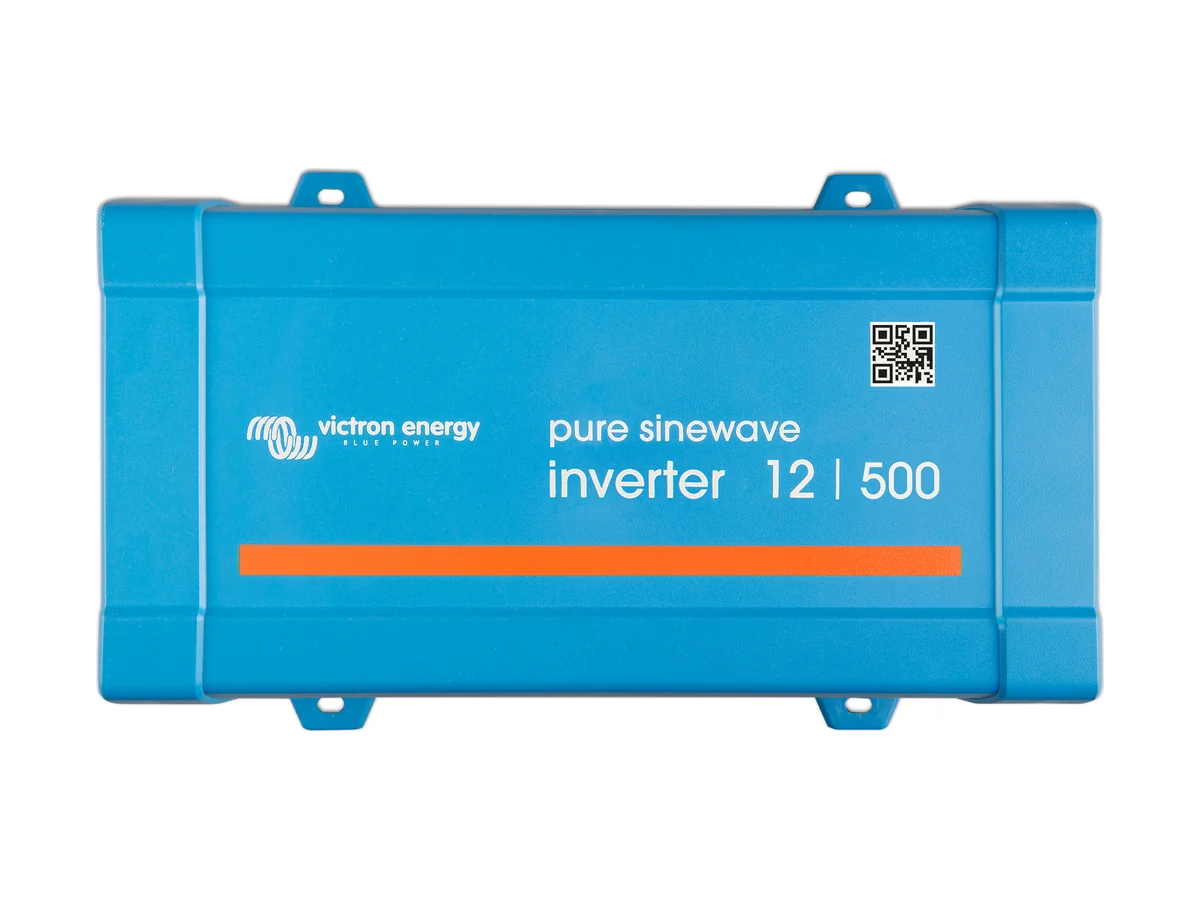
Victron Phoenix Inverter VE.Direct 12/500
Victron Phoenix Inverter VE.Direct 12/500
The Victron Phoenix Inverter VE.Direct 12/500 offers ECO mode for periods with no connected loads. That makes standby behaviour a useful selection point, but Victron's older datasheet warns that loads below the minimum threshold may not wake the inverter.
The 120 V HW15 manual lists 750 W peak output for 3 seconds and a weight of 3.5 kg. An optional VE.Direct Bluetooth dongle enables access through VictronConnect, and remote on/off is available. This model has no transfer switch.
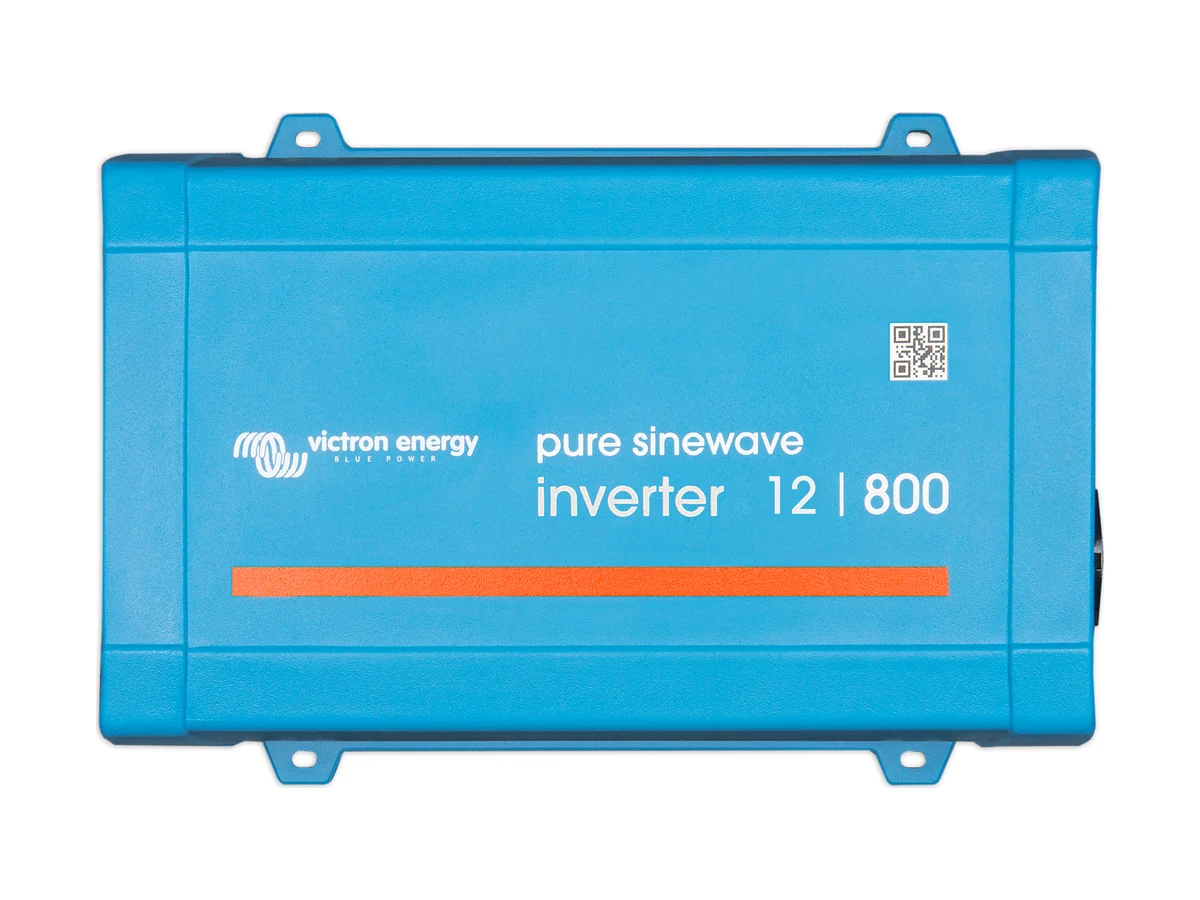
Victron Phoenix Inverter VE.Direct 12/800
Victron Phoenix Inverter VE.Direct 12/800
The Victron Phoenix Inverter VE.Direct 12/800 has the higher continuous output of the two Victron models here. Its 120 V HW15 manual lists 800 W continuous at 25 C, falling to 650 W at 40 C.
The same manual lists 1200 W peak output for 15 seconds and a weight of 5.1 kg. That peak rating provides temporary headroom. It does not increase the continuous load the inverter can support.

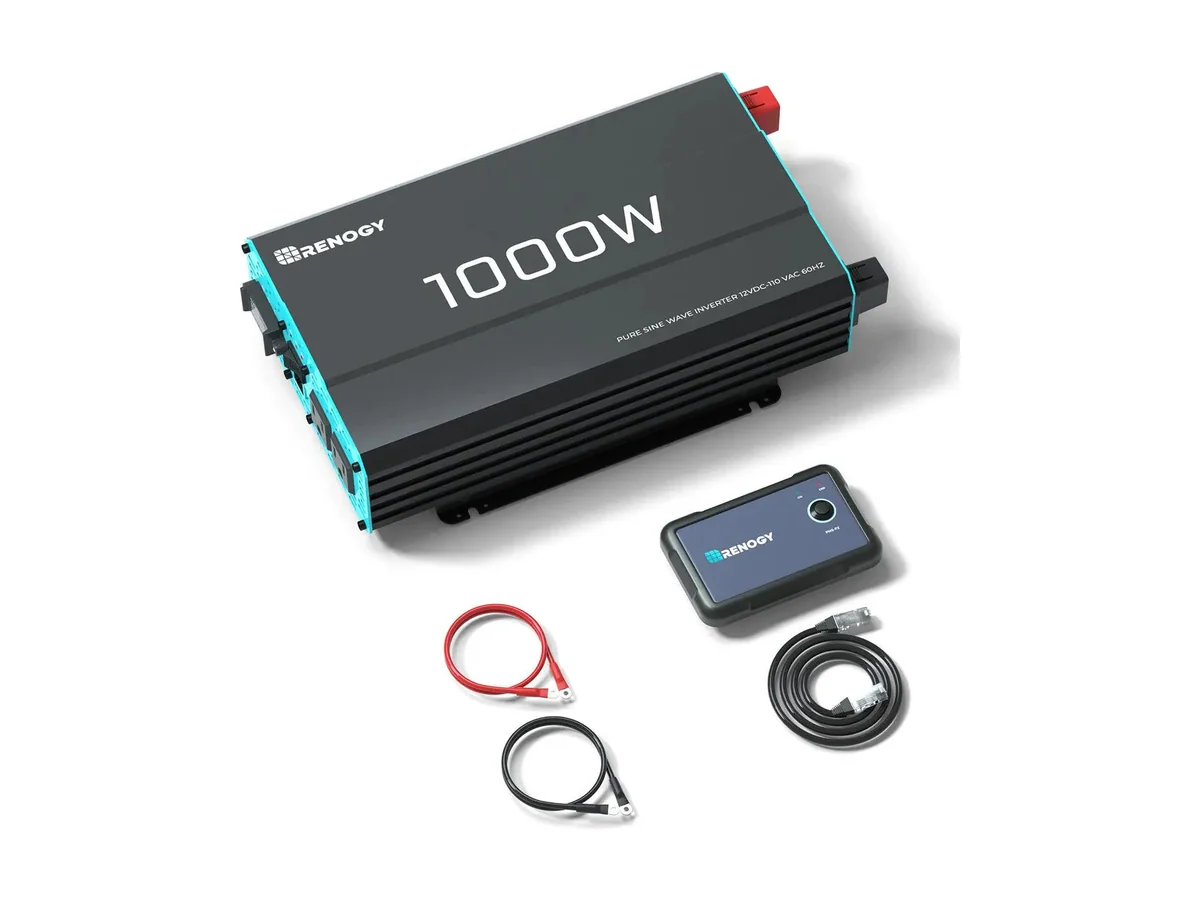
Renogy 12V 1000W Pure Sine Wave Inverter
Renogy 12V 1000W Pure Sine Wave Inverter
The Renogy 12V 1000W Pure Sine Wave Inverter provides 1000 W continuous output and 2000 W peak output. It has two AC sockets and a USB port.
Match the US listing to model RNG-INVT-1000-12V-P2-US. It works with 12 V lithium batteries, does not support 24 V systems and does not charge batteries. Renogy warns that reverse polarity damages the unit and advises against switching it on while a connected load is already switched on.
Xantrex PROwatt SW 1000
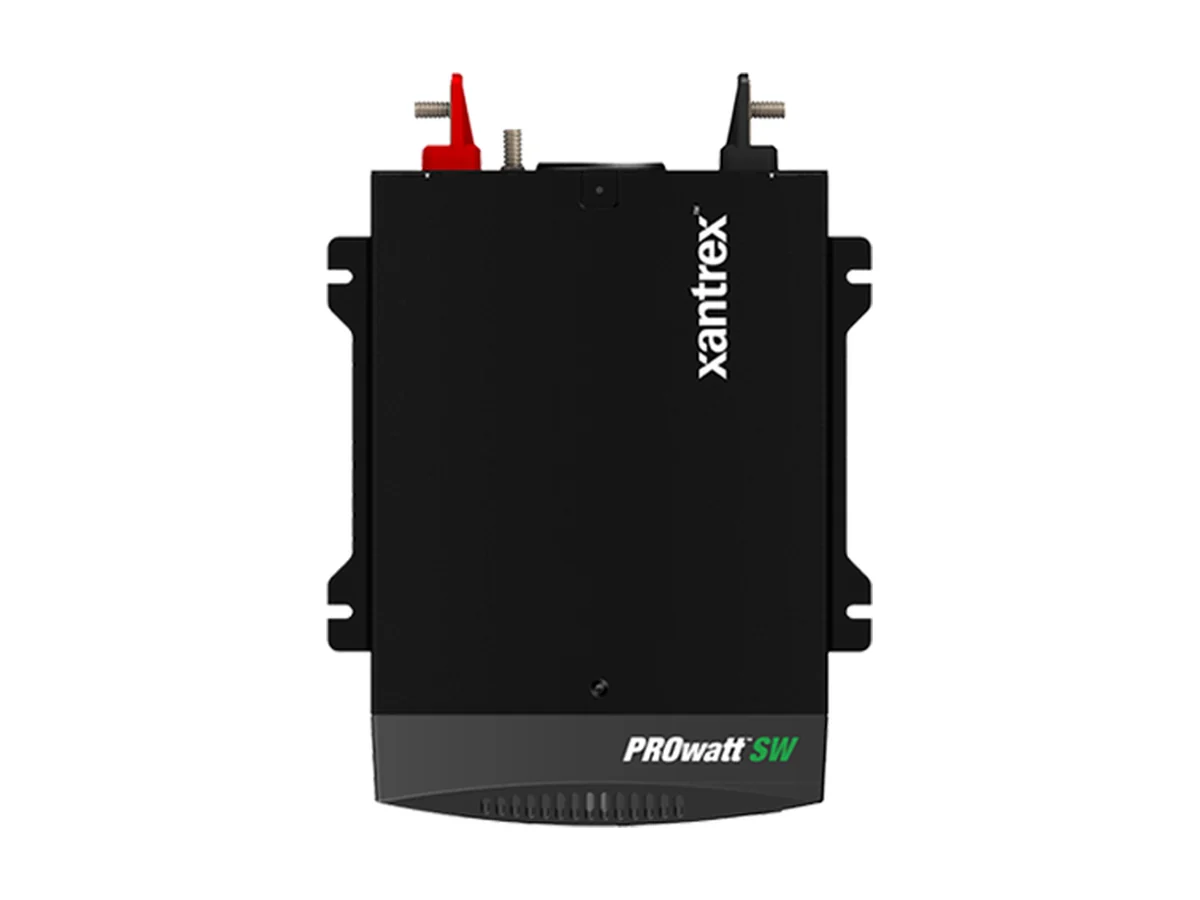
Xantrex PROwatt SW 1000
The Xantrex PROwatt SW 1000 provides True Sine Wave output through dual GFCI AC receptacles. That outlet arrangement may suit your build, but the maker specifies an operating range of 0 to 40 C.
The owner's guide calls for DC-rated battery-side protection. Its fuse-size figure differs from the datasheet, so no fuse size is recommended here. Match the Amazon listing to part 806-1210.
Choose Around Your Loads and Installation
Write down what you want to run together, then compare that demand with continuous output at the expected operating temperature. Renogy and Xantrex give different continuous outputs despite both using 1000 in the name. The Victron 12/500 and 12/800 also have lower continuous ratings at 40 C than at 25 C.
Account for cable routing, battery-side protection and airflow clearance before ordering. Victron warns never to connect the inverter output to another AC source, including shore power or a generator. Confirm the exact model and US 120 V version on the listing. Wiring it in? Our camper van wiring guide and the power station guide cover the rest of the power setup.

- Use continuous output at van temperature to size the inverter. Peak output is time-limited.
- Victron's 120 V 12/500 provides 460 W continuous at 25 C and 380 W at 40 C. The 12/800 provides 800 W and 650 W at those temperatures.
- The Victron 12/500 lists 750 W peak for 3 seconds. The 12/800 lists 1200 W peak for 15 seconds. Neither peak rating is a continuous operating limit.
- Check idle behaviour as well as output. Victron ECO mode may miss small loads below its wake-up threshold.
FAQ
Is a 1000 W inverter always rated for 1000 W continuous?
No. Renogy specifies 1000 W continuous for the model covered here, while Xantrex specifies 900 W continuous for the PROwatt SW 1000. Read the continuous rating rather than relying on the model name.
Do these inverters provide pure sine wave output?
Renogy specifies pure sine wave output, Xantrex specifies True Sine Wave, and Victron describes its Phoenix range as pure sine. Compare continuous output and temperature ratings alongside waveform when choosing.
Does an internal inverter fuse replace protection near the battery?
An internal fuse alone does not establish what battery-side protection your installation requires. Cable selection and battery-side protection depend on the exact inverter, battery system and regional version.
Which regional versions does this comparison cover?
This comparison covers US 120 V versions sold on Amazon US. The Victron figures come from the 120 V HW15 manual and should not be applied to other regional versions.
Affiliate disclosure. This post contains affiliate links. If you click and buy something, this site earns a small commission at no extra cost to you. Picks are based on published specs, independent tests and manufacturer information. As an Amazon Associate I earn from qualifying purchases. Read the full affiliate disclosure. Amazon and the Amazon logo are trademarks of Amazon.com, Inc. or its affiliates.
Your next step