
Best Portable Power Station for Digital Nomads: Working Off the Grid
As an Amazon Associate I earn from qualifying purchases. Some links on this page earn us a small commission, at no extra cost to you. Full disclosure.
Quick answer
Which is the best power station for digital nomads, the Jackery Explorer 300 or the EcoFlow River 2? The Jackery Explorer 300 has the bigger capacity, 293Wh, but a slower wall recharge (about 2.5 hours, according to Jackery, and only with its 90W wall charger and a 60W USB-C PD charger used together). The EcoFlow River 2 recharges from 0 to 100 percent in about an hour, though its companion app has had sync bugs by some accounts. Checked on 5 October 2026.
Our top picks
Quick Comparison
| Power station | Capacity | Full recharge | Shop |
|---|---|---|---|
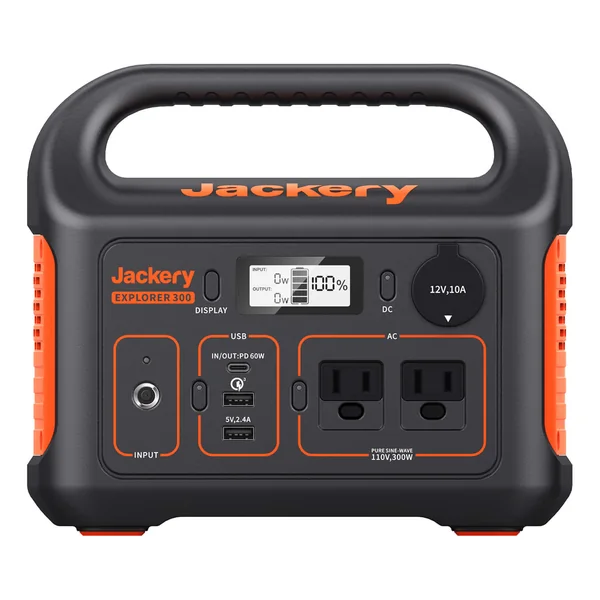 | 293Wh | ~2.5 hours | Get yours on Amazon |
| EcoFlow River 2 | 256Wh | ~1 hour | Get yours on Amazon |
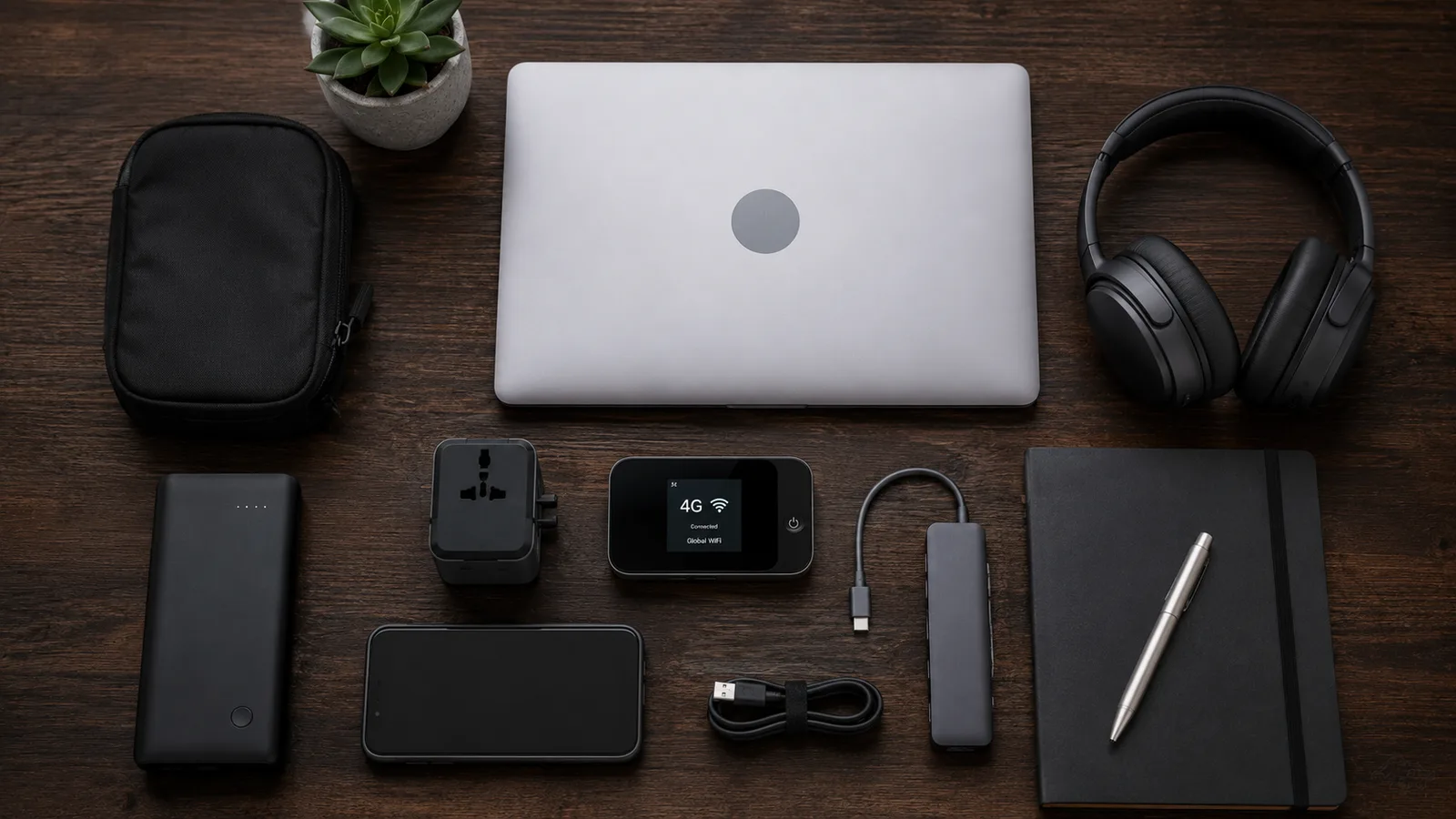
If you have ever had your laptop die mid-call in a beach hut with no outlet in sight, you already know why a best portable power station for a digital nomad earns its spot in the backpack. For nomads splitting time between coworking spaces, guesthouses, and the occasional spot with no reliable grid at all, this is not a gadget, it is backup income insurance.
- The Jackery Explorer 300 has the bigger capacity (293Wh) but a wall recharge of about 2.5 hours.
- The EcoFlow River 2 (256Wh) recharges from 0 to 100 percent in about an hour, though its companion app has had sync bugs by some accounts.
- A power station of roughly 250 to 300Wh, like either of these two, can keep a laptop, phone and router running through a two to three hour outage.
- Both units sit above the 160Wh airline limit, so neither can travel in cabin or checked luggage: ship it or buy one locally.
Why nomads need one
Power cuts in places like Bali, Chiang Mai, or rural Mexico are common enough that most long-term expats stop being surprised by them. A power station of roughly 250 to 300Wh keeps a laptop, phone, and router running through a two to three hour outage, usually enough to finish and send a deadline.
Ask any nomad who has lived through a rainy season blackout and they will tell you the same thing: a small power station buys just enough time to finish and send the work before the meeting starts. That margin is the entire point of carrying one.

From the road
I lived for five years on a houseboat I built myself, on the water in Berlin, and I was completely autonomous: solar panels, my own water filter systems, and no rent, because I was anchored in the middle of the water.
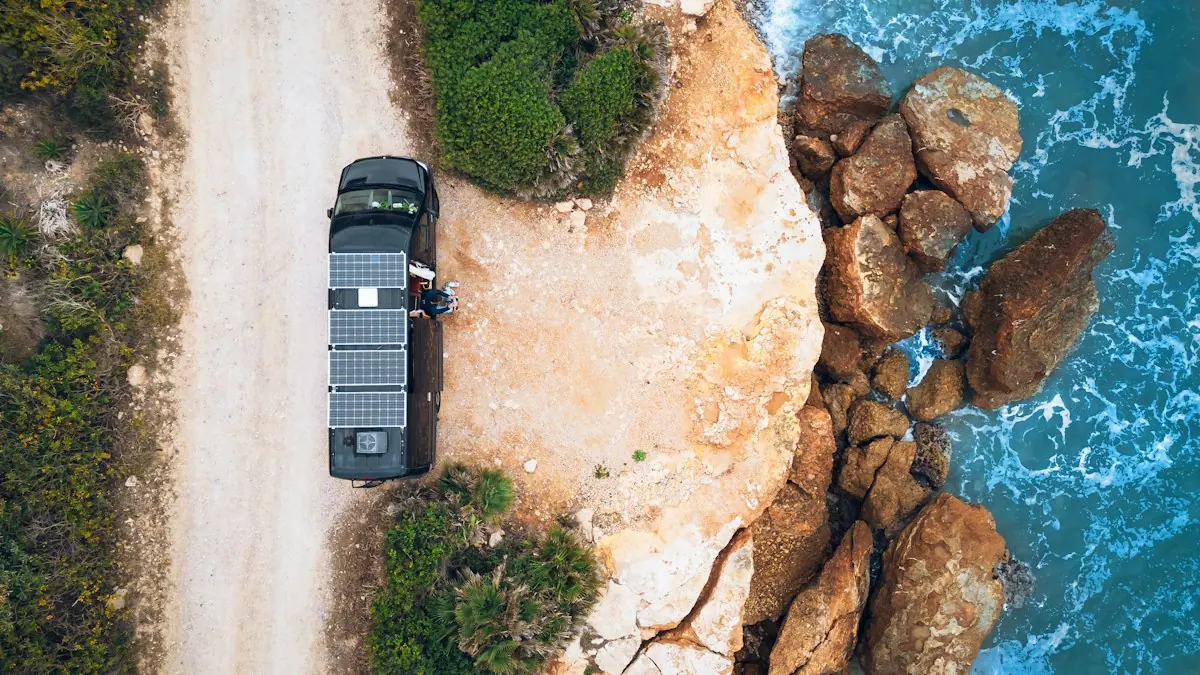
Later I lived off grid in a van and a caravan, without a generator. I plugged a mobile power unit into the solar panels, it charged the battery, and then I could plug in everything inside.
How much capacity do you actually need
A laptop typically draws somewhere between 45 and 65 watts under normal use, so a 250 to 300Wh power station like either of these two gives roughly four to six hours of laptop time on a single charge, more with the screen brightness turned down. A phone charge barely registers against that capacity, and a travel router or MiFi hotspot usually pulls under 10 watts, so keeping the wifi alive through an outage costs very little of the battery. The real question is not raw capacity, it is how many hours you need to bridge before the grid comes back or you reach the next outlet.
Charging beyond the wall
Both product lines support 12V car charging, useful on long overland trips between cities, and both brands sell matching solar panels as an add-on for slow travel plans that include stretches without reliable grid power. Car charging tends to be even slower than the wall adapter on both units, so treat it as a top-up option for a multi-hour drive rather than a fast recharge method. Neither unit is meant to be a primary power source, they are built to bridge a gap, not replace the grid.
Our remote work setup
The gear guides we compare for working from cafes, coliving rooms and rentals:
Jackery Explorer 300 vs EcoFlow River 2
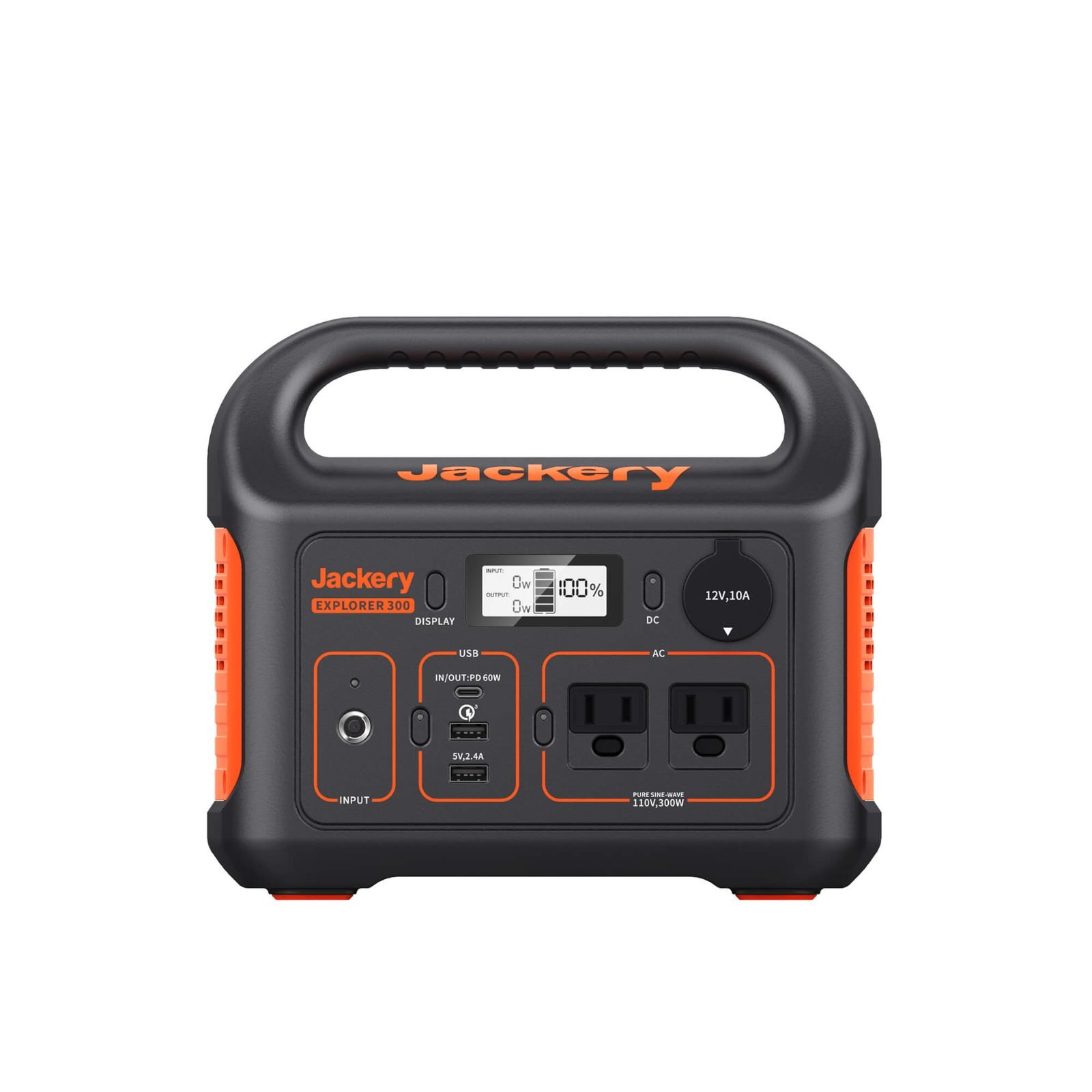
Jackery Explorer 300
From the spec table
- 293Wh capacity
- Two AC outlets
What could be better
- The 2.5 hour wall recharge is slower than the EcoFlow if you only get a short window of grid power before the next cut
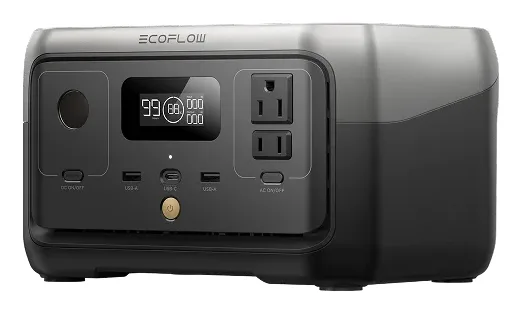
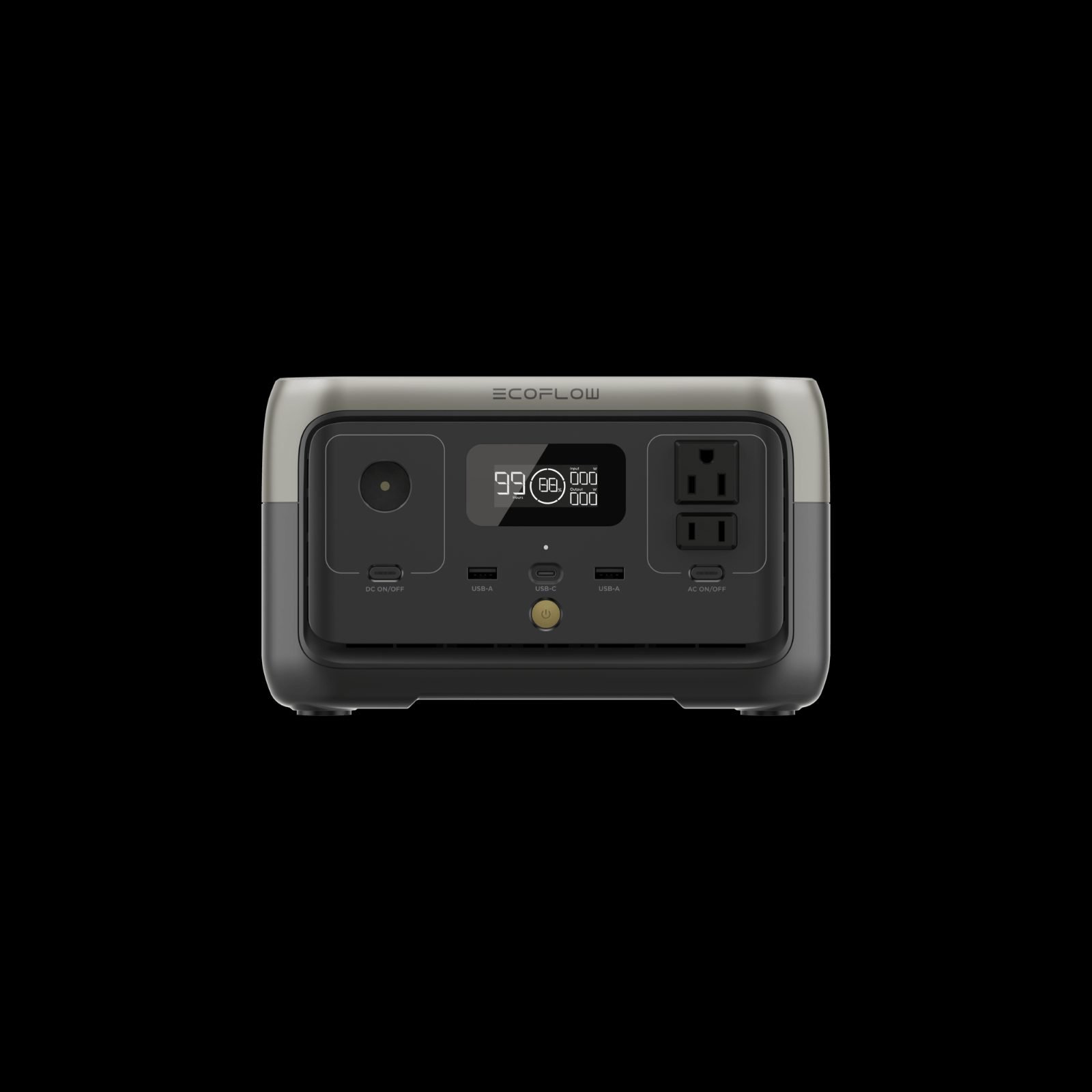
EcoFlow River 2
From the spec table
- Full recharge in about 1 hour
- 6 output ports
- 3.5kg
What could be better
- Several reviewers report its companion app has had sync bugs
- Its build feels less rugged for rough travel

| Feature | Jackery Explorer 300 | EcoFlow River 2 |
|---|---|---|
| Capacity | 293Wh | 256Wh |
| Weight | See listing | 3.5kg |
| Full recharge (wall) | ~2.5 hours | ~1 hour |
| AC outlets | 2 | See listing (6 output ports in total) |
| Approx. price | Check price on Amazon | Check price on Amazon |
What could be better
The Jackery’s 2.5 hour wall recharge is slower than the EcoFlow if you only get a short window of grid power before the next cut. The EcoFlow charges far faster (0 to 100 percent in about an hour, per EcoFlow), but several reviewers report its companion app has had sync bugs, and its build feels less rugged for rough travel.
Flying with a power station
Most airlines follow the same lithium battery rule: up to 100Wh is fine without asking, 100-160Wh needs airline approval, and anything over 160Wh is not allowed in the cabin or checked luggage. The Jackery Explorer 300 (293Wh) and EcoFlow River 2 (256Wh) both sit above that 160Wh line . That means neither one can travel in your cabin bag or checked luggage on a passenger flight. Ship it or buy one locally instead.
Ready to stop losing work to blackouts? Worth a look: the Jackery Explorer 300 and the EcoFlow River 2. Choosing between the two brands? See Jackery vs EcoFlow.
Related watching: Jackery Explorer 300 Major Flaw and Full Review
More from NomadsToolsLab: Digital Nomad Guide to Bali and Airalo Review 2026.
Battery health matters too on a device that might sit unused for weeks between trips. Lithium packs like these hold their charge best when stored around 50 to 70 percent rather than full or empty, so topping one up right before a long flight and then letting it drain fully in storage is the pattern most likely to shorten its lifespan over a few years of nomad use.
What the makers say, read on 5 October 2026: the Jackery Explorer 300 has 300W output and two pure sine wave AC outlets, and its 2.5 hour recharge uses a 90W wall charger and a 60W USB-C PD charger together (ca.jackery.com). EcoFlow lists the River 2 (256Wh) with 300W AC output, six output ports, an LFP battery, 3,000+ cycles and a 5-year warranty (ecoflow.com). The 100Wh and 160Wh airline limits come from IATA's guidance for passengers (iata.org/en/youandiata/travelers/batteries/).
Watch: the Jackery Explorer 300 reviewed
Video by Outdoor Zone.
Seen enough? Here is the Jackery Explorer 300 from this article.
Jackery Explorer 300
From the spec table
- 293Wh capacity
- Two AC outlets
What could be better
- The 2.5 hour wall recharge is slower than the EcoFlow if you only get a short window of grid power before the next cut
EcoFlow River 2
From the spec table
- Full recharge in about 1 hour
- 6 output ports
- 3.5kg
What could be better
- Several reviewers report its companion app has had sync bugs
- Its build feels less rugged for rough travel
Frequently Asked Questions
Jackery Explorer 300 or EcoFlow River 2: which is better for a digital nomad?
The Jackery Explorer 300 has the bigger capacity, 293Wh, but a slower wall recharge of about 2.5 hours, which uses a 90W wall charger and a 60W USB-C PD charger together (ca.jackery.com). The EcoFlow River 2 holds 256Wh and recharges from 0 to 100 percent in about an hour, per EcoFlow, though several reviewers report its companion app has had sync bugs. Specs checked on 5 October 2026.
How much power does a laptop need from a power station?
A laptop typically draws between 45 and 65 watts under normal use, so a 250 to 300Wh power station gives roughly four to six hours of laptop time on a single charge. A travel router or MiFi hotspot usually pulls under 10 watts, so keeping the wifi alive through an outage costs very little.
Can I take a power station on a plane?
No, not these two. Most airlines follow the same lithium battery rule: up to 100Wh is fine without asking, 100 to 160Wh needs airline approval, and anything over 160Wh is not allowed in cabin or checked luggage (IATA guidance for passengers). The Jackery Explorer 300 (293Wh) and the EcoFlow River 2 (256Wh) are both over the line, so ship one or buy it locally.
Can I charge a power station from a car or solar panels?
Both product lines support 12V car charging, and both brands sell matching solar panels as an add-on. Car charging tends to be even slower than the wall adapter on both units, so treat it as a top-up on a multi-hour drive rather than a fast recharge.
How long does a power station battery last?
EcoFlow lists the River 2 with an LFP battery, 3,000+ cycles and a 5-year warranty (ecoflow.com, read 5 October 2026). Lithium packs hold their charge best when stored around 50 to 70 percent rather than full or empty, so avoid letting one drain fully while it sits unused between trips.
Affiliate disclosure. This post contains affiliate links. If you click and buy something, this site earns a small commission at no extra cost to you. Picks are based on published specs, independent reviews and manufacturer information, and we only recommend what we would use ourselves. As an Amazon Associate I earn from qualifying purchases. Read the full affiliate disclosure. Amazon and the Amazon logo are trademarks of Amazon.com, Inc. or its affiliates.
More off-grid builds: cargo van conversion for beginners in 5 steps and houseboat electricity and water for beginners. Looking at a bigger 1 kWh station for a van instead? See our Bluetti vs EcoFlow comparison.
Your next step